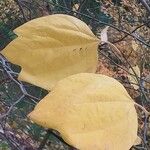
Lindera obtusiloba
Blunt-lobe spicebush · Japanese spicebush · Blunt-lobed spice bush · Blunt-lobed Spicebush
Description
Source: leafsnapLindera obtusiloba, the blunt-lobed spice bush, is a species of flowering plant in the laurel family Lauraceae, native to China, Korea and Japan. It is a spreading deciduous shrub or small tree growing to 6 m (20 ft) tall and wide, with glossy aromatic leaves and deep yellow flowers which appear in spring before the leaves. Juvenile leaves are lobed (as the name suggests) and are deep purple. The leaves often turn yellow in autumn. This plant has gained the Royal Horticultural Society's Award of Garden Merit.
Care Guide
💧 Water Every 2 weeks
The Japanese spicebush flourishes in moderately moist conditions and requires consistently hydrated soil. During the growing season, it needs more water to support foliage growth, making a bi-weekly watering schedule ideal. Typically found outdoors, this plant benefits from natural rainfall to help maintain its moisture needs.
☀️ Light Partial sun
The japanese spicebush grows best with a mix of sun and light shade, reflecting its native habitats where light varies. It can tolerate stronger sunlight when required, though excessive exposure may stress the plant. Specific light requirements for different growth stages have not been identified for this species.
What are the sunlight requirements for a Japanese spicebush?
The Japanese spicebush, or Lindera obtusiloba, requires a balance of sun and gentle shade, ideally thriving in environments that offer a diverse light pattern similar to its origin. It can withstand full sunlight for above 6 hours daily but prefers about 3-6 hours of sunlight, avoiding overexposure to prevent stress on the plant. It's important to observe the movement of sunlight through your garden to provide your plants with an optimal mix of light and shade.
How can artificial lighting benefit indoor Japanese spicebush plants?
Indoor Japanese spicebush plants benefit significantly from artificial lighting, especially when natural sunlight is insufficient, such as during winter or in areas within the home that don't receive enough sunlight. Optimal growth is achieved with artificial lighting by selecting the right type of light, like LED lights, which can be tailored to provide specific wavelengths needed by the plant. For full sun plants, 30-50W/sq ft is recommended, partial sun plants require 20-30W/sq ft, and full shade plants need 10-20W/sq ft. The proper distance of 12-36 inches above the plant mimics natural sunlight, and ensuring 8-12 hours of light per day can promote healthier, faster growth.
What symptoms indicate insufficient light for a Japanese spicebush when grown indoors?
When a Japanese spicebush doesn't receive enough light indoors, several symptoms may appear, including smaller new leaves, leggy or sparse growth, faster leaf drop, slower or halted growth, lighter-colored or pale new leaves, and symptoms of chlorosis, sunscald, leaf curling, wilting, and leaf scorching. These signs indicate stress from insufficient sunlight, affecting the plant's ability to properly photosynthesize and maintain health.
What solutions can help a Japanese spicebush suffering from insufficient sunlight?
Improving the sunlight exposure for a Japanese spicebush involves several strategies. Indoors, gradually shifting the plant to sunnier spots each week or using artificial light like a desk or ceiling lamp for at least 8 hours daily can help, especially for plants that are not easily movable. Outdoors, a gradual movement to sunnier locations can prevent sunburn, allowing the plant to adjust to the change in light intensity. Additionally, reducing obstructions like pruning trees or transplanting smaller plants during their dormant period to areas with better sunlight and drainage can significantly improve their access to sufficient sunlight. Although parts of the plant damaged by insufficient light may not recover, new growth will be healthy with improved light conditions.
🌡️ Temperature 5–35°C
Japanese spicebush is highly adaptable to a wide range of climatic conditions, from blazing summers to freezing winters. Nonetheless, it has a preferred temperature range for growth. If temperatures rise too much, the plant becomes vulnerable to heat and humidity stress, which can cause it to die. In areas where temperatures approach the lower threshold of its cold tolerance, insulating the plant is necessary to protect it.
💨 Humidity
🪴 Soil 6-7
🌱 Fertilizer
Timing is vital for fertilizing Japanese spicebush. Apply fertilizer in early spring and continue monthly until early summer. Fertilizer promotes attractive blooms and supplies energy during both dormancy and active growth.
Why should I put fertilizer on my Japanese spicebush?
Fertilizing your Japanese spicebush is important for several reasons. Firstly, it will help your spicebush produce beautiful blooms. To ensure excellent flowers during the spring season, it is best to fertilize in early spring. Secondly, fertilizer provides your spicebush with ample energy that it can store in the ground while it is dormant. By giving your spicebush extra nutrients during fall planting or late spring, you can help it store more energy to use once active growth resumes.
🪴 Pot & Repot
✂️ Pruning
The Japanese spicebush is a deciduous shrub known for its vibrant autumn colors and fragrant leaves. Pruning it in early spring helps prevent sap loss, encourages new growth, and improves airflow by removing dead or crossing branches. This practice promotes the plant's health and enhances its aesthetic appeal, ensuring its vigor.
🌿 Propagating
🐛 Diseases & pets
☠️ Toxicity
Characteristics
- Plant Type
- Tree, Shrub
- Life Cycle
- Perennial
- Genus
- Lindera
- Family
- Lauraceae
- Hardiness Zone
- 5-9
- Mature Height
- 3.05 m to 6.1 m
- Mature Spread
- 3.05 m to 4.57 m
- Leaf Color
- Green, Yellow
- Leaf Type
- Deciduous
- Flower Color
- Yellow, Green
- Flower Size
- 0.51 cm to 0.76 cm
- Bloom Time
- Early spring, Mid spring
- Planting Time
- Spring, Autumn, Winter
- Harvest Time
- Late summer, Early fall, Mid fall
- Native Area
- Nepal, India, Myanmar, Japan, Koppen, Bhutan, South Korea, China