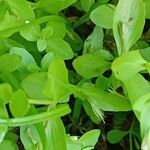
Lindernia dubia
Moist-bank-pimpernel · Moistbank Pimpernel · Shortstalk Lindernia · Yellow-seed False Pimpernel · Yellowseed False Pimpernel
Description
Source: leafsnapLindernia dubia is a species of flowering plant known by the common names yellowseed false pimpernel and moist bank pimpernel. It is a member of the "new" plant family Linderniaceae, and it is sometimes treated as a member of the families Scrophulariaceae and Plantaginaceae. It is native to much of the Americas from Canada to Chile, and it can be found on other continents as an introduced species. It grows in wet habitat, such as riverbanks, pond margins, and meadows. It is an annual herb growing a mostly erect, branching stem to exceed 30 centimeters in height. The oppositely arranged leaves vary in size and shape, from lance-shaped to oval, toothed or not, and under one to over three centimeters long. Flowers emerge from upper leaf axils. Each has a calyx of five narrow, linear sepals. The tubular corolla is up to a centimeter long, white in color with a blue or purple tint, and lipped at the mouth, the lower lip with three rounded lobes. The fruit is a capsule containing yellow seeds.
🎭 Safety, Well-being
Care Guide
💧 Water
The Yellowseed false pimpernel thrives in moist environments and does best with consistent hydration, benefiting from weekly watering. Although it has a moderate tolerance to drought, it truly flourishes outdoors, making it ideal for rain gardens or areas with frequent rainfall.
How should I water my Yellowseed false pimpernel?
To water Yellowseed false pimpernel, you have multiple options like using a garden hose with a spray nozzle, a watering can, or other common watering tools. The plant is not particular about the type of water it receives, whether it is rainwater, tap water, or filtered water. It's advised to avoid watering this plant from above as it can harm the leaves and flowers and possibly lead to diseases. Setting up a drip irrigation system is often the best way to water Yellowseed false pimpernel as it ensures even and direct application of water to the soil. For a potted Yellowseed false pimpernel, you can use the same watering approach but change the tools. Use a cup, watering can, or tap to directly water the soil of the container-grown plant.
How much water does my Yellowseed false pimpernel require?
There are a few ways to decide how much water your Yellowseed false pimpernel needs. Some gardeners feel the soil to check for moisture, watering until the top six inches feel damp. Alternatively, you can use a measurement of about two gallons per week depending on heat and soil dryness. However, strictly following this guideline may lead to overwatering if less water is needed. When growing in a container, you should moisten all dry soil layers or check for moisture by sticking your finger in the soil. Excess water should drain from the pot's holes.
What should I do if I give too much or too little water to my Yellowseed false pimpernel?
The remedy for underwatering Yellowseed false pimpernel is straightforward: if you see that your plant is lacking moisture, start watering it more often. However, overwatering can be a more serious issue, especially if you don't catch it early. When your Yellowseed false pimpernel is overwatered, it can develop diseases that cause it to decline and eventually die. To prevent this, it's important to choose a proper growing location that receives plenty of sunlight to dry out the soil and has good drainage to prevent water from pooling and causing waterlogged soil. If you have overwatered a potted Yellowseed false pimpernel, you may need to transfer it to a new pot. The previous container might not have had good soil drainage or enough drainage holes. When repotting an overwatered plant, make sure to use loose soil and a pot that drains efficiently.
How frequently do I need to water my Yellowseed false pimpernel plant?
Yellowseed false pimpernel requires regular watering throughout the growing season. In spring, you should water it once a week. As the season progresses and becomes warmer, you may need to water it two to three times a week. However, watering it more than that can harm the plant. Regardless of how often you water it, make sure the soil remains relatively moist but not wet. When it comes to Yellowseed false pimpernel in a pot, you'll need to water it more frequently. This is because the soil in a pot can heat up and dry out faster than ground soil. Generally, you should water a potted Yellowseed false pimpernel a few times per week, compared to just once a week for an in-ground plant.
How do I know if I'm giving enough water to my Yellowseed false pimpernel?
Avoiding overwatering can be challenging for Yellowseed false pimpernel plants. While they have deep roots that should be moistened weekly, these plants are prone to root rot and browning if overwatered. Underwatering is not as likely to occur, as Yellowseed false pimpernel can survive without additional watering for some time. However, if you go too long without watering, the plant may wilt and develop dry leaves.
☀️ Light Full sun
The yellowseed false pimpernel thrives in conditions rich in sunlight, which is an essential element for its growth and overall well-being. This plant can also cope reasonably well with moderately reduced sun exposure. Nonetheless, either too little or excessive light can result in sub-optimal plant growth and health.
What are the sunlight requirements for Yellowseed false pimpernel?
Yellowseed false pimpernel thrives in full sunlight, requiring above 6 hours of sunlight daily to maintain its growth and health. It also adapts well to partial sun conditions, about 3-6 hours of sunlight. It's important to watch how sunlight moves through your garden and choose spots that provide a good balance of light and shade for your plants, ensuring their happiness.
How can artificial lighting benefit indoor Yellowseed false pimpernel plants?
Indoor Yellowseed false pimpernel plants require adequate lighting for optimal growth, especially when natural sunlight is insufficient. Artificial lights, such as LED lights, are beneficial as they can be customized to provide specific wavelengths of light that plants need for faster, healthier growth. For full sun plants, 30-50W/sq ft of artificial light is needed, partial sun plants require 20-30W/sq ft, and full shade plants need 10-20W/sq ft. The light source should be placed 12-36 inches above the plant, mimicking natural sunlight for 8-12 hours per day.
What are common symptoms of improper sunlight exposure in Yellowseed false pimpernel?
Yellowseed false pimpernel may exhibit several symptoms if grown in inadequate light conditions: smaller new leaves, leggy or sparse growth, early leaf drop to conserve resources, halted or no new growth, pale or irregularly colored new leaves, and chlorosis or loss of green leaf color. Exposure to excessive sunlight can lead to sunscald, leaf curling, wilting, and leaf scorching, indicating the plant is receiving too much light.
How can I address sunlight-related issues with my Yellowseed false pimpernel?
To address sunlight-related issues, gradually increase the plant's exposure to direct sunlight by moving it to a sunnier location each week until it receives at least 6 hours of sunlight. For indoor plants, consider using desk lamps or professional plant grow lights for 8 hours daily. Outdoors, avoid drastic changes in light to prevent sunburn. Identify and reduce obstructions like tree branches that block sunlight, or transplant smaller plants during their dormant period to a location with ample sunlight and good drainage.
🌡️ Temperature 15–35°C
Yellowseed false pimpernel originates from temperate environments and thus favors temperatures of 68° to 95°F (20 to 35°C). To support healthy growth year-round, it is advisable to adjust the plant’s environment to keep temperatures within this range, particularly during colder or hotter periods.
What is the ideal temperature range for Yellowseed false pimpernel?
Yellowseed false pimpernel thrives in temperate environments, preferring a temperature range between 68°F to 95°F (20°C to 35°C). Maintaining this temperature range is crucial for the plant's health throughout the year, especially during seasons that are cooler or hotter than its preferred climate. The plant exhibits strong cold resistance, negating the need for special frost protection measures in most cases. However, if temperatures are expected to fall below -15°C, it is important to provide protection by covering the plant with soil or straw and watering it abundantly before the first freeze in autumn to keep the soil moist.
How does Yellowseed false pimpernel react to low temperatures?
Yellowseed false pimpernel is notably cold-tolerant, performing best when the temperature stays above 20°C. During winter, it's crucial to keep it above 0°C to ensure its health and growth. Should temperatures dip below -15°C, the plant may not show immediate signs of distress, but there can be a noticeable decrease in sprouting or even an absence of sprouting come springtime. To tackle this issue, any parts of the plant that have failed to sprout by spring should be removed.
What should I do if Yellowseed false pimpernel is exposed to high temperatures?
During the summer, it's important to keep the Yellowseed false pimpernel below 35°C. Exposure to temperatures surpassing 41°C can cause the leaves to lighten in color, curl, become prone to sunburn, and in extreme cases, the plant may wilt and dry completely. To mitigate such high temperature effects, trim away the sunburned and dried-up areas of the plant. Relocating the plant to a shaded area or utilizing a shade cloth to protect it from the midday and afternoon sun are effective strategies. Additionally, watering the plant in the early morning and evening helps keep the soil adequately moist.
What is the botanical name of Yellowseed false pimpernel?
The botanical name of the Yellowseed false pimpernel is Lindernia dubia.
💨 Humidity
🪴 Soil 6-7
🌱 Fertilizer
To foster healthy leaf development, Yellowseed false pimpernel can positively respond to numerous low-strength fertilization applications. It is recommended that you provide this nourishment to Yellowseed false pimpernel about once a month throughout the summertime. Nitrogen plays a vital role in promoting leaf growth and utilizing supplements rich in nitrogen can assist in the flourishing of Yellowseed false pimpernel.
🪴 Pot & Repot
✂️ Pruning
The Yellowseed False Pimpernel is known for its delicate blue flowers and thrives in moist environments. To promote healthy growth, lightly prune the plant from early to late spring, removing any dead stems. Pruning helps create a compact shape, improves air circulation, and encourages vigorous flowering. Always use clean, sharp tools to minimize plant stress and prevent disease.
🌿 Propagating
🐛 Diseases & pets
☠️ Toxicity
Characteristics
- Plant Type
- Herb
- Life Cycle
- Annual, Biennial
- Genus
- Lindernia
- Family
- Linderniaceae
- Hardiness Zone
- 7-10
- Mature Height
- 5 cm to 20 cm
- Mature Spread
- 20 cm to 30 cm
- Leaf Color
- Green
- Leaf Type
- Semi-evergreen
- Flower Color
- White, Purple, Blue, Violet
- Flower Size
- 2.54 cm
- Bloom Time
- Summer, Early fall, Mid fall
- Planting Time
- Spring, Summer, Autumn
- Harvest Time
- Late summer, Fall, Early winter
- Native Area
- Honduras, Mexico, Guatemala, Peru, Panama, Colombia, Cuba, Bolivia, Venezuela, Guyana, El Salvador, Nicaragua, Ecuador, Costa Rica