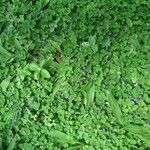
Lindernia grandiflora
Savannah False Pimpernel · Round-leaved false pimpernel
Care Guide
💧 Water
☀️ Light Full sun
Savannah false pimpernel comes from bright, open habitats and does best in full sun. It can tolerate some partial shade but favors direct sunlight for optimal growth. This plant, which may be annual or biennial, is noted for its sun-loving character.
What are the sunlight requirements for Savannah false pimpernel (Lindernia grandiflora)?
The Savannah false pimpernel, known botanically as Lindernia grandiflora, thrives in conditions of partial to full sun. To meet the partial sun requirement, ensure it receives about 3-6 hours of sunlight daily. For it to flourish under full sun, it should be exposed to more than 6 hours of sunlight a day. It's important to observe the movement of sunlight through your garden carefully, selecting locations that offer an ideal mix of light and shade to guarantee the plants' well-being.
🌡️ Temperature 20–37.8°C
The Savannah false pimpernel comes from tropical areas, where the climate is usually warm and humid. Consequently, it is well suited to high temperatures and moisture. It is not fond of sudden temperature shifts and prefers a steady thermal environment, so avoiding temperature fluctuations indoors is important. It generally cannot tolerate cold and needs warmer conditions for growth. If the ambient temperature falls too low, the plant may stop growing or even die.
What is the common name of Lindernia grandiflora?
The common name of Lindernia grandiflora is Savannah false pimpernel.
💨 Humidity
🪴 Soil 6-7
🌱 Fertilizer
When Savannah false pimpernel has opened most of its blooms to full size, you should resume fertilizing. Start fertilizing again around the time the blooms are at their peak, doing so every three to four weeks as weather permits. Then, once the plant begins to produce fewer new blooms, stop fertilizing; there’s no need to feed it when it can no longer produce more blooms.
🪴 Pot & Repot Every 12 months
✂️ Pruning
The Savannah false pimpernel features lush foliage and delicate flowers. For the best results, prune it from early to late spring. This will help shape the plant, remove any damage, and encourage bushier growth. Make clean cuts near the leaf nodes to enhance healing. Pruning during the plant's active growth period boosts its recovery and enhances its ornamental appeal.
🌿 Propagating
🐛 Diseases & pets
☠️ Toxicity
Characteristics
- Plant Type
- Herb
- Life Cycle
- Annual
- Genus
- Lindernia
- Family
- Linderniaceae
- Hardiness Zone
- 9-11
- Mature Height
- 15 cm
- Mature Spread
- 61 cm
- Leaf Color
- Green, Dark Green
- Leaf Type
- Evergreen
- Flower Color
- Purple, Lavender
- Flower Size
- 1.02 cm to 1.52 cm
- Bloom Time
- Summer, Early fall, Mid fall
- Planting Time
- Spring, Summer, Autumn
- Harvest Time
- Late summer, Fall, Early winter