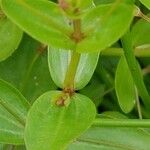
Lindernia palustris
Prostrate False-pimpernel · Common false pimpernel · Creeping false pimpernel
Care Guide
💧 Water
☀️ Light Partial sun
For optimal growth, prostrate false pimpernel does best in a mix of sunny and shaded spots. It can tolerate sun-drenched areas, although too much sunlight may harm it. Native to places with substantial shade, evenly distributed daylight is important for healthy development at every stage.
🌡️ Temperature 15–32.2°C
Prostrate false pimpernel originates from areas with a moderate climate and prefers temperatures of 68 to 95°F (20 to 35℃). Seasonal adjustment means providing warmer conditions, ideally keeping temperatures above 68°F (20℃) during winter.
💨 Humidity
🪴 Soil 6-6
🌱 Fertilizer
Prostrate false pimpernel benefits from regular, dilute applications of fertilizer to encourage healthy leaf growth. You should fertilize Prostrate false pimpernel about once a month during the summer. Nitrogen is essential for foliage, and supplying nitrogen-rich sources helps Prostrate false pimpernel thrive.
🪴 Pot & Repot
✂️ Pruning
🌿 Propagating
🐛 Diseases & pets
☠️ Toxicity
Characteristics
- Plant Type
- Herb
- Life Cycle
- Annual
- Genus
- Lindernia
- Family
- Linderniaceae
- Hardiness Zone
- 8
- Mature Height
- 5 cm to 20 cm
- Mature Spread
- 10 cm to 20 cm
- Leaf Color
- Green
- Leaf Type
- Semi-evergreen
- Flower Color
- White
- Flower Size
- 0.25 cm to 0.51 cm
- Bloom Time
- Summer, Early fall, Mid fall
- Planting Time
- Spring, Summer, Autumn
- Harvest Time
- Late summer, Fall, Early winter
- Native Area
- Turkey, Malaysia, India, Austria, Slovakia, Slovenia, Croatia, Belarus, Russia, Germany, Indonesia, Koppen, South Korea, Romania, Portugal, Nepal, France, Tajikistan, Czech Republic, Philippines, Bulgaria, Bangladesh, Poland, Laos, Greece, Armenia, Ukraine, Serbia, China, Afghanistan, Italy, Kazakhstan, Spain, Switzerland, Vietnam, Myanmar, Japan, Bhutan, Iran, Azerbaijan, Hungary, Thailand