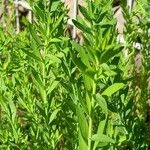
Linum grandiflorum
Crimson flax · Red flax · Scarlet flax · Flowering flax · Large-flowered Flax
Description
Source: leafsnapLinum grandiflorum, commonly known as Scarlet Flax or Red Flax, is a flowering plant in the Linaceae family. This annual plant reaches a height of 30-60 cm and is characterized by its striking bright red flowers, each consisting of five petals. The leaves are narrow, lance-shaped, and display a bluish-green hue. Native to North Africa, Scarlet Flax has gained popularity in gardens worldwide due to its attractive flowers and ease of cultivation. It thrives in well-drained soil and can grow in full sun or partial shade, withstanding drought conditions effectively. The plant blooms from late spring through summer, drawing bees and other pollinators with its vibrant red flowers. Linum grandiflorum produces an abundance of small seeds, making it an excellent option for naturalizing meadows or wildflower gardens. Beyond its ornamental appeal, Scarlet Flax has a history of medicinal use in various cultures. The seeds contain linseed oil, known for its anti-inflammatory properties, which can be applied topically to treat skin conditions such as eczema and psoriasis. In summary, Linum grandiflorum is a stunning annual flowering plant that brings color and charm to any garden. Additionally, it offers potential health benefits through its medicinal properties.
🌳 Flax has numerous applications beyond its well-known production of fiber and oil. The stem's bast fibers are used in the composite industry to produce biodegradable materials. Its seed byproducts are being investigated for bioenergy production. The plant's potential as a phytoremediation agent is studied for cleaning soils contaminated with heavy metals, and its flowers are favored by bees, supporting biodiversity.
🎭 Wealth, Security, Attractiveness
Care Guide
💧 Water Every 7 days
Scarlet flax flourishes in moderate climates and needs regular watering to stay healthy, typically about once a week to prevent overwatering. It is often cultivated outdoors to take advantage of natural rainfall. Consistent moisture is particularly important during its growing season to ensure vibrant blooms.
How should I water my Scarlet flax?
Scarlet flax can be watered using various common watering tools such as a garden hose with a spray nozzle or a watering can. They are not too particular about the type of water they receive, whether it's rainwater, tap water, or filtered water. It's generally advisable to avoid watering this plant from overhead as it can harm the leaves and flowers and potentially cause disease. Setting up a drip irrigation system can be the most effective way to water Scarlet flax, as it delivers water evenly and directly to the soil. When it comes to container-grown Scarlet flax, you can use a cup, watering can, or tap water to water it directly into the soil.
What should I do if I give my Scarlet flax too much water or too little water?
Underwatering Scarlet flax can be fixed easily. When you see that your plant lacks moisture, just water it more regularly. Overwatering, on the other hand, is a more serious problem. If not detected early, it can lead to diseases and the eventual decline and death of your Scarlet flax. To prevent this, choose a suitable location with plenty of sunlight to dry the soil and good drainage to prevent waterlogging. If your potted Scarlet flax is overwatered, consider changing it to a pot with better drainage. Repot the plant using loose soil and an efficiently draining pot.
How much water does my Scarlet flax need?
To ensure a healthy growth of scarlet flax, it is important to water it regularly throughout the growing season. In spring, water the plant once a week. As the season progresses and the weather gets hotter, increase your watering to two or three times a week. However, watering too much can be harmful to the plant. It is crucial to maintain relatively moist soil without it being overly wet. When it comes to potted scarlet flax, the watering needs are slightly different. Due to the soil heating up and drying out faster, it is recommended to water container-grown plants a few times a week, compared to just once a week for plants in the ground.
How much water does my Scarlet flax plant need?
To determine the amount of water to give your Scarlet flax, there are a few options. Some gardeners prefer to check the soil moisture by feeling it, suggesting that you water until the top six inches of soil are moist. Another approach is to use a specific measurement, such as around two gallons per week, based on factors like temperature and soil dryness. However, it's important to avoid overwatering if your plant requires less. When growing Scarlet flax in a container, a different method is needed. It's recommended to water until all dry soil layers are moist, which can be tested by sticking a finger in the soil. Additionally, excess water can be observed flowing out of the drainage holes when watering.
How can I know if I'm giving enough water to my Scarlet flax?
Caring for Scarlet flax plants can be a bit tricky when it comes to watering. On one hand, these plants have deep roots and require weekly moisture. However, overwatering can lead to root rot and browning. Underwatering is less of a concern as Scarlet flax can survive without frequent watering, but if you wait too long to water, wilting and dry leaves may occur.
☀️ Light Full sun
Flax flourishes with abundant sunlight, favoring open-sky exposure so it can absorb substantial solar energy for photosynthesis and achieve optimal growth. In its natural habitat where sunlight is plentiful, it can tolerate locations with somewhat less sun. Excessive shade or overcast weather may impair its development, causing malnutrition and stunted growth.
What are the sunlight requirements for Scarlet flax?
Scarlet flax requires more than 6 hours of sunlight daily to thrive. It's crucial to observe your garden's sunlight patterns and choose spots that provide a harmonious balance of light and shade, ensuring the plant's wellbeing. In environments where natural sunlight is insufficient, particularly during winter or in less sunny areas, artificial lighting can serve as an effective substitute, aiding in healthier and faster growth. For optimal growth, full sun plants necessitate 30-50W/sq ft of artificial light, partial sun plants need 20-30W/sq ft, and full shade plants require 10-20W/sq ft. Adjusting the light source's distance (12-36 inches above the plant) and duration (8-12 hours per day) to mimic natural sunlight conditions is vital for indoor plant care.
What are common symptoms of inadequate lighting in Scarlet flax?
Scarlet flax grown under inadequate light may display several symptoms indicating light deficiency. These include smaller new leaves, leggy or sparse growth, premature leaf drop, slowed or ceased growth, pale new leaves or irregular color patterns, chlorosis, sunscald, leaf curling, wilting, and leaf scorching. These symptoms collectively reveal the plant's struggle in low-light conditions, highlighting the importance of ensuring sufficient sunlight for its health and growth.
How can I address light deficiency problems in Scarlet flax?
To combat light deficiency in Scarlet flax, indoor plants can be gradually moved to sunnier locations to ensure they receive at least 6 hours of direct sunlight daily. Using a south-facing window and keeping curtains open during the day can maximize sunlight exposure. Artificial light can also be an alternative, with lamps kept on for at least 8 hours a day or the use of professional grow lights if the plant is large or not easily movable. Outdoor plants should be moved to optimal sunlight spots by gradually increasing their exposure to prevent shock. Removing obstructions such as overhanging branches can improve sunlight access. For smaller plants, consider transplanting during their dormant period to a better-lit area with good drainage. However, note that parts of the plant that have suffered from sunlight deficiency may not fully recover, but new growth should be healthy following these adjustments.
🌡️ Temperature 5–32.2°C
Flax is native to regions with temperate climates. The optimal temperature for their growth is 68 to 95°F (20 to 35°C). When seasonal variations are extreme, it is advisable to adjust temperatures to imitate these conditions.
What is the ideal temperature range for Scarlet flax to thrive?
Scarlet flax, or Linum grandiflorum, thrives in environments where temperatures are between 20 to 38°C (68 to 100.4°F). This temperature range is ideal for its growth, and adjustments may be necessary to maintain these conditions seasonally. The plant exhibits strong cold resistance, so it generally doesn't require special frost protection measures during winter. However, if temperatures are expected to drop below -40°C, providing cold protection by covering the plant with soil or straw is important. Additionally, watering the plant abundantly before the first freeze in autumn to ensure the soil is moist can help prevent drought and water scarcity during winter and early spring.
How does Scarlet flax react to low temperatures?
Scarlet flax is cold-tolerant and shows optimal growth when temperatures are above 20°C. However, during winter, it's crucial to keep temperatures above 0°C to avoid detrimental effects. If temperatures fall below -40°C, the plant may not show immediate signs of distress during winter, but there could be a noticeable decrease in sprouting or even a complete absence of sprouting in spring. If this occurs, removing any parts that have failed to sprout in spring is advisable as part of the solution.
What should be done if Scarlet flax experiences high temperatures?
When faced with high temperatures, particularly during summer, keeping Scarlet flax below 38°C is essential. If temperatures rise above 43°C, the plant may exhibit signs of heat stress. Symptoms include the leaves becoming lighter in color, curling, and becoming prone to sunburn; in severe cases, the plant may wilt and dry out. To mitigate these effects, it's recommended to trim away any sunburned or dried-up parts of the plant. Relocating the plant to a shaded area or utilizing a shade cloth to protect it from midday and afternoon sun can be beneficial. Ensuring the soil remains moist by watering in the morning and evening will also help the plant manage high temperatures better.
💨 Humidity
🪴 Soil 6-7
🌱 Fertilizer
When most of Flax's blooms have fully opened, resume fertilizing. During the period of peak bloom production, apply fertilizer every three to four weeks, as weather permits. Then, once Flax begins to produce fewer new blooms, stop fertilizing; there's no need to fertilize when the plant can no longer produce more blooms.
Why should I put fertilizer on my Scarlet flax plant?
Plants, including Scarlet flax, require nutrients to survive. This is a well-known fact for most gardeners, regardless of their experience. Without proper nourishment, Scarlet flax can die soon after the first pollination. Therefore, it is vital to provide the correct nutrients in the appropriate amounts to sustain Scarlet flax throughout the blooming season and promote the growth of large, beautiful flowers. Fertilizer is particularly beneficial for Scarlet flax as it helps develop a robust and healthy root system. Given that this plant has a delicate and thin root structure susceptible to damage, fertilizing during planting supports the establishment of a strong foundation for the plant and enhances its ability to produce sensational flowers. Furthermore, if fertilization is timed correctly, it can significantly prolong Scarlet flax's flowering period.
What is the ideal time to fertilize my Scarlet flax?
Scarlet flax experiences rapid growth in the early growing season, after the last frost has passed. This is the best time to fertilize the plant, specifically during planting. Whether you plant it in the ground or in planters, apply fertilizer when the plant is first put into the soil. This initial dosage of fertilizer will suffice until later in the year when the blooms are abundant. Once the season is in full swing and the Scarlet flax has bloomed to its full size, it's time to resume fertilizing. Start fertilizing every three to four weeks, depending on the weather, when the blooms are at their peak. As the Scarlet flax begins to produce fewer new blooms, stop fertilizing. There's no need to continue fertilizing when the plant reaches its maximum bloom capacity.
When is the best time to not use fertilizer on my Scarlet flax?
Regular fertilizing is important for Scarlet flax, but it is crucial to apply it at the right time. In certain situations, it is necessary to hold back on fertilizers. These situations are usually related to climate, but other controllable factors should also be considered. Whenever there is something wrong with the plant, soil, or climate, it is advisable to wait until the issues are resolved and the plant has recovered. For instance, if there are sudden or severe changes in the weather, such as a cold snap during the summer, it is best to wait until warmer conditions return before applying fertilizers. Similarly, if the soil is too dry or compacted, it is better to wait until it can absorb the nutrients properly instead of applying fertilizers that would go straight to the roots without being effectively distributed by the soil. Additionally, it is not recommended to apply fertilizers during the hottest parts of the day when temperatures reach the 90-degree Fahrenheit range. This is because fertilizers can break down at different rates depending on temperature, and applying them during excessively hot weather may cause them to break down too quickly. Furthermore, any pests or diseases should be addressed and resolved before re-fertilizing.
Which fertilizer should I use for my Scarlet flax plant?
To properly nourish most types of Scarlet flax, use a fertilizer specifically designed for high-yield blooming plants. Look for a fertilizer with a higher phosphorus content, indicated by a higher P number in the NPK ratio (e.g., 10-30-10). Many fertilizer brands offer suitable options for blooming plants like Scarlet flax, making it convenient to provide the necessary nutrients. When using a pre-mixed fertilizer, carefully follow the instructions on the package to avoid over or under-fertilization, which can lead to poor growth or wilting of the plant.
How should I add nutrients to my Scarlet flax plant?
Here are some simplified instructions for fertilizing Scarlet flax, depending on the type of fertilizer you have: 1. When initially planting Scarlet flax, mix the recommended amount of fertilizer into the soil before planting and water it in. 2. For pellet fertilizers, mix the pellets into the top inch of soil around the outer edge of the plant where the roots are. Water them in well at first, then water regularly afterward. 3. Other fertilizers can be mixed into a watering can and applied like regular watering. Follow the instructions on the fertilizer packaging for consistency. 4. If you prefer a regular schedule, aim to fertilize every three to four weeks. Remember that specific fertilizing instructions may vary, so always refer to your fertilizer packaging for more guidance.
🪴 Pot & Repot
When repotting Flax, choose a pot 1-2 inches (2.5–5.1 cm) larger in diameter that has good drainage. Use a well-draining potting mix and consider adding perlite for extra drainage. Repot in spring or early summer, water thoroughly afterward, and initially place it in a shady location.
✂️ Pruning
Scarlet flax thrives with minimal pruning, but it's important to focus on deadheading and cutting back the plant by one-third after the first bloom to encourage bushier growth. Prune in early to late spring to improve air circulation, reduce the risk of disease, and maintain the plant's appearance. This ensures long-lasting blooms and a healthier plant overall.
🌿 Propagating
🐛 Diseases & pets
☠️ Toxicity
Characteristics
- Plant Type
- Herb
- Life Cycle
- Annual, Perennial
- Genus
- Linum
- Family
- Linaceae
- Hardiness Zone
- 4-8
- Mature Height
- 1.22 m
- Mature Spread
- 20 cm to 25 cm
- Leaf Color
- Green
- Leaf Type
- Deciduous
- Flower Color
- Blue
- Flower Size
- 1.52 cm to 2.54 cm
- Bloom Time
- Late spring, Early summer
- Planting Time
- Spring, Summer
- Harvest Time
- Mid summer
- Native Area
- Russia, Saudi Arabia, Afghanistan, Iraq, Syria, Turkey, Oman, Montenegro, Iran, Cyprus, Yemen, Lebanon