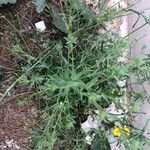
Linum strictum
Upright Flax · Stiff Flax · Upright yellow flax
Description
Source: leafsnapLinum strictum, commonly known as rigid flax, upright flax, and upright yellow flax, is a species of flax that has a rigid stem, from whence it derives its taxonomic name, growing to a height of 10–45 cm. The plant is endemic to the Mediterranean region, and features highly in classical Hebrew and Greek literature, owing principally to its cultivation for its plant fiber, linen, but also for its edible seeds and culinary foliage.
Care Guide
💧 Water
Rigid flax thrives with moderate hydration, preferring consistently moist soil without becoming waterlogged. To maintain this balance, water the plant weekly. Typically grown outdoors, rigid flax benefits from well-draining soil that supports its growth cycles and adapts to the moisture conditions of its native habitat.
How frequently should I water my Rigid flax plant?
To keep your Rigid flax plant healthy, it's important to water it regularly throughout the growing season. In the spring, aim to water it once a week. As the weather gets warmer, you may need to increase the watering to two or three times a week. However, be careful not to overwater, as this can harm the plant. Regardless of the frequency of watering, make sure the soil remains moist but not waterlogged. When it comes to watering Rigid flax in a pot, the approach is slightly different. Potted plants tend to dry out faster, so you'll likely need to water them more frequently. In most cases, water your container-grown Rigid flax a few times a week, rather than just once per week for a plant in the ground.
What is the most effective way to water my Rigid flax?
Rigid flax can be watered using various tools such as a garden hose with a spray nozzle or a watering can. It is not fussy about the type of water it receives, whether it's rainwater, tap water, or filtered water. However, watering from overhead should be avoided as it can harm the plant's leaves and flowers and cause diseases. For Rigid flax planted in the ground, a drip irrigation system is often the best way to water it as it ensures even and direct watering to the soil. When it comes to container-grown Rigid flax, a similar approach can be taken using a cup, watering can, or tap water to apply water directly to the soil.
What should I do if I give my Rigid flax plant too much water or not enough water?
When your Rigid flax lacks water, the solution is simple: water it more often. However, overwatering can be a serious issue if not caught early. Overwatering can lead to diseases that can cause the plant to decline and die. To prevent this, choose a growing location with plenty of sunlight and good drainage, to allow excess water to drain away. If you overwater your Rigid flax in a pot, you may need to change to a new pot with better drainage. When repotting, ensure you use loose soil and a pot that drains efficiently.
How much water does my plant called Rigid flax need?
To determine how much water your Rigid flax needs, there are a few approaches you can take. One option is to feel the soil to gauge its moisture level. This method suggests watering until the top six inches of soil feel moist. Another approach is using a set measurement. Generally, providing about two gallons of water per week to your Rigid flax should suffice, depending on temperature and soil drying speed. However, it's important to avoid overwatering if your plant requires less than two gallons per week. When growing Rigid flax in a container, a different method should be used. In this case, water should be given to moisten all layers of dry soil. To test if the soil is dry enough, you can stick your finger into it. Alternatively, water can be added until you notice a slight trickle of excess water draining from the pot's holes.
How can I know if I'm giving enough water to my Rigid flax?
Avoiding overwatering your Rigid flax can be challenging. These plants have deep roots that should be moistened once a week, but they are highly prone to root rot and browning if overwatered. Underwatering is less of a concern as Rigid flax can survive without additional watering for a while, but if they are not watered for too long, they may wilt and develop dry leaves.
☀️ Light Full sun
French flax comes from bright, open habitats where it flourishes in full sun. It tolerates partial sun but favors direct sunlight for optimal growth. This plant, which can be annual or biennial, is known for its sun-loving nature.
What are the sunlight requirements for Rigid Flax?
Rigid Flax requires more than 6 hours of sunlight to ensure its healthy development. It has a strong affinity for light-rich locations, coming from environments abundant in sun. The right balance of light and shade is crucial for the plant's happiness and growth. Lack of sufficient lighting can lead to stunted growth and poor health, whereas excessive sunlight does not adversely affect it. It's important to observe how sunlight moves through your garden and choose spots that provide a good balance.
How can artificial lighting support plant growth indoors?
Indoor plants, including Rigid Flax, require adequate lighting for optimal growth, especially when natural sunlight is insufficient. Artificial lights, particularly LED, offer a vital solution by providing the specific wavelengths needed for healthy development. For plants that need full sun, 30-50W/sq ft of artificial light is recommended. The light source should be placed 12-36 inches above the plant, mimicking natural sunlight's distance, and be kept on for 8-12 hours per day to simulate natural daylight hours.
What are the symptoms of inadequate light exposure in Rigid Flax?
Rigid Flax may show several symptoms when exposed to inadequate light, including smaller new leaves, leggy or sparse growth, faster leaf drop, slower or ceased new growth, and lighter-colored or pale new leaves. In case of excessive sunlight, symptoms like chlorosis, where leaves lose their green color and turn yellow, sunscald, leaf curling, wilting, and leaf scorching might appear. These symptoms indicate either a deficiency or excess of sunlight, affecting the plant's overall health.
What solutions can alleviate the effects of insufficient or excessive sunlight for Rigid Flax?
To counter insufficient sunlight, gradually move plants to sunnier locations until they receive at least 6 hours of direct sunlight daily. For indoor plants, use artificial lighting such as desk or ceiling lamps, or invest in professional grow lights for a minimum of 8 hours daily. In cases of overexposure, ensure to gradually adapt plants to sunlight changes to prevent sunburn. For those in the ground, consider reducing obstructions or transplanting to sunnier locations with good drainage. It's essential to note that parts of the plant affected by poor lighting may not recover, but increasing light exposure can ensure new growth is healthy.
🌡️ Temperature 20–37.8°C
French flax demonstrates good temperature adaptability, tolerating higher heat and wide temperature swings. In hot weather, it is important to ensure proper watering and provide suitable shading to prevent sunburn. On the other hand, French flax has relatively weak tolerance to low temperatures; while it can cope with some cold, excessively low temperatures can cause frost damage.
What is the ideal temperature range for Rigid Flax growth?
Rigid flax, or Linum strictum, flourishes in environments where temperatures range from 68 to 95 °F (20 to 35 °C). It's well-suited to temperate climates and can generally withstand seasonal temperature fluctuations without needing significant adjustments. However, special attention might be needed to maintain optimal temperatures during unusually cold or hot periods.
How does Rigid Flax cope with cold weather, and what precautions should be taken?
Thanks to its strong cold resistance, Rigid flax doesn't usually require special frost protection measures in the winter. Nonetheless, if temperatures are anticipated to drop below -25°C, it's crucial to protect the plant by covering it with soil or straw. It's also advisable to water the plant abundantly before the first freeze in autumn to ensure that the soil remains moist and freezes in that state, helping to prevent drought and water scarcity for the plant during the winter and early spring.
What should be done if Rigid Flax is exposed to low temperatures?
Rigid flax is quite cold-tolerant, performing best when temperatures stay above 20°C and ideally above 0°C during winter. Exposure to temperatures below -25°C might not show immediate impact, but there could be a noticeable decrease in sprouting or even a complete absence of sprouting come springtime. The remedy for this is simply to remove any parts of the plant that have failed to sprout in the spring.
How does Rigid Flax react to high temperatures, and how can it be protected?
In the summer, it's essential to ensure that the temperature around Rigid Flax does not exceed 35°C. Should the temperatures rise above 38°C, the plant's leaves may become lighter, more prone to curling, and susceptible to sunburn, potentially leading to wilting and drying out of the entire plant. To protect it, trim away any sunburned and dried parts, move the plant to a shadier location or use a shade cloth to protect it from midday and afternoon sun. It's also beneficial to water the plant in the morning and evening to keep the soil consistently moist.
💨 Humidity
🪴 Soil 5-7
🌱 Fertilizer
When most of the French flax flowers have fully opened, resume fertilizing. At the peak flowering period, apply fertilizer again every three to four weeks, as the weather allows. Once the plant begins to produce fewer new blooms, stop fertilizing; there's no need to feed it when it can no longer form more flowers.
🪴 Pot & Repot
✂️ Pruning
Rigid flax benefits greatly from careful spring pruning, which removes dead stems and encourages healthy growth and blooms. Regular trimming not only boosts vigor but also enhances air circulation. It's important to use clean tools for the best results. Be sure to avoid heavy pruning outside of the spring season, as it can stress the plant.
🌿 Propagating
🐛 Diseases & pets
☠️ Toxicity
Characteristics
- Plant Type
- Herb
- Life Cycle
- Annual
- Genus
- Linum
- Family
- Linaceae
- Hardiness Zone
- 9-11
- Mature Height
- 91 cm
- Mature Spread
- 91 cm
- Leaf Color
- Green
- Leaf Type
- Deciduous
- Flower Color
- Yellow
- Flower Size
- 1.52 cm to 3.05 cm
- Bloom Time
- Summer, Early fall, Mid fall
- Planting Time
- Spring
- Harvest Time
- Late summer, Fall, Early winter
- Native Area
- Libya, Turkey, Slovakia, Montenegro, Croatia, Morocco, Slovenia, Yemen, Russia, Romania, France, Portugal, Saudi Arabia, Tunisia, Cyprus, Bulgaria, Greece, Serbia, Lebanon, Syria, Italy, Spain, Iran, Albania, Azerbaijan, Algeria, Hungary