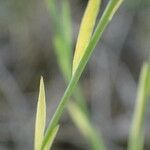
Linum trigynum
Slender yellow flax · French flax · Southern flax · Yellow flax · Indian Yellow Flax
Description
Source: leafsnapLinum trigynum, the French flax, is a species of annual herb in the family Linaceae. It is native to Southern Europe, Western Asia, North Africa, the Horn of Africa and some oceanic islands, such as Madeira, Canary Islands and Socotra. They have a self-supporting growth form. Individuals can grow to 0.18 m tall.
Care Guide
💧 Water
French flax thrives in moderate watering conditions, which reflect its temperate origins. It needs to be watered weekly and is well-suited for outdoor environments in various climate zones. This plant flourishes during the rainy season, making it an excellent choice for easy-care gardening.
How should I water my French flax plant properly?
To water French flax, you have several options: using a garden hose with a spray nozzle, a watering can, or any other common watering tool. French flax is not too particular about the type of water it receives, whether it's rainwater, tap water, or filtered water. However, it's generally best to avoid watering this plant from above as it can harm the leaves and flowers and potentially cause disease. Instead, setting up a drip irrigation system is often the most effective method for watering French flax. This system ensures that water is evenly and directly applied to the soil. If you have a container-grown French flax, you can follow a similar approach but with different tools. Use a cup, watering can, or even your tap to directly water the soil of the plant in the container.
What should I do if I give too much or too little water to my French flax?
Underwatering French flax is easy to fix – just water it more regularly when you see that it lacks moisture. Overwatering can be a serious problem, especially if you don't catch it early. Overwatered French flax can get sick and die. To avoid this, find a good spot for your plant that gets enough sunlight to dry the soil and has proper drainage. If you have an overwatered potted flax, consider changing to a new pot with better drainage. When repotting, use loose soil and a well-draining pot.
How often do I need to water my French flax?
When growing French flax, it is important to water it regularly throughout the growing season. To start, water the plant about once per week in spring. As the season progresses and it gets warmer, you may need to increase watering to about two to three times per week. However, be careful not to exceed this rate as it can harm the plant. In addition to the frequency, it is also important to keep the soil moist but not wet regardless of how often you water it. If you are growing French flax in a pot, the watering routine should be adjusted. Generally, you will need to water container-grown plants more frequently compared to those in the ground. This is because the soil in a pot can heat up and dry out faster. In most cases, plan to water a French flax in a pot a few times per week rather than just once per week for an in-ground plant.
How much water does my plant from France called flax need?
Determining the appropriate amount of water for your French flax can be approached in a few different ways. Some gardeners prefer to gauge moisture levels by feeling the soil, suggesting that watering should continue until the first six inches of soil feel moist. Alternatively, you can use a standard measurement of approximately two gallons per week for your French flax, taking into account temperature and soil dryness. However, be cautious with this method as it may lead to overwatering if your plant requires less. Growing French flax in a container requires a different technique. Here, you should water until all layers of dry soil have been moistened. You can determine this by sticking your finger in the soil or by observing a slight trickle of excess water from the pot's drainage holes.
How can I know if I'm giving enough water to my French flax?
Avoiding overwatering your French flax can be somewhat challenging. These plants have deep roots, so watering the soil once a week is necessary. However, French flax is highly prone to root rot and browning if overwatered. Underwatering is less of a concern, as these plants can survive without additional watering for some time. Yet, if you go too long without watering, the plant may wilt and its leaves may become dry.
☀️ Light Full sun
French flax comes from bright, open habitats where it flourishes in full sun. It tolerates partial sun but favors direct sunlight for optimal growth. This plant, which can be annual or biennial, is known for its sun-loving nature.
What are the sunlight requirements for French flax?
French flax thrives in bright, open environments and requires full sun, meaning it should receive above 6 hours of sunlight daily for optimal growth. It can also tolerate partial sun, which is about 3-6 hours of sunlight, but prefers direct sunlight. Observing how sunlight moves through your garden will help in choosing the best spots that provide the right balance of light and shade, ensuring your plants' happiness.
How can artificial lighting be used for French flax?
Indoor French flax plants require adequate lighting, especially when natural sunlight is insufficient. Artificial lights, like LED lights that can be customized to provide specific wavelengths, offer a solution. For full sun plants, 30-50W/sq ft of artificial light is needed, 20-30W/sq ft for partial sun plants, and 10-20W/sq ft for full shade plants. The light source should be placed 12-36 inches above the plant to mimic natural sunlight, and most plants need 8-12 hours of light per day.
What are the symptoms of inadequate light for French flax?
When French flax is cultivated indoors with inadequate light, it may show symptoms such as smaller new leaves, leggy or sparse growth, faster leaf drop, slower or no new growth, lighter-colored new leaves, chlorosis, sunscald, leaf curling, wilting, and leaf scorching. These symptoms indicate a plant struggling with light deficiency or excessive sunlight exposure.
How can you manage French flax with insufficient sunlight?
To manage French flax with insufficient sunlight, gradually move the plants to a sunnier location to receive at least 6 hours of direct sunlight daily. Using a south-facing window helps maximize sunlight exposure. For indoor plants that are large or not easily movable, consider using artificial lighting such as desk or ceiling lamps for at least 8 hours daily, or professional plant grow lights. Outdoor plants should be moved gradually to avoid sunburn. If obstructions block sunlight, such as trees, pruning them may help, or for smaller plants, transplanting during their dormant period can ensure they get ample sunlight.
🌡️ Temperature 20–37.8°C
French flax demonstrates good temperature adaptability, tolerating higher heat and wide temperature swings. In hot weather, it is important to ensure proper watering and provide suitable shading to prevent sunburn. On the other hand, French flax has relatively weak tolerance to low temperatures; while it can cope with some cold, excessively low temperatures can cause frost damage.
What is French flax?
French flax, scientifically known as Linum trigynum, is a plant with significance in various contexts, including but not limited to, botanical studies, gardening, and perhaps herbal medicine. The specific details such as its physical characteristics, uses, and care requirements were not provided. For comprehensive information, one might need to consult a detailed botanical or gardening resource.
💨 Humidity
🪴 Soil 5-7
🌱 Fertilizer
When most of the French flax flowers have fully opened, resume fertilizing. At the peak flowering period, apply fertilizer again every three to four weeks, as the weather allows. Once the plant begins to produce fewer new blooms, stop fertilizing; there's no need to feed it when it can no longer form more flowers.
🪴 Pot & Repot
✂️ Pruning
To ensure the healthy growth of French flax, it's important to prune it from early to late spring. Begin by removing any dead stems, then shape the plant to improve air circulation. Light pruning promotes better flowering and increases the plant's vigor. Avoid making heavy cuts on older wood, as this can be detrimental. Always use clean, sharp tools to reduce the risk of disease.
🌿 Propagating
🐛 Diseases & pets
☠️ Toxicity
Characteristics
- Plant Type
- Herb
- Life Cycle
- Annual
- Genus
- Linum
- Family
- Linaceae
- Hardiness Zone
- 9-11
- Mature Height
- 91 cm
- Mature Spread
- 91 cm
- Leaf Color
- Green
- Leaf Type
- Deciduous
- Flower Color
- Yellow
- Flower Size
- 1.52 cm to 3.05 cm
- Bloom Time
- Summer, Early fall, Mid fall
- Planting Time
- Spring
- Harvest Time
- Late summer, Fall, Early winter
- Native Area
- Libya, Turkey, Slovakia, Montenegro, Croatia, Morocco, Slovenia, Yemen, Russia, Romania, France, Portugal, Saudi Arabia, Tunisia, Cyprus, Bulgaria, Greece, Serbia, Lebanon, Syria, Italy, Spain, Iran, Albania, Azerbaijan, Algeria, Hungary