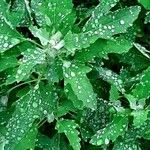
Lipandra polysperma
Many-seeded Goosefoot · Many-seed Goosefoot · Manyseed goosefoot · European Goosefoot · Allseed
Description
Source: leafsnapLipandra polysperma, commonly known as many-seeded bur-reed, is a perennial aquatic plant in the Sparganiaceae family. Native to Europe and Asia, it thrives in the shallow waters of ponds, lakes, and slow-moving streams. The plant features long, slender stems that can grow up to one meter in length and narrow, grass-like leaves. Its flowers are small and inconspicuous, with male flowers located at the top of the stem and female flowers at the base. The fruit of Lipandra polysperma is a bur-like structure containing numerous seeds, which gives the plant its common name "many-seeded bur-reed." Lipandra polysperma is vital to aquatic ecosystems, providing habitat for various organisms such as fish, insects, and birds. Additionally, it helps improve water quality by absorbing excess nutrients, thereby preventing algal blooms.
Care Guide
💧 Water Every 7 days
All-seed plants thrive in moderate climates with consistent moisture. They need weekly watering and prefer well-draining soil to prevent root rot. While they can withstand short periods of drought, all-seed plants grow best outdoors, where natural rainfall can meet their moisture requirements.
What should I do if I give my All-seed plant too much or too little water?
To remedy underwatering of All-seed plants, simply increase the frequency of watering when you notice that the plant lacks moisture. On the other hand, overwatering can lead to more severe consequences if not detected early. Excess water can cause diseases that may ultimately result in the decline and death of the All-seed plant. To prevent this, choose a suitable location with ample sunlight to dry the soil and ensure good drainage to avoid waterlogged soils. If you overwater your potted All-seed plant, it might be necessary to transfer it to a new pot. The previous container may have lacked proper soil drainage or sufficient drainage holes. When repotting the overwatered All-seed, use loose soils and a well-draining pot.
How should I water my All-seed plant?
To water All-seed, you have several options: a garden hose with a spray nozzle, a watering can, or any other common watering tool. All-seed is not too particular about the type of water it receives, whether it's rainwater, tap water, or filtered water. However, it's generally advisable to avoid watering the plant from above as this can harm the leaves and flowers and potentially lead to disease. For best results, using a drip irrigation system is often recommended as it evenly and directly provides water to the soil. When watering a container-grown All-seed, you can follow a similar approach but use a cup, watering can, or tap to directly apply water to the soil.
How frequently do I need to water my All-seed plant?
All-seed needs regular watering throughout the growing season. In the spring, you should water the plant about once per week. As the season progresses and it gets warmer, you may need to increase watering to two to three times per week. However, exceeding this watering rate can be harmful to your All-seed. It's important to keep the soil moist but not wet, regardless of how often you water. Watering All-seed in a pot is a little different. Generally, you'll need to water container-grown All-seed more frequently because the soil in pots can heat up and dry out faster than ground soil. In most cases, plan to water a potted All-seed a few times per week, compared to just once per week for a plant in the ground.
How much water does my plant need?
There are a few different ways to decide how much water to give your All-seed plant. Some gardeners prefer to gauge the moisture level of the soil by feeling it with their hands. This method suggests watering until the top six inches of the soil feel moist. Another approach is to measure the amount of water you provide. On average, All-seed plants require about two gallons of water per week, adjusting for the weather and how quickly the soil dries out. However, following strict guidelines can result in overwatering if your plant needs less water for some reason. When growing in a container, you need to use a different method to determine the watering amount. In this case, you should moisten all the dry layers of soil. You can check the moisture level by sticking your finger into the soil or by watering until you see a slight trickle of water coming out of the drainage holes.
How do I know if I am watering my All-seed enough?
Avoiding overwatering your All-seed can be somewhat difficult due to the balance required between keeping the deep roots moistened and avoiding root rot. Overwatering can lead to browning and root rot, while underwatering is less likely but can cause wilting and dry leaves if left for too long without supplemental watering.
☀️ Light Full sun
All-seed performs best with abundant sunlight, which supports optimal growth. In its early stages it can tolerate moderate sun. Its native habitats were areas with plentiful sunshine. Too much or too little light can harm the plant and impede its healthy development.
What are the sunlight requirements for All-seed plants?
All-seed plants thrive best when exposed to full sun, meaning they require above 6 hours of sunlight daily. They can also grow under partial sun conditions, with around 3-6 hours of sunlight. It's important to observe how sunlight moves through your garden to find spots that offer a good balance of light and shade, ensuring the plants remain healthy.
What are the essentials for growing All-seed?
All-seed plants demand abundant sunlight for optimal growth and can tolerate moderate sun during their early stages. Their natural habitat has conditioned them for a life under generous sunlight. Both excessive and insufficient light can negatively impact their growth. For indoor plants lacking natural light, especially during winter or in darker spaces, artificial lighting is crucial for ensuring proper growth. Using the right artificial light type, like LED, which can be adjusted to provide specific light wavelengths, is important. The light intensity and duration should mimic natural sunlight as closely as possible, with 30-50W/sq ft for full sun plants, 20-30W/sq ft for partial sun, and 10-20W/sq ft for full shade plants, ensuring 8-12 hours of light per day.
What symptoms indicate All-seed isn't getting enough light?
When All-seed plants are grown indoors and don't receive adequate light, they may exhibit several symptoms indicating light deficiency: smaller new leaf growth, leggy or sparse development, early leaf drop to conserve resources, halted or no new growth, leaves developing pale or irregular color patterns, chlorosis (leaves turning yellow), sunscald resulting in damaged tissue due to intense light, leaf curling as a defense mechanism, wilting from water loss, and leaf scorching with brown, dry, or crispy leaf edges.
What are some solutions for All-seed plants getting insufficient sunlight?
To address insufficient sunlight for All-seed plants, a gradual increase in exposure is key. For indoor scenarios, moving plants to a sunnier location bit by bit until achieving at least 6 hours of sunlight or using artificial light sources, like a desk lamp for 8 hours daily or professional grow lights, can help. Outdoors, plants should be moved progressively to adapt to brighter conditions, avoiding abrupt changes that could cause sunburn. Reducing obstructions, such as pruning trees that block sunlight, and transplanting smaller plants during their dormant period to sunnier spots with good drainage can significantly improve their health and growth.
🌡️ Temperature 15–35°C
All-seed grows naturally in settings where temperatures fall between 68 and 95 °F (20 to 35 ℃). The plant does best within that temperature range. During extreme seasons, adjustments may be needed to maintain this temperature preference.
What is the optimal temperature range for growing All-seed?
All-seed (Lipandra polysperma) grows best in environments where temperatures range from 68 to 95 °F (20 to 35 °C). It thrives optimally within this temperature range. Adjustments to the growing environment may be needed during extreme weather to maintain these ideal conditions.
Does All-seed require any special protection against cold temperatures?
All-seed exhibits strong resistance to cold and usually does not require special frost protection measures during winter. However, in cases where winter temperatures are expected to drop below -15°C, providing cold protection becomes important. This can be done by covering the plant with soil or straw. Additionally, watering the plant abundantly before the first freeze in autumn to keep the soil moist is recommended. This practice helps in preventing drought and water scarcity for the plant during winter and early spring.
How does All-seed react to temperatures below its cold tolerance level?
All-seed is remarkably cold-tolerant and performs best when the temperature is kept above 0°C during winter. Should the temperature fall below -15°C, while there might not be visible damage during the winter, a decrease in sprouting or a complete lack of sprouting might occur in spring. To address this, any parts of the plant that have failed to sprout in spring should be removed.
What should be done if All-seed is exposed to temperatures above its heat tolerance?
In the heat of summer, it's crucial to ensure that All-seed is not exposed to temperatures above 35°C. Exposure to temperatures exceeding 41°C can cause the leaves to lighten in color, become prone to curling, suffer from sunburn, or in severe cases, lead to the entire plant wilting and drying out. Remedial actions include trimming away sunburned and dried-up parts, moving the plant to a shaded area, or using a shade cloth to protect it from the midday and afternoon sun. Additionally, watering the plant in the morning and the evening to maintain soil moisture is advisable.
💨 Humidity
🪴 Soil 6-7
🌱 Fertilizer
All-seed benefits from regular, dilute applications of fertilizer to encourage healthy leaf development. You should feed All-seed roughly once a month throughout the summer. Nitrogen is important for foliage, and adding nitrogen-rich sources helps All-seed flourish.
🪴 Pot & Repot
✂️ Pruning
All-seed is a bushy plant renowned for its abundant seed production. To maintain its health and productivity, prune the plant from early to late spring. Start by removing any dead stems and thinning out crowded areas. This will enhance airflow and improve the plant's overall health. Be sure to use sterilized tools during pruning to prevent infections, which will promote vigorous growth and increase seed yield.
🌿 Propagating
🐛 Diseases & pets
☠️ Toxicity
Characteristics
- Plant Type
- Herb
- Life Cycle
- Annual
- Genus
- Lipandra
- Family
- Amaranthaceae
- Hardiness Zone
- 7-10
- Mature Height
- 10 cm to 49 cm
- Mature Spread
- 20 cm to 40 cm
- Leaf Color
- Green, Dark Green
- Leaf Type
- Semi-evergreen
- Flower Color
- Green
- Flower Size
- 0.15 cm
- Bloom Time
- Summer, Early fall, Mid fall
- Planting Time
- Spring, Summer, Autumn
- Harvest Time
- Late summer, Fall, Early winter
- Native Area
- Turkey, Sweden, Austria, Slovakia, Montenegro, Slovenia, Croatia, Belarus, Russia, Germany, Estonia, Romania, Latvia, Belgium, Portugal, Netherlands, France, Czech Republic, Bulgaria, Armenia, Poland, Greece, Ukraine, Serbia, Lithuania, Norway, Italy, Kazakhstan, Spain, Switzerland, Denmark, Finland, Israel, Albania, Ireland, United Kingdom, Hungary, Azerbaijan