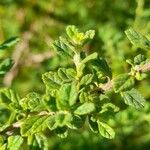
Lippia micromera
Puerto Rican oregano · Spanish-thyme · Jamaican oregano · Italian oregano
Description
Source: leafsnapLippia micromera, commonly referred to as American mint or bushy lippia, is a perennial herb in the Verbenaceae family. Native to North and Central America, it thrives in varied habitats such as prairies, savannas, and woodlands. The plant features a woody stem that can reach up to 1 meter in height, with small, oppositely arranged leaves. The leaves of Lippia micromera are aromatic, releasing a minty scent when crushed or rubbed. They are also valued for their medicinal uses, including the treatment of digestive issues, headaches, fever reduction, and respiratory ailments. In the summer, the plant produces small white flowers clustered together, which attract bees and other pollinators. Additionally, its strong scent is known to repel insects. For optimal growth, Lippia micromera requires full sun exposure or partial shade and well-drained soil. It can be propagated from seeds or cuttings in the spring. Overall, Lippia micromera is an appealing herbaceous plant that offers both ornamental value due to its fragrant foliage and practical medicinal properties. It is a valuable addition to gardens across North America.
Care Guide
💧 Water Every 7 days
☀️ Light Full sun
Spanish thyme comes from habitats with plentiful sunlight, such as open fields and sunlit meadows. It prefers full sun, but can also tolerate partial sun.
🌡️ Temperature 20–37.8°C
Spanish thyme prefers mild temperatures, roughly those most people find comfortable. It does best in conditions that are not overly hot or too cold. The primary problem with very high temperatures is the increased risk of sunburn, so in summer it is wise to give it some shade to avoid excessive heat. When temperatures fall, Spanish thyme becomes dormant. If you want it to grow continuously, you need to keep temperatures higher during winter. Frost can damage the plant and should be avoided.
💨 Humidity
🪴 Soil 6-7
🌱 Fertilizer
To achieve the greatest yield, Spanish thyme does best with regular applications of a balanced fertilizer, particularly one high in nitrogen. Apply fertilizer before planting, at planting, and when seedlings are 2 inches tall. Adding compost or manure also supplies nutrients continuously. Not enough nutrients in the soil causes underdeveloped leaves and stems, poorer flavor, thin stems, and can make the taste bitter.
🪴 Pot & Repot
✂️ Pruning
🌿 Propagating
🐛 Diseases & pets
☠️ Toxicity
Characteristics
- Plant Type
- Herb
- Life Cycle
- Perennial
- Genus
- Lippia
- Family
- Verbenaceae
- Hardiness Zone
- 9-11
- Mature Height
- 30 cm to 61 cm
- Mature Spread
- 30 cm to 61 cm
- Leaf Color
- Green, Dark Green
- Leaf Type
- Semi-evergreen
- Flower Color
- White
- Flower Size
- 0.20 cm to 0.25 cm
- Bloom Time
- Late spring, Summer, Early fall, Mid fall
- Planting Time
- Spring, Summer, Autumn
- Harvest Time
- Mid summer, Late summer, Fall
- Native Area
- Cuba, Honduras, Venezuela, Guyana, Nicaragua, Costa Rica