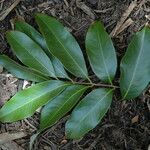
Litchi chinensis
Lychee · Leechee · Litchi · Litchee · Lichi
Description
Source: leafsnapLitchi chinensis, commonly known as lychee, is a tropical fruit tree native to China. It belongs to the soapberry family and is closely related to the longan and rambutan. This tree can grow to a height of 10-28 meters and features a dense canopy of shiny, leathery evergreen leaves. The lychee fruit is small and either round or oval-shaped, with a rough, reddish-brown outer skin that peels off easily. The flesh inside is translucent white or pinkish and has a sweet flavor often likened to grapes or strawberries. Lychee trees thrive in warm temperatures and high humidity, making them ideal for tropical regions like Southeast Asia, India, and parts of Africa. They are also commercially cultivated in parts of Florida and Hawaii in the United States. Besides being enjoyed fresh as a snack or dessert, lychees are versatile in culinary applications. They are used in sauces, jams, jellies, preserves, compotes, conserves, marmalades, chutneys, pickles, relishes, salsas, syrups, and flavored drinks like juices and smoothies. You can also find them in ice creams, sorbets, gelatos, yogurts, puddings, custards, cakes, breads, muffins, tarts, pies, cookies, biscuits, chocolates, truffles, fondue, fudge, nougat, macarons, marzipan, nut butters, spreads, toppings, dressings, vinaigrettes, dips, spice blends, rubs, marinades, meat glazes, and even alcohol infusions like liqueurs and wines. Traditionally, lychees have been used for their medicinal properties. They are believed to improve digestion, stomach health, respiratory health, cardiovascular health, and immune system function. Additionally, they may help reduce inflammation, stress, and anxiety, promote skin and hair health, and aid in weight loss.
🌳 In addition to the sweet pleasure of eating lychee fresh, vineyards have adopted the fruit's distinctive floral flavor to produce exotic lychee wines. This small but expanding industry uses the fruit's aromatic character to make a drink that is both distinctive and reflective of its tropical origins, offering an alternative use of lychee in the culinary world.
Care Guide
💧 Water Every 7 days
Lychee thrives in humid, tropical climates where moisture is consistent. To mimic natural rainfall, it should be watered every two weeks. Ideally, lychee is grown outdoors, where it can flourish in high humidity and receive plenty of rain during the growing season. Therefore, it's crucial to consider the climate zone before planting lychee for optimal success.
How can I make sure my Lychee tree gets enough water all year round?
The frequency of watering your Lychee will depend on the season. In the hottest summer months, when there is ample sunlight, you will need to water it more often as the soil tends to dry out quickly. However, during the winter when the plant is not actively growing, it requires less water and you can water it every 2 to 3 weeks or even less frequently. If you are growing the plant indoors, be cautious of appliances like air conditioners as they can cause the plant to dry out faster, requiring more frequent watering.
How should I water my Lychee plant to keep it healthy?
Your Lychee plant is not picky about how you water it, so you can use any common watering tool. Watering cans, hoses, or even cups will work fine. Regardless of the tool, it's important to water the soil directly and make sure all areas are equally moistened to provide water to the entire root system. Using filtered water is helpful to avoid harmful particles in tap water. Also, using water at or slightly above room temperature is beneficial as extreme cold or hot water can be shocking to the plant. However, the Lychee plant usually responds well to any type of water.
What do I do if I give too much or too little water to my Lychee plant?
When planting outdoor plants, especially new ones or seedlings, it's important to be mindful of watering. Make sure to water them adequately for the first few months, as young trees rely on consistent watering until their roots are established. Once the roots are established, rainwater should suffice most of the time for Lychee plants. When growing Lychee in pots, overwatering is a common mistake. If you accidentally overwater your Lychee, take immediate action to fix the situation. First, stop watering the plant to minimize the impact of overwatering. Then, remove the Lychee from its pot and check its roots for any signs of root rot. If there is no root rot, you can return the plant to its container. However, if you find signs of root rot, trim away the affected roots and consider applying a fungicide to prevent further damage. Lastly, repot the Lychee in well-draining soil. On the other hand, if you notice your Lychee is underwatered, simply increase the frequency of watering. Underwatering can be fixed easily by ensuring sufficient watering. When a Lychee plant is underwatered, its leaves may droop, dry out, and fall off. However, they will quickly regain their fullness after receiving enough water. Adjust your watering schedule promptly when you observe signs of underwatering.
How frequently do I need to water my Lychee plant?
To effectively water outdoor plants, it is usually sufficient to rely on rainfall. However, if your area doesn't receive enough rainfall, you should provide adequate watering every two weeks in the spring and fall. In the summer, more frequent watering is necessary. In the slower growth period of winter, water sparingly or not at all. Young or newly planted Lychee trees require more frequent watering to help them establish and become adaptable and drought tolerant. For potted plants, there are two approaches to determine watering frequency for your Lychee. One option is to follow a predetermined watering schedule, either once a week or once every other week. However, this method may not consider the specific growing conditions of your Lychee. Alternatively, you can adjust the watering frequency based on the moisture level of the soil. It is generally recommended to wait until the top two to four inches of soil, about one-third to one-half of the pot's depth, have dried out before watering again. Keep in mind that during the summer, when the plant's water needs are higher, a predetermined schedule may not be sufficient.
How much water does my Lychee tree require?
When watering your Lychee, you don't always need to give it a lot of water. If only a few inches of soil have dried since your last watering, you can support healthy growth by giving it about five to ten ounces of water each time. You can also consider the moisture of the soil to determine how much water to give. If more than half of the soil has become dry, you may need to give more water than usual. In this case, keep adding water until you see excess water draining from the pot's holes. If your Lychee is planted outdoors and gets plenty of rain, it may not need additional watering. When the Lychee is young or still establishing, make sure it gets 1-2 inches of rain per week. As it grows, it can rely on rainwater and only needs a full watering when the weather is hot and there's been no rainfall for 2-3 weeks to prevent stress.
☀️ Light Full sun
Lychee favors plentiful sunlight but can also adjust to moderately lit locations. Its native habitat is drenched in sunlight, so ample sun markedly promotes vigorous growth. Lack of light can cause weak development, while excessive sun can burn it.
What are the sunlight requirements for a Lychee plant?
Lychee plants thrive in environments that are rich in sunlight, requiring full sun exposure of above 6 hours of sunlight a day, but they can also tolerate partial sun with about 3-6 hours of sunlight. It's crucial to watch how sunlight moves through your garden to identify the perfect spots that ensure a balance of light and shade, promoting the plant's health and growth. Lychee's natural preference for abundant sunlight means that in its ideal habitat, such exposure encourages robust growth, while insufficient light can result in poor development. Extreme sun exposure, however, may lead to scorching of the plant.
How can artificial lighting be used for Lychee plants indoors?
For indoor Lychee plants, where natural sunlight may be inadequate, artificial lighting serves as an essential supplement to promote growth. LED lights are recommended for their ability to emulate specific wavelengths needed by plants. Full sun plants require 30-50W/sq ft of artificial light, partial sun plants need 20-30W/sq ft, and full shade plants should have 10-20W/sq ft. The placement of these lights should be 12-36 inches above the plant, aiming to mimic the natural length of daylight, which is typically 8-12 hours per day.
What are the symptoms of insufficient light exposure in Lychee plants?
Lychee plants showing signs of insufficient light may exhibit symptoms such as smaller new leaves, leggy or sparse growth, faster leaf drop, slowed or ceased new growth, paler new leaves, and other signs of stress such as chlorosis (yellowing leaves), sunscald, leaf curling, wilting, and leaf scorching. These symptoms indicate the plant's struggle in low-light conditions or overexposure to direct sunlight, affecting its overall health and development.
What solutions are available to improve light exposure for Lychee plants?
To enhance light exposure for Lychee plants, gradually introduce them to sunnier locations, ensuring they receive at least 6 hours of direct sunlight daily. For indoor plants, consider using a south-facing window or artificial lighting, like plant grow lights, for at least 8 hours each day. Outdoors, avoid drastic changes to prevent sunburn by progressively moving plants to brighter areas. Reducing obstructions like pruning trees or transplanting to sunnier spots can also help. Note that affected parts may not recover, but new growth will be healthy with improved light conditions.
🌡️ Temperature 20–37.8°C
Lychee comes from regions with temperatures ranging from 68 to 100 °F (20 to 38 °C). It prefers warm conditions and may need measures like insulating during cooler seasons to grow optimally.
Where do Lychees originally come from and what are their temperature preferences?
Lychees originate from climates with conditions ranging between 68 to 100°F (20 to 38°C), thriving in warm temperatures. They are extremely heat-loving plants, sensitive to cold temperatures which can cause harm. To ensure optimal growth, it’s recommended to insulate the plant during cooler seasons. During autumn, if grown outdoors, bringing the Lychee plant indoors to a location near a bright window helps, though it should be kept at a distance from heaters. It's beneficial to maintain temperatures above 20°C during winter, as temperatures nearing 5°C can be detrimental to the plant.
What symptoms do Lychees show at low temperatures, and how can you protect them?
Lychee plants prefer warm temperatures and do not tolerate low temperatures well, thriving best when the temperature is above 20°C and should be kept above 5°C during winter. Exposure to temperatures below 1°C may cause the leaves to lighten in color, and following frost damage, leaves can gradually turn brown or black, exhibiting symptoms like wilting and drooping. To protect them from low temperatures, trim off any frost-damaged parts and move the plant indoors to a warmer environment. It's best to place the plant near a south-facing window to ensure it receives ample sunlight, and avoid placing it near heaters or air conditioning vents to prevent the air from becoming excessively dry.
How should Lychees be cared for in high temperatures?
In high temperatures, especially during summer, it is crucial to keep Lychee plants below 38°C to prevent heat stress. When temperatures exceed 43°C, the plant's leaves may lighten, indicating an increased susceptibility to sunburn. To care for Lychees in these conditions, trim away any sunburned or dried parts of the plant. Move the plant to a location that provides shade during the midday and afternoon sun to protect it. Additionally, watering the plant in the morning and evening helps keep the soil moist and supports the plant in high temperature conditions.
💨 Humidity high (>60%)
This plant needs special care because it loves high humidity levels of 60-80% or more. The best way to achieve this is by placing a humidifier near the plant. Daily misting is also essential! Make sure the room has good ventilation.
🪴 Soil 5-7
🌱 Fertilizer
Choose organic fertilizers (e.g., fish emulsion, compost) instead of chemical fertilizers for lychee. Provide higher nitrogen and phosphorus to young plants in spring. Incorporate compost or fertilizer before or after planting. For mature plants, supplement in spring with a balanced fertilizer or one targeted to specific deficiencies. Nutrient deficiency causes small leaves, short branches, yellow or bronze leaves, acidic fruits, premature fruit fall, and splitting.
Why is it necessary to add fertilizer to my Lychee plant?
If the soil in your area is rich, fertilizing may not be necessary. However, if the soil lacks nutrients, it will affect the growth and production of a Lychee tree. To determine the nutrient levels in the soil, a soil test is recommended. Nutrient deficiency in Lychee can lead to small leaves, short branches, yellow or bronze leaves, and less tasty fruits due to increased acidity. Certain deficiencies can also cause early fruit drop or splitting.
When should I fertilize my Lychee tree?
To promote the growth of young Lychee trees, it is recommended to use fertilizers with higher nitrogen and phosphorus content. This will help in developing robust leaves and roots, which are crucial for future growth. The ideal time to apply fertilizer is in the spring of the tree's first growing season. It would also be beneficial to incorporate compost or another fertilizer into the soil either before or right after planting. For mature Lychee plants, it is advised to supplement their fertilizer every few years, as needed, throughout the spring and summer. This can be done using a balanced fertilizer or a fertilizer specifically designed to address any soil deficiencies in your area. It is important to note that fertilizing Lychee trees during autumn or winter should be avoided.
When is a bad time to use fertilizer on my Lychee plant?
To ensure healthy growth of the Lychee tree, there are a few important points to remember. Firstly, refrain from fertilizing the tree after pruning it, or if it is facing disease, insect infestation, or any other form of stress. Fertilizers are effective in treating nutrient deficiencies in the soil, but they cannot resolve other underlying issues that may harm the Lychee. In such cases, it is crucial to accurately diagnose the problem so that appropriate measures can be taken rather than relying on fertilizer alone. It is also advisable to avoid applying fertilizer during winter or during excessively hot and dry periods in the summer.
What kind of fertilizer does my Lychee tree require?
Lychee plants prefer tropical locations where there is plenty of decaying organic matter. While they can grow without fertilizer, providing them with macronutrients and micronutrients can be beneficial. If you're growing Lychee specifically for its fruit, using a high-phosphorus organic fertilizer like mushroom compost, bone meal, or poultry manure can help produce tasty and well-shaped fruits. When buying fertilizer, you'll notice a number (NPK) on the label that indicates the ratio of nitrogen, phosphorus, and potassium. Nitrogen deficiency is commonly found in soils, but conducting a soil test is the best way to determine which nutrients your soil lacks and may need additional supplementation.
How can I make my Lychee plant grow better?
When using fertilizer, it is important to follow the instructions provided. It is better to use too little fertilizer than too much, so it is recommended to be conservative. This is particularly crucial with chemical fertilizers, as they are usually highly concentrated compared to organic fertilizers. Liquid fertilizers need to be diluted with water before being used to water the Lychee plant. On the other hand, granular or dry fertilizers can be spread around the plant's base, ensuring that no fertilizer comes into direct contact with any part of the plant. It is commonly recommended to use fertilizers once every 2-3 weeks during the growing season. When it comes to organic fertilizers, they can either be mixed into the soil before planting or spread as a layer on top of the soil, depending on whether the plant is newly-planted or already mature.
🪴 Pot & Repot 2-3 years
When repotting Lychee, choose a pot 1–2 inches (2.5–5.1 cm) larger with ample drainage. Use a well-draining potting mix. Repot in spring or fall, making sure the root ball sits slightly below the rim of the flower pot. After repotting, water thoroughly and place the plant in a warm spot with indirect sunlight.
✂️ Pruning
Lychee trees have evergreen leaves and bear fruit. To keep them healthy and productive, prune them from early to late spring. Remove any dead branches and thin the foliage to improve airflow and light exposure. Regular pruning not only boosts harvests but also helps control pests and maintain the tree's shape. This ensures vigorous growth and contributes to a thriving garden.
🌿 Propagating
🐛 Diseases & pets
☠️ Toxicity
While lychee trees are generally not poisonous to people and pets, the stone-like seeds can have toxic traits when ingested. Consuming the seeds may result in severe vomiting, a drop in blood sugar, lethargy, and might even induce a coma.
Characteristics
- Plant Type
- Tree
- Life Cycle
- Perennial
- Genus
- Litchi
- Family
- Sapindaceae
- Hardiness Zone
- 10-12
- Mature Height
- 6.1 m to 9.14 m
- Mature Spread
- 7.92 m
- Leaf Color
- Green
- Leaf Type
- Evergreen
- Flower Color
- White
- Flower Size
- 2.54 cm
- Bloom Time
- Mid spring, Late spring
- Planting Time
- Spring, Autumn
- Harvest Time
- Mid summer
- Native Area
- Guangdong and Fujian provinces of Southern China (tropical)