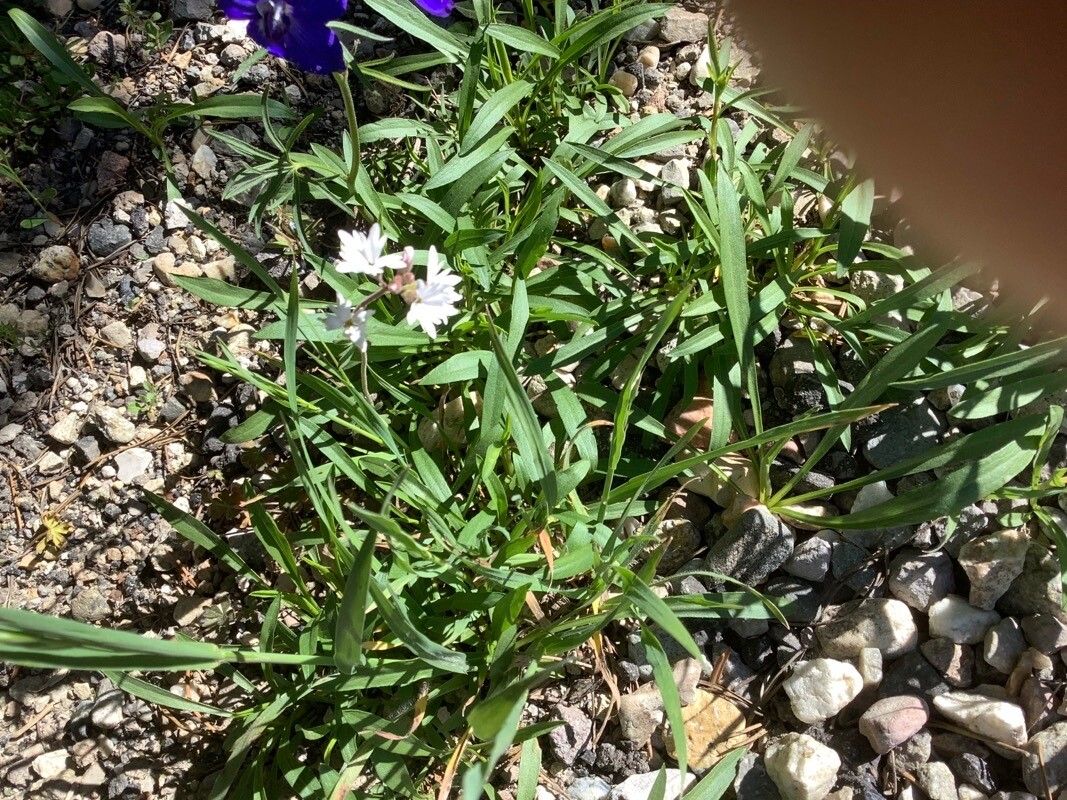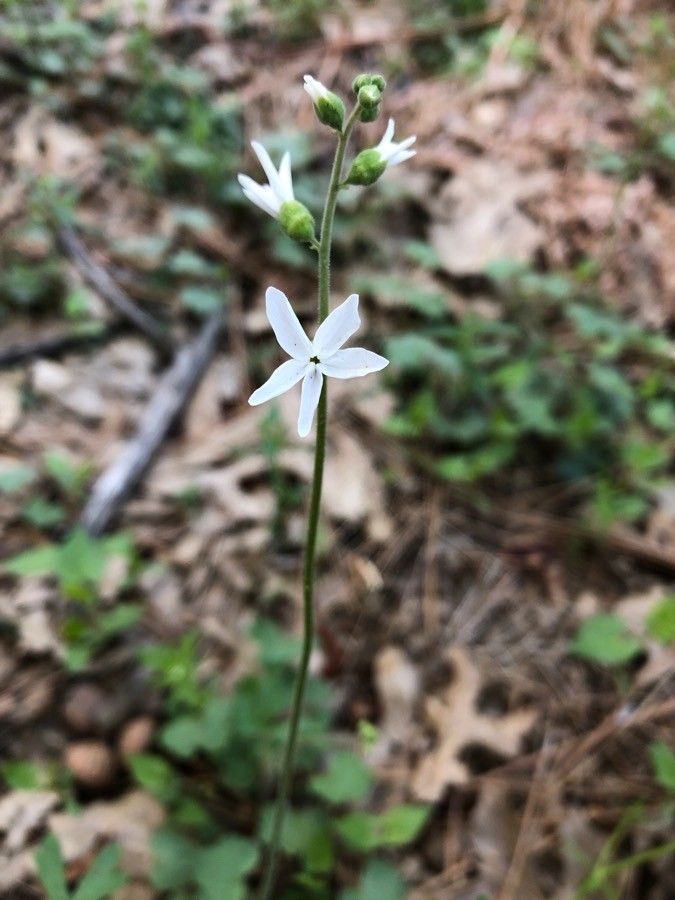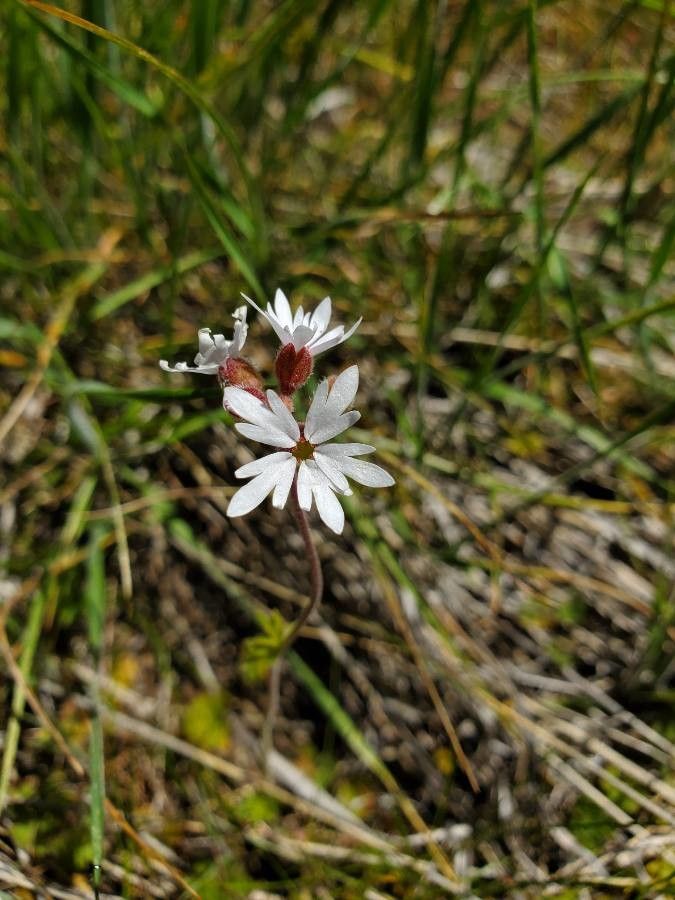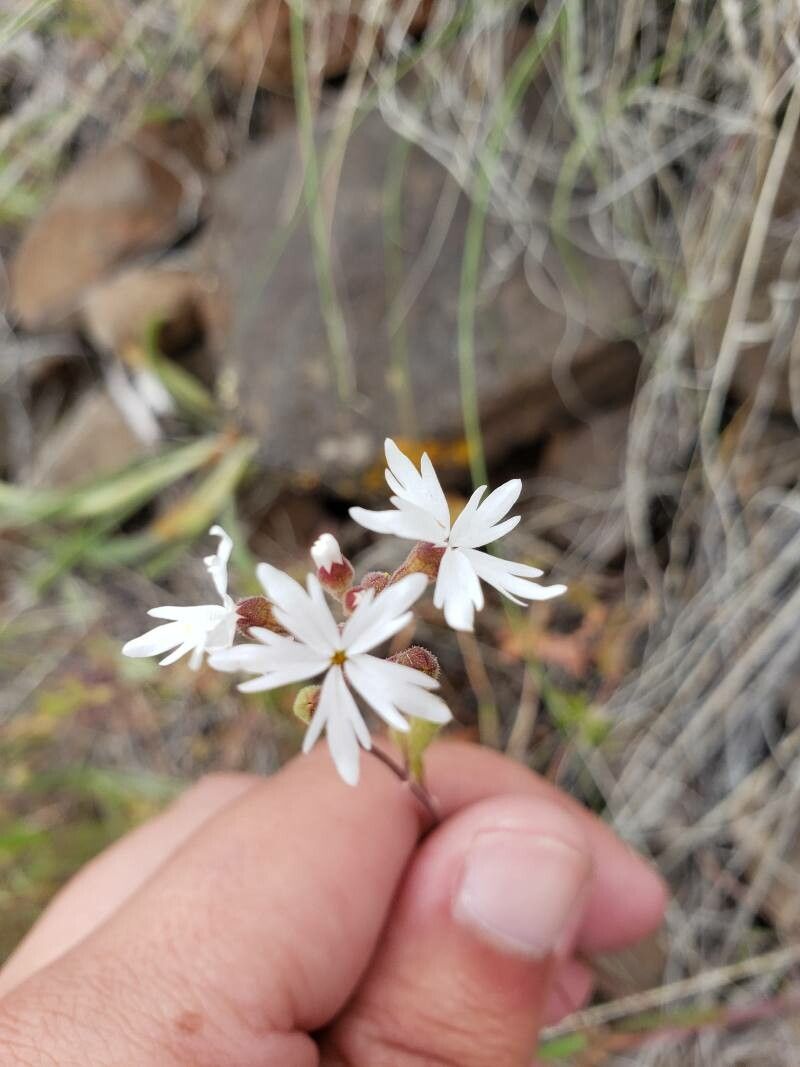
Lithophragma parviflorum is a species of flowering plant in the saxifrage family known by the common name smallflower woodland star. It is native to much of western North America from British Columbia to California to South Dakota and Nebraska, where it grows in several types of open habitat. It is a rhizomatous perennial herb growing erect or leaning with a naked flowering stem. The leaves are mainly located low on the stem, each cut into three lobes or divided into three lobed leaflets. The stem bears up to 14 flowers, each in a cuplike calyx of red or green sepals. The five petals are bright white, up to 1.6 centimeters long, and usually divided into three toothlike lobes. Its bulblets may produce toxins capable of poisoning livestock, although rodents eat them with no known adverse effects.
Smallflower woodland star has strong disease resistance and is generally not prone to illnesses. However, it can be affected by pests and diseases present in its environment. These problems are typically not severe. Regarding care, the plant needs moderate maintenance. Regular pruning is necessary to maintain a good appearance and encourage healthy growth. Fertilizing can also help boost flowering. Smallflower woodland star is appropriate for anyone with outdoor space, such as a garden or patio, and does not demand extensive care experience. It may require more attention when kept indoors.
How to keep Lithophragma Parviflorum.
Light
Smallflower woodland star is native to habitats like forest understories or rocky areas, where it grows in natural shade. It prefers partial sun but can adapt to full sun or full shade, showing its adaptable and hardy nature.
Water
The smallflower woodland star flourishes in moderate moisture conditions and does best with consistent weekly watering. It is well-suited to cooler outdoor climates, where natural rainfall patterns support its seasonal growth, requiring minimal human intervention.
Temperature
Smallflower woodland star can tolerate a wide range of temperatures, though its distribution may still be restricted by different combinations of moisture and heat. It does best in warm summer conditions with adequate rainfall or watering. Extended stretches of cloudy, rainy weather or prolonged high temperatures increase the chance that Smallflower woodland star will die. In winter, protecting it from the cold can boost its survival rate.
Fertilizer
The best time to fertilize Smallflower woodland star is in early spring when the flowers are forming. Using an appropriate fertilizer promotes better blooms and helps Smallflower woodland star produce attractive flowers. Fertilizing in early spring ensures strong flowering during the season and supplies energy for dormant growth phases.
Pruning
The smallflower woodland star is known for its delicate flowers and low-lying foliage. To encourage healthy growth and extend the blooming period, prune the plant from early to late spring, once it has finished flowering. Be sure to use clean, sharp tools to prevent disease, maintain the plant's shape, and boost its vitality for strong development.
Botanical profile.
- Plant Type
- Herb
- Life Cycle
- Perennial
- Genus
- Lithophragma
- Family
- Saxifragaceae
- Hardiness Zone
- 4-8
- Mature Height
- 10 cm to 30 cm
- Mature Spread
- 5 cm to 15 cm
- Leaf Color
- Green
- Leaf Type
- Deciduous
- Flower Color
- White
- Flower Size
- 0.51 cm to 1.02 cm
- Bloom Time
- Early spring, Mid spring
- Planting Time
- Spring, Summer
- Harvest Time
- Late spring, Early summer