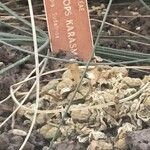
Lithops karasmontana
Karas Mountains living stone
Description
Source: leafsnapLithops karasmontana, the Karas Mountains living stone, is a species of flowering plant in the ice plant family Aizoaceae, native to Namibia and South Africa (the name refers to the Great Karas Mountains of Namibia).
Care Guide
💧 Water Every 2 weeks
Lithops have the ability to store water in their leaves for months. Meaning they do not need to be watered every day. Water your lithops once every two weeks at the end of summer where this plant is growing. But as soon as winter starts, it is best to leave it be and not water at all. You can also check if the plant starts to wrinkle or pucker. If it appears to be sinking deeper into the pot and feels softer than usual when given a gentle squeeze, then it is time to water it again.
☀️ Light Full sun
Originating from dry regions, Lithops karasmontana performs best in full sun, as its native habitat is marked by intense sunlight and scant shade. It can also tolerate partial sun, giving it some flexibility in its growth.
🌡️ Temperature 20–37.8°C
Although Lithops karasmontana can tolerate some heat, it mainly thrives and grows in the cooler seasons and goes dormant in summer. In very hot summer conditions, provide shade to prevent scorching from intense sunlight. Watering should be reduced or stopped during the hottest part of the year to prevent root rot. Lithops karasmontana shows vigorous growth in winter and spring. If temperatures do not drop too low, it will continue to grow steadily.
💨 Humidity
🪴 Soil 6-7
🌱 Fertilizer
For Lithops karasmontana, apply light doses of fertilizer 1-2 times a year during the growing season. Do not fertilize in winter or in summer when the plant is dormant. Cut back on fertilizer for plants that have been repotted and wait a couple of months after repotting before feeding. Fertilizing helps maintain healthy growth and promotes flowering.
🪴 Pot & Repot Every 2 years
When repotting Lithops karasmontana, choose a pot slightly larger than the current one that has good drainage. Use a well-draining, gritty cactus or succulent mix. Gently remove the plant from its old pot, brush off excess soil, and set it in at the same depth. Wait a few days before watering to allow any root damage to heal. Repot in spring or fall and place it in a brightly lit location.
✂️ Pruning
Living stones do not need pruning. The only removal that will help this plant is the removal of papery remnants from older leaves once the plant has reabsorbed all of its moisture and nutrients.
🌿 Propagating
🐛 Diseases & pets
☠️ Toxicity
Lithops are safe for humans and house pets. It has a sweet and spicy smell but the smell does not reflect its flavor which suggests that this plant is not a food source although not poisonous. Even though it is generally non-toxic, any chemical sprayed on it can be poisonous to both humans and animals. If medical problems happen because of this plant, seek the doctor’s help immediately.
Characteristics
- Plant Type
- Succulent
- Life Cycle
- Perennial
- Genus
- Lithops
- Family
- Aizoaceae
- Hardiness Zone
- 9-11
- Mature Height
- 1 cm
- Mature Spread
- 2 cm
- Leaf Color
- Brown
- Leaf Type
- Evergreen
- Flower Color
- White
- Flower Size
- 2.03 cm to 4.06 cm
- Bloom Time
- Fall
- Planting Time
- Spring, Summer, Autumn
- Harvest Time
- Early winter, Mid winter
- Native Area
- Namibia