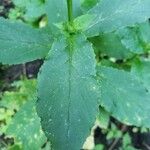
Lobelia siphilitica
Great blue lobelia · Blue lobelia · Great lobelia · Blue cardinal-flower
Description
Source: leafsnapLobelia siphilitica, the great blue lobelia, great lobelia, or blue cardinal flower, is a plant species within the family Campanulaceae. It is an herbaceous perennial dicot native to eastern and central Canada and United States. There are two recognized varieties of Lobelia siphilitica, Var. siphilitica and Var. ludoviciana. Blooming from August to October, it is short-lived, lasting only for a few years.Although self-compatible, a flower is unable to offer pollen to itself and it must be pollinated by insects, primarily bumblebees. Bees use the lower three fused petals as a landing pad. A bee of correct weight will depress these petals on its way to the flower's nectar, this lowers the stigma wiping it against the bee's back.
🌳 Great blue lobelia is a popular perennial often cultivated in late-summer gardens for its striking blue flowers. These blooms appear at a unique time of year, when many other flowers have faded. This plant is excellent as a border and fits well in cottage, wild, and woodland gardens. It also looks lovely near streams and ponds. Common companion plants include hollyhocks, impatiens, and wax begonias.
🎭 Malice
Care Guide
💧 Water Every week
The great blue lobelia thrives in moist environments, as it needs a consistent supply of water and shows adaptability to different water conditions. Watering it weekly encourages lush growth. Additionally, using mulch outdoors can help retain soil moisture, especially during times of high water demand in the growing season.
What's the difference between watering my Great blue lobelia inside and outside?
Growing the Great blue lobelia indoors is most common for gardeners who live in non-temperate and non-tropical regions. It's important to consider that soil in a container can dry out faster than ground soil. Additionally, if you have drying elements like air conditioning units, your Great blue lobelia will need more frequent watering compared to if it was planted outside. In such cases, you may not need to water your Great blue lobelia much if at all, especially if you receive regular rainfall. On the other hand, if you grow this plant indoors, you will need to water it more often since relying on rainwater to soak the soil isn't an option.
How should I water my Great blue lobelia?
To properly water the Great blue lobelia, it is important to use filtered water at room temperature. This type of water is preferable because tap water may contain harmful particles. Additionally, it is recommended to use room temperature or slightly warmer water since this plant originates from a warm environment and cold water may shock it. It is also advised to avoid overhead watering as it can lead to foliage complications. Instead, you should water the plant by applying filtered room temperature water directly to the soil until it is completely soaked. This method benefits the plant by moisturizing its roots and aiding in the spread of nutrients throughout the soil.
What do I do if I give too much or too little water to my Great blue lobelia?
Both overwatering and underwatering can harm the health of your Great blue lobelia, but overwatering is more commonly problematic. If this plant receives too much water, its stems and leaves may wilt and turn yellow. Overwatering for a long time can also lead to diseases like root rot, mold, and mildew, which can kill your plant. Underwatering is less common for the Great blue lobelia, as it tolerates drought fairly well. However, it is still possible, and in such cases, you may notice brittle and brown leaves. It is crucial to spot signs of overwatering early when caring for your Great blue lobelia, as some of the resulting diseases, like root rot, may be irreversible if left unaddressed for too long. If you observe early signs of overwatering, reduce your watering schedule immediately. You should also check the soil quality where your plant is growing. If the soil drains poorly, replace it with a loose, well-draining potting mix. Conversely, if you notice signs of underwatering, simply water more regularly until those signs disappear.
How often do I need to water my Great blue lobelia?
If your Great blue lobelia is in a pot, you can check if it needs water by sticking your finger into the soil. If the top two to three inches are dry, it's time to water it. If you're growing the plant outdoors in the ground, you can use the same method to test the soil. When the top few inches have dried out, it's time to water. Usually, in spring and early fall, you'll need to water once a week. In extremely hot weather, you may need to water twice a week or more. However, mature and well-established Great blue lobelia plants can withstand drought well.
How much water does my Great blue lobelia require?
When watering your Great blue lobelia, don't hesitate to give it a generous amount of water. Make sure the first two to three inches of soil are dry before watering, and then give it a thorough soak. The goal is to saturate the soil completely, so add enough water that it starts to drain out of the bottom of the pot. If you don't see any excess water draining, you may not have given enough water. However, be careful not to let the water accumulate in the soil, as this can harm the plant. On the other hand, if water isn't draining properly, it could mean that the soil doesn't have good drainage, which is not good for the plant's health. If the plant is outside, it typically needs about 1 inch of rainfall per week.
☀️ Light Full sun
The great blue lobelia flourishes in bright sunlight for most of the day, although it still exhibits modest growth in lower light. It comes from habitats that receive abundant light exposure. Insufficient light can limit its growth, while excessive light does not cause significant harm.
What are the sunlight requirements for the Great Blue Lobelia?
The Great Blue Lobelia requires full sun, which translates to more than 6 hours of sunlight per day, but it can also grow in partial sun, meaning it gets about 3-6 hours of sunlight. It's important to observe how sunlight moves through your garden to identify spots that offer the right balance of light and shade. This ensures the plants get the appropriate amount of sunlight to thrive.
Can the Great Blue Lobelia grow with less sunlight?
Yes, the Great Blue Lobelia can exhibit modest growth even with a lesser amount of light than its optimal requirement of full sun. Originating from environments with considerable exposure to sunlight, it best thrives under abundant daylight. However, insufficient light could hinder its growth, whereas too much light does no significant harm.
What artificial lighting requirements do indoor Great Blue Lobelia plants have?
Indoor Great Blue Lobelia plants need proper lighting, especially when natural sunlight is insufficient. Artificial lights, such as LED lights, are beneficial because they can be customized to provide specific wavelengths needed by the plants. The intensity of artificial light recommended varies: 30-50W per square foot for full sun plants, 20-30W for partial sun plants, and 10-20W for full shade plants. The lights should be placed 12-36 inches above the plants, mimicking natural sunlight as closely as possible, and kept on for 8-12 hours per day.
What are the signs of insufficient or excessive light in Great Blue Lobelia?
Signs of inadequate light include smaller new leaves, leggy or sparse growth, faster leaf drop, slowed or ceased growth, and lighter-colored or pale new leaves. Excessive light can cause chlorophyll breakdown leading to chlorosis (yellowing of leaves), sunscald, leaf curling, wilting, and leaf scorching, which are indicative of the plant struggling to photosynthesize efficiently and maintain hydration.
How to remedy light-related issues for indoor and outdoor Great Blue Lobelia plants?
To address light-related issues, indoor plants should be gradually moved to sunnier spots each week, aiming for at least 6 hours of sunlight daily or using artificial light for at least 8 hours if moving the plant isn't feasible. Outdoor plants should also be shifted to sunnier locations gradually to prevent sunburn. Additionally, reducing obstructions such as pruning trees or transplanting smaller plants during their dormant period can help outdoor and ground-planted lobelias receive adequate sunlight. It's important to note that parts of the plant affected by light issues may not recover, but new growth will be healthy with proper light exposure.
🌡️ Temperature 5–35°C
Great blue lobelia prefers cool to moderate temperatures of 41 to 95 ℉ (5 to 35 ℃). It is native to temperate zones and grows best in soil that stays consistently moist. In summer it may benefit from some shade to avoid heat damage.
What are the essential care tips for Great Blue Lobelia?
Great Blue Lobelia, with its botanic name Lobelia siphilitica, thrives in cool to moderate temperatures, specifically in the range of 41 to 95°F (5 to 35°C). It's native to temperate regions and prefers soil that remains constantly moist. During hot summer months, providing some shade can prevent heat damage. Although it has strong cold resistance, in regions where winter temperatures might drop below -30°C, it's important to protect the plant from frost by covering it with materials such as soil or straw. Additionally, watering the plant abundantly before the first freeze of autumn ensures the soil remains moist when it enters a frozen state, helping the plant avoid drought and water scarcity during winter and early spring.
How does Great Blue Lobelia react to low temperatures?
Great Blue Lobelia is cold-tolerant and functions best when temperatures remain above 5°C. It typically survives well during winters, provided the temperature stays above -25°C. However, when temperatures plummet below -30°C, the plant may face issues such as a lack of sprouting or decreased sprouting in spring. In such instances, it is advisable to remove any parts that have failed to sprout once spring arrives.
What should I do if Great Blue Lobelia experiences high temperatures?
During summer, it is crucial to ensure that the temperature around Great Blue Lobelia does not exceed 35°C. If the temperature goes above 38°C, the plant’s leaves might become lighter, curl, suffer from sunburn, or, in severe cases, the entire plant may wilt and dry out. To address this, trim away any sunburned or dried parts of the plant. Moving the plant to a shaded area during midday and afternoon or utilizing shade cloth can help mitigate heat stress. Watering the plant in the morning and evening will keep the soil moist and further aid in cooling.
💨 Humidity normal (40-60%)
This plant will thrive in moderate humidity, which is probably the level in your home. However, misting it a few times a week can be very beneficial. Make sure the room has good ventilation.
🪴 Soil 6-7
🌱 Fertilizer
Usually a single fertilizer application in spring is adequate for Great blue lobelia, though multiple feedings can maximize growth. Fertilize about every month to month and a half. Feeding improves the appearance and function of the leaves, helping maintain even color and a healthy texture. It also promotes root development and nutrient uptake for long-term plant health.
Why should I put plant food on my Great blue lobelia?
The Great blue lobelia's leaves form the majority of its structure. Fertilizing is crucial for keeping these leaves looking great and functioning properly. By fertilizing correctly, you can ensure that the leaves maintain their color and texture. Fertilization also plays a role below the soil's surface. It helps the Great blue lobelia develop new roots and maintain its existing root system. This not only promotes current plant health but also improves its ability to absorb nutrients from the soil in the future.
When should I fertilize my Great blue lobelia?
If you grow your Great blue lobelia outdoors, it will start growing new leaves in early spring. These leaves indicate that it's time to fertilize the plant. Usually, one application of fertilizer in spring is enough for the Great blue lobelia to thrive. However, if you want to maximize its growth, you can fertilize it multiple times during spring and early summer. In this case, you can feed the plant around once every month to a month and a half.
When is it best not to fertilize my Great blue lobelia plant?
During late fall and winter, your Great blue lobelia will become dormant and stop producing new growth. It is important to avoid fertilizing your Great blue lobelia during this time. As spring and summer approach, if you do choose to fertilize, gradually reduce the rate of fertilization as your Great blue lobelia's growth rate will also slow down. In general, it is not recommended to fertilize your Great blue lobelia during extremely hot weather or when the soil is exceptionally dry. Fertilizing under these conditions can stress your Great blue lobelia and lead to its premature demise.
Which fertilizer should I use for my Great blue lobelia?
Choosing the best fertilizer for a Great blue lobelia is actually quite simple. These plants do well with a general-purpose garden fertilizer that has equal amounts of nitrogen, phosphorus, and potassium, such as a 10-10-10 ratio. Just make sure to steer clear of fertilizers with excessive nitrogen. The majority of suitable fertilizers for this plant come in granular form, which are slow-release and easy to apply to the soil. Additionally, you can enhance the growth of your Great blue lobelia by using organic soil amendments like compost.
How can I feed my Great blue lobelia?
In early spring, when your Great blue lobelia starts to sprout its first leaves, it's time to apply a granular slow-release fertilizer with a balanced formula. Just spread it around the base of the plant, and you can repeat this process later in the season if you like. Remember to avoid applying the fertilizer directly to the plant itself. To access the soil around the roots, you may need to move some leaves aside. Additionally, watering the Great blue lobelia before and after feeding it is usually a good idea.
🪴 Pot & Repot 2-3 years
When repotting Great blue lobelia, select a pot 1–2 inches (2.5–5.1 cm) larger with adequate drainage. Use a well-draining potting mix. Repot in spring or fall, making sure the root ball sits just below the rim of the pot. Water thoroughly after repotting and put the plant in a warm spot with indirect sunlight.
✂️ Pruning
The Great Blue Lobelia produces striking blue flowers and benefits from light pruning in the spring. To encourage growth, extend the flowering period, and prevent self-seeding, remove any damaged stems and spent blooms. Regular pruning helps the plant remain compact and reduces the risk of disease. Always use sterilized tools to maintain optimal plant health throughout the growing season.
🌿 Propagating
🐛 Diseases & pets
☠️ Toxicity
Characteristics
- Plant Type
- Herb
- Life Cycle
- Perennial
- Genus
- Lobelia
- Family
- Campanulaceae
- Hardiness Zone
- 4-9
- Mature Height
- 0.91 m to 1.22 m
- Mature Spread
- 30 cm to 46 cm
- Leaf Color
- Green
- Leaf Type
- Deciduous
- Flower Color
- Blue
- Flower Size
- 2.54 cm
- Bloom Time
- Mid summer
- Planting Time
- Spring
- Harvest Time
- Mid summer
- Native Area
- Southern Africa