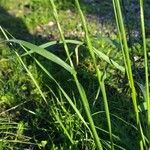
Lolium perenne
Ήρα πολυετής (EL) (GR) · Perennial ryegrass · English ryegrass · Italian Ryegrass · Perennial Rye-grass
Description
Source: leafsnapLolium perenne, commonly known as perennial ryegrass, is a cool-season grass species widely cultivated for its high-quality forage and turf applications. Belonging to the Poaceae family, it is native to Europe, Asia, and North Africa. This plant features a bunch-type growth habit with narrow, dark green leaves. Its shallow root system enables it to adapt exceptionally well to various soil types. Perennial ryegrass thrives in cool temperatures ranging from 15-25°C (59-77°F) and prefers a pH range of 5.5-7.0. While it can tolerate moderate shade, it achieves optimal growth and development when exposed to full sunlight. Due to its high nutritional value and palatability, perennial ryegrass is commonly used as a forage crop for livestock such as cattle, sheep, horses, and goats. Besides its agricultural importance, perennial ryegrass plays a significant role in the turfgrass industry. It establishes quickly from seed, forming dense swards ideal for sports fields, including golf courses and football pitches. Overall, Lolium perenne remains a globally significant grass species due to its versatility across various applications, including agriculture (forage) and landscaping (turf). Its adaptability and utility make it one of the most widely cultivated grasses worldwide.
🌳 Surprisingly, perennial ryegrass is more than just an ordinary lawn grass. Its strong adaptability makes it a preferred option for athletic turf because of its durability and attractive appearance. Beyond sports fields, perennial ryegrass supplies excellent feed for livestock—especially in dairy production—owing to its high digestibility and nutrient-rich composition. It is ranked among the top forage crops worldwide. Additionally, its dense root system aids soil stabilization and erosion control, making it suitable for rehabilitating sites like mines.
🎭 Immorality and a fickle temperament
Care Guide
💧 Water Every 7 days
Perennial ryegrass thrives in temperate climates and prefers consistently moist soil, though it can handle short periods of drought. It is recommended to water it twice a week. This grass is usually grown outdoors, where it benefits from natural rainfall, which helps maintain its lush green appearance during the growing season.
How should I water my Perennial ryegrass?
Perennial ryegrass is most commonly grown as a lawn, and there are specific recommended methods for watering this type of grass. One option is to use a hose with a spray nozzle attachment, while a more effective approach is to set up a sprinkler system. For even better results, consider using a sprinkler system with a timer to ensure the grass receives the appropriate amount of water at the right times. When watering, it is preferable to use cool or room temperature water. Additionally, it's beneficial to water in the morning because this allows the soil to absorb the water while facilitating the evaporation of any excess moisture due to sunlight exposure throughout the day.
What should I do if I give my Perennial ryegrass too much water or not enough water?
If you accidentally give your Perennial ryegrass too much water, there are a few steps you can take to help your lawn recover. One way to fix this problem is by aerating the soil to improve drainage. It may also be helpful to dethatch the Perennial ryegrass. On the other hand, if you don't give your Perennial ryegrass enough water, the solution is different. In this case, you should let the lawn grow a little longer before mowing. You should also increase the amount of water you give to the Perennial ryegrass.
How often should I water my Perennial ryegrass? -> How many times do I need to water my Perennial ryegrass?
The frequency of watering for Perennial ryegrass depends on where you live, the climate, and the season. In cooler northern regions, watering once every 1-2 weeks is sufficient. In warmer southern regions, watering once a week is usually necessary. However, if there is regular rainfall, you can adjust your watering schedule accordingly. It's important to note that rainfall alone is not enough to keep the grass alive. During the summer, Perennial ryegrass goes into a dormant period and may still need some water to avoid drying out, but it doesn't require water for new growth.
How much water does my grass need?
Understanding how much to water your Perennial ryegrass is actually quite simple. Whether you live in a cooler northern region or a warmer southern location, the general rule is to give your Perennial ryegrass about one inch of water each time you water it. However, during the peak of summer when the grass goes into a brief dormancy period, it is best to provide light but appropriate waterings in order to protect it from the intense sunlight. Of course, the total amount of water needed will depend on the size of the area covered by your Perennial ryegrass. For example, watering a large area of Perennial ryegrass would require more water than caring for a small lawn with Perennial ryegrass.
How can I know if I'm giving enough water to my Perennial ryegrass?
If you give your Perennial ryegrass too much or too little water, there are several visual cues that can indicate the issue. When overwatering occurs, the blades of Perennial ryegrass may become softer than usual, and you might also notice a buildup of thatch. On the other hand, if you underwater your lawn, you can expect to see brown patches and signs of heat stress in the Perennial ryegrass, such as fungus accumulations and yellowing of the grass blades. Additionally, underwatered lawns tend to retain footprints for longer periods compared to lawns that have received the correct amount of water.
☀️ Light Full sun
Perennial ryegrass needs considerable sunlight to grow vigorously, although it can survive in partly shaded locations. Having evolved in areas with abundant light, its growth may be limited by inadequate illumination. Conversely, too much sun can cause stress, resulting in lowered hardiness and productivity.
What are the sunlight requirements for Perennial ryegrass?
Perennial ryegrass thrives in full sun, necessitating more than 6 hours of direct sunlight daily to maintain vigorous growth. It can also adapt to partial sun conditions, receiving about 3-6 hours of sunlight. However, its growth might be stunted if the light conditions are not sufficient, as it is originally from habitats abundant in sunlight. Too much exposure, on the other hand, can cause stress, leading to reduced resilience and productivity of the plant.
How does artificial lighting support plant growth indoors?
Indoor plants, including those positioned in less sunny spaces or during winter when natural sunlight is scarce, can benefit significantly from artificial lighting. This is particularly true for Perennial ryegrass, which requires substantial light. LED lights are recommended due to their ability to be tailored to suit the specific light wavelength needs of plants. For optimal growth, full sun plants need about 30-50 Watts per square foot, partial sun plants require 20-30 Watts per square foot, while full shade plants do well with 10-20 Watts per square foot. The artificial light source should be placed 12-36 inches above the plant to simulate natural sunlight conditions, and plants generally need between 8-12 hours of light per day.
What are the signs of inadequate sunlight in Perennial ryegrass?
When Perennial ryegrass doesn't receive enough sunlight, several symptoms can manifest. Small leaves may indicate that new growth is underlit compared to older, mature leaves. The plant might also exhibit leggy or sparse growth, where the distances between leaves or stems become longer, giving the plant a stretched-out appearance. Faster leaf drop can occur as the plant sheds older leaves sooner than normal to conserve energy for new leaf growth. Further, the plant may experience delayed or completely halted growth, develop lighter-colored or yellow leaves due to insufficient chlorophyll and nutrient capture, and suffer from conditions like chlorosis, sunscald, leaf curling, wilting, and leaf scorching due to overexposure to sunlight or inadequate light conditions.
What are the recommended solutions for light-related issues in Perennial ryegrass?
To address light-related issues in Perennial ryegrass, indoor treatment involves gradually moving the plant to a spot where it receives at least 6 hours of direct sunlight daily, placing it near a south-facing window with curtains open during daylight hours for maximized sunlight and nutrient accumulation. If the plant is large or not easily moveable, supplementing with professional plant grow lights for at least 8 hours a day is advisable. For outdoor adjustments, gradually relocating your plants to sunnier spots over several weeks to avoid sunburn is recommended. Additionally, reducing obstructions like pruning tree branches to let more sunlight through and transplanting smaller plants to sunnier locations during their dormant period can significantly improve sunlight exposure. Note that parts of the plant that have been significantly affected by insufficient sunlight may not fully recover, but new growth should be healthy following these adjustments.
🌡️ Temperature 5–32.2°C
Perennial ryegrass is a species native to temperate regions and grows best at 68 to 95 °F (20 to 35 ℃). During cooler seasons, a slight temperature adjustment can help maintain the plant's growth and vitality.
What is perennial ryegrass and in what temperatures does it thrive?
Perennial ryegrass, botanically known as Lolium perenne, is a plant native to temperate environments. It ideally thrives in temperatures ranging from 68 to 95°F (20 to 35°C). Perennial ryegrass is well-suited to temperate conditions and displays significant cold tolerance, making it a versatile plant for various climatic conditions.
How should perennial ryegrass be cared for in cooler seasons and winter to maintain its growth and vitality?
In cooler seasons, it's beneficial to make slight temperature adjustments to sustain the growth and vitality of perennial ryegrass. Although it is highly cold-tolerant and does not require additional frost protection measures during winter, it is recommended to water the plant generously before the first freeze of autumn. This ensures the soil remains moist and enters a frozen state frostedly, helping to prevent drought and water scarcity for the plant during winter and early spring.
What are the important symptoms to watch for in perennial ryegrass during low and high temperatures?
For perennial ryegrass, low temperature tolerance is significant, but the winter temperature should stay above -25°C to avoid damage. If temperatures drop below this threshold, there might not be noticeable changes during winter, but a decrease in sprouting or even no sprouting might occur in spring. For high temperatures, perennial ryegrass is not tolerant above 35°C. Excessive heat can stop its growth and increase susceptibility to rot. Proper care involves removing unsprouted or sunburned parts in spring, providing shade during peak sun, and ensuring the soil remains moist with morning and evening watering.
💨 Humidity normal (40-60%)
This plant will thrive in moderate humidity, which is probably the level in your home. However, misting it a few times a week can be very beneficial. Make sure the room has good ventilation.
🪴 Soil 5-7
🌱 Fertilizer
Perennial ryegrass is a cool-season grass that primarily grows in spring and fall. It becomes dormant in winter and its growth slows during summer. Applying appropriate fertilizers in spring can supply nutrients and encourage vigorous, dense growth. Well-fed lawns are greener, more resilient, and resist pests and weeds.
When is the best time to not fertilize my Perennial ryegrass?
Fertilizer can sometimes harm Perennial ryegrass, especially if the plant is already stressed. It is best to avoid fertilizing when the grass is struggling with diseases or insect problems, as the fertilizer can weaken the plant's defenses and make it more susceptible to further issues. Additionally, do not fertilize the grass during its dormant period in winter or when it is growing slowly in summer. Instead, wait until the grass is actively growing before applying fertilizer. In hot weather, it is advisable to avoid fertilizing during the hottest part of the day to prevent fertilizer burn. Fertilization should also be avoided just after a rainstorm, as allowing the soil to dry for a day or two will minimize runoff and potential contamination of water sources.
Why should I put fertilizer on my Perennial ryegrass?
To achieve vigorous, thick growth, it is crucial to fertilize Perennial ryegrass. A well-fed lawn that is healthy will maintain density, have a vibrant green color, recover effectively from mechanical or insect damage, and be better equipped to handle environmental stressors such as heat, drought, and cold temperatures. Conversely, lawns that are under-fertilized and unhealthy will gradually lose density and become thin over time, allowing unwanted grasses and weeds to take over. Additionally, malnourished lawns are more vulnerable to insect and disease issues.
When should I fertilize my Perennial ryegrass?
Perennial ryegrass is a type of cool-season grass that primarily grows during the spring and fall, when temperatures are mild. During the colder months of winter, it goes dormant and its growth may also slow down in the hottest part of summer. To support its growth cycle, it is recommended to fertilize the grass at the end of each major growth period. This will help replenish nutrients and build up reserves that will sustain the grass during its dormant periods in summer and winter.
What kind of fertilizer should I use for my Perennial ryegrass?
To properly fertilize Perennial ryegrass, it's recommended to use specific lawn or turf fertilizers rather than general garden fertilizers like a 12-12-12 blend. Turf blends are specially formulated to have higher levels of nitrogen, while reducing phosphorus and potassium. This balanced ratio provides the necessary nutrients for the lawn while minimizing any potential harm. Lawn fertilizers also tend to contain nutrients that are slowly released over time, ensuring a consistent and long-term feed for the grass. When it comes to fertilizer nutrients, nitrogen is the most important and has the greatest impact on established lawns as it promotes overall growth and a vibrant green color. On the other hand, Perennial ryegrass also requires phosphorus and potassium for robust stem and root development, resistance against drought and extreme temperatures, as well as natural defenses against pests and diseases.
How should I add fertilizer to my Perennial ryegrass?
Perennial ryegrass requires fertilizer applications at two important times: during its active growth periods in the spring and fall. During the cooler seasons, this type of grass thrives and grows the most, while it slows down during the hot summer months. To adequately support its growth, it is recommended to fertilize the grass in late spring and fall before it goes dormant for winter. In spring, fertilization replenishes the nutrients that the grass extracts from the soil during its growth, and it also provides nourishment if growth slows due to the heat. Fall fertilization helps the grass recover from the stress of summer and prepares it for winter by building up reserves in its roots. It is best to apply fall fertilizer about six weeks before the first expected frost. It's important to carefully follow the instructions on the fertilizer label regarding recommended rates, or you can also apply fertilizers based on soil test recommendations. After fertilizing, make sure to water the product into the soil thoroughly.
🪴 Pot & Repot Every 12 months
✂️ Pruning
Perennial ryegrass is a finely textured grass that is perfect for both lawns and pastures. To maintain its density and control weeds, keep it mowed to a height of 1-2 inches. For uniform growth, prune the grass in early to mid-spring. It regenerates most vigorously during cooler periods, enhancing aeration and allowing sunlight to penetrate more effectively.
🌿 Propagating
🐛 Diseases & pets
☠️ Toxicity
Characteristics
- Plant Type
- Grass
- Life Cycle
- Perennial, Annual
- Genus
- Lolium
- Family
- Poaceae
- Hardiness Zone
- 5-7
- Mature Height
- 30 cm to 91 cm
- Mature Spread
- 10 cm
- Leaf Color
- Green
- Leaf Type
- Evergreen
- Flower Color
- Green
- Flower Size
- 0.51 cm to 0.76 cm
- Bloom Time
- Mid spring, Late spring, Early summer
- Planting Time
- Spring, Summer
- Harvest Time
- Early summer, Mid summer
- Native Area
- Libya, Lesotho, Egypt, Turkey, Sweden, Austria, Slovakia, Pakistan, Slovenia, Morocco, Croatia, Yemen, Belarus, Iraq, Germany, Jordan, Iceland, Romania, Belgium, Moldova, Portugal, Netherlands, Saudi Arabia, France, Tunisia, Czech Republic, Cyprus, Bulgaria, Poland, Armenia, Greece, Serbia, Lebanon, Norway, Afghanistan, Syria, Italy, Spain, Switzerland, Denmark, Finland, Israel, Iran, Albania, Ireland, United Kingdom, Hungary, Algeria, Azerbaijan