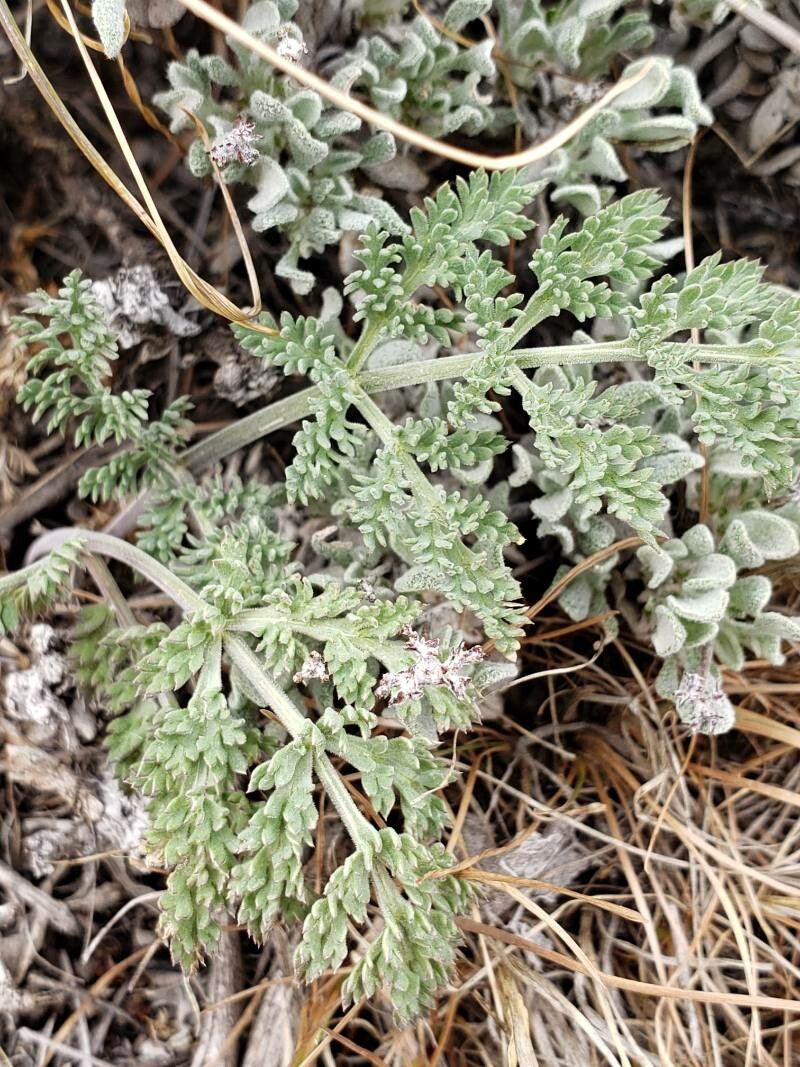
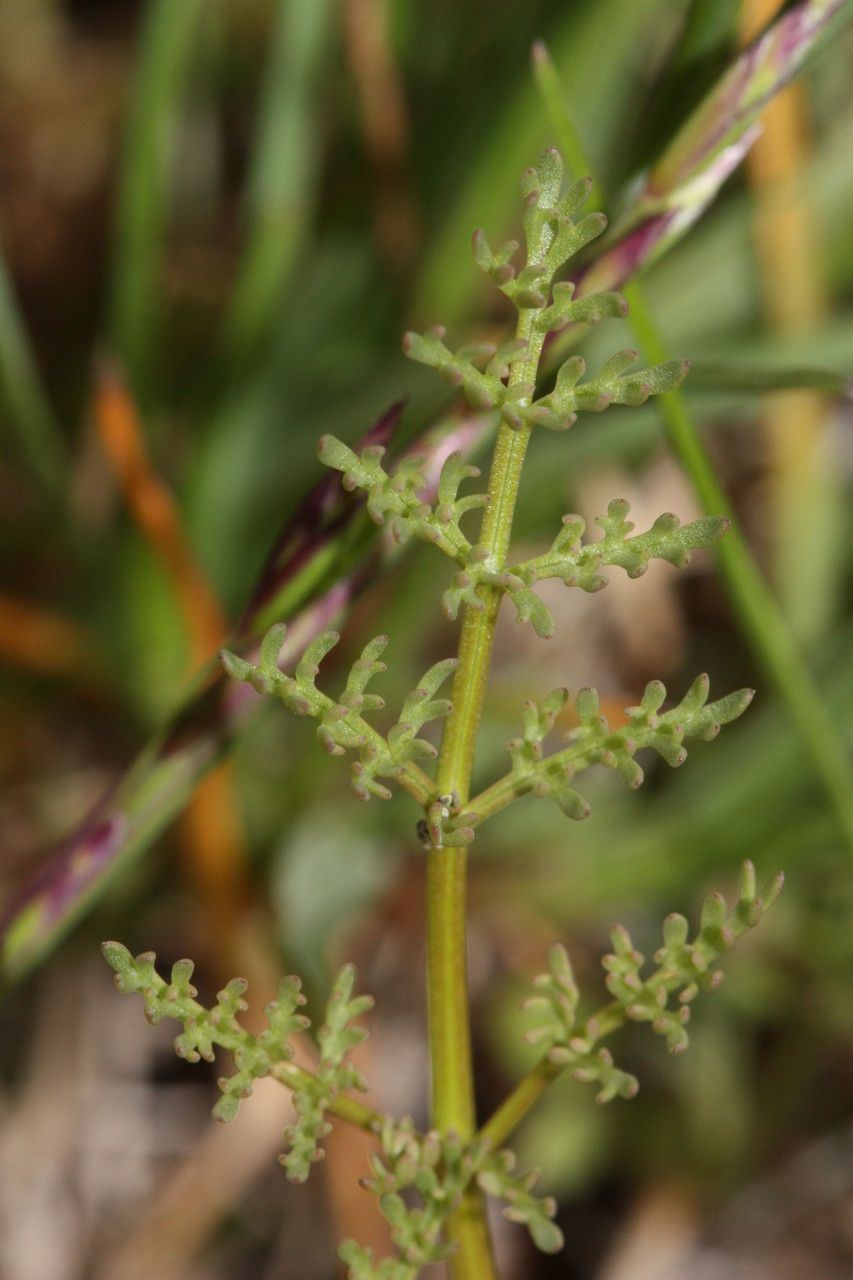
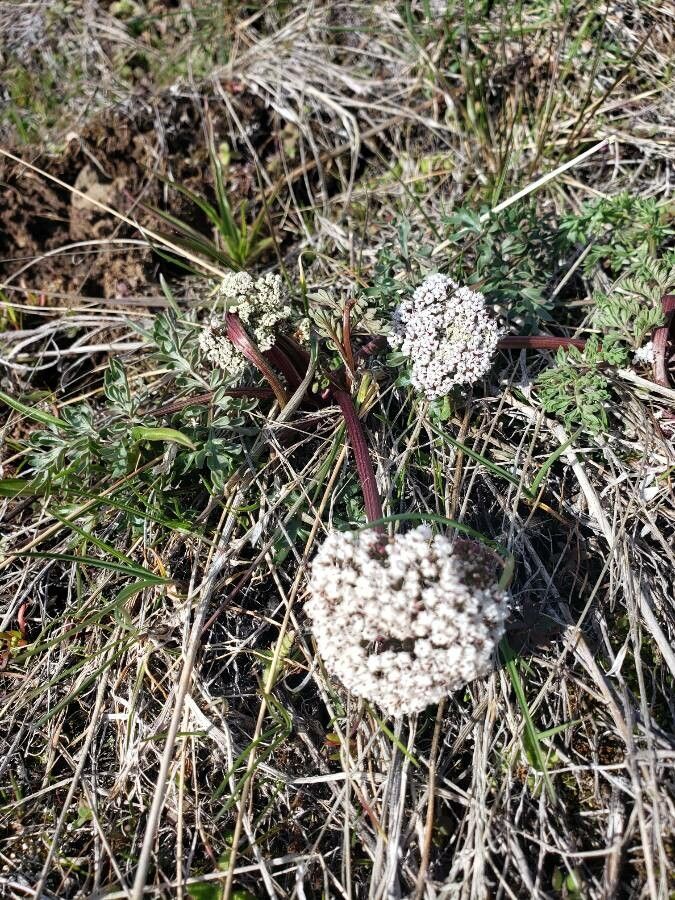
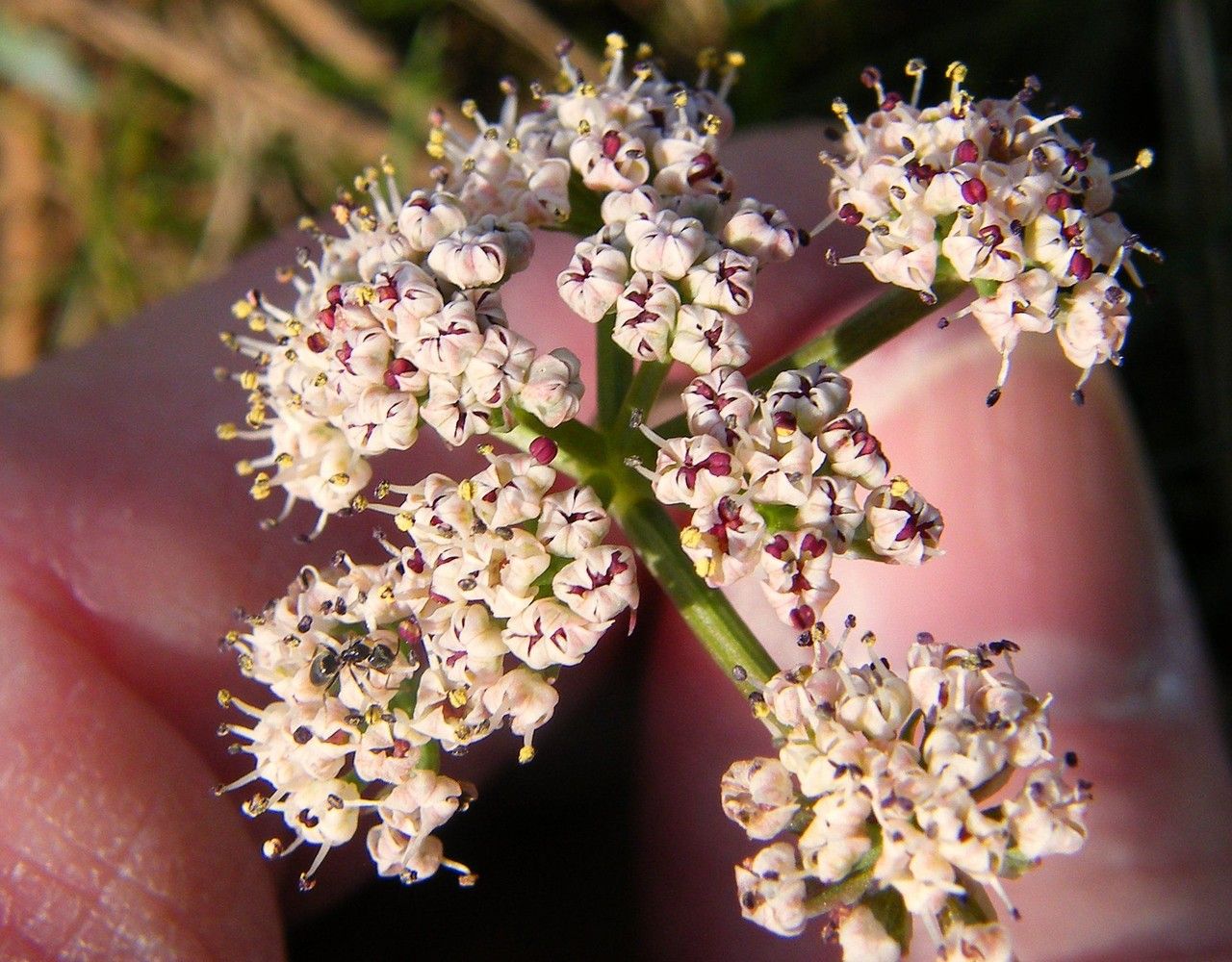
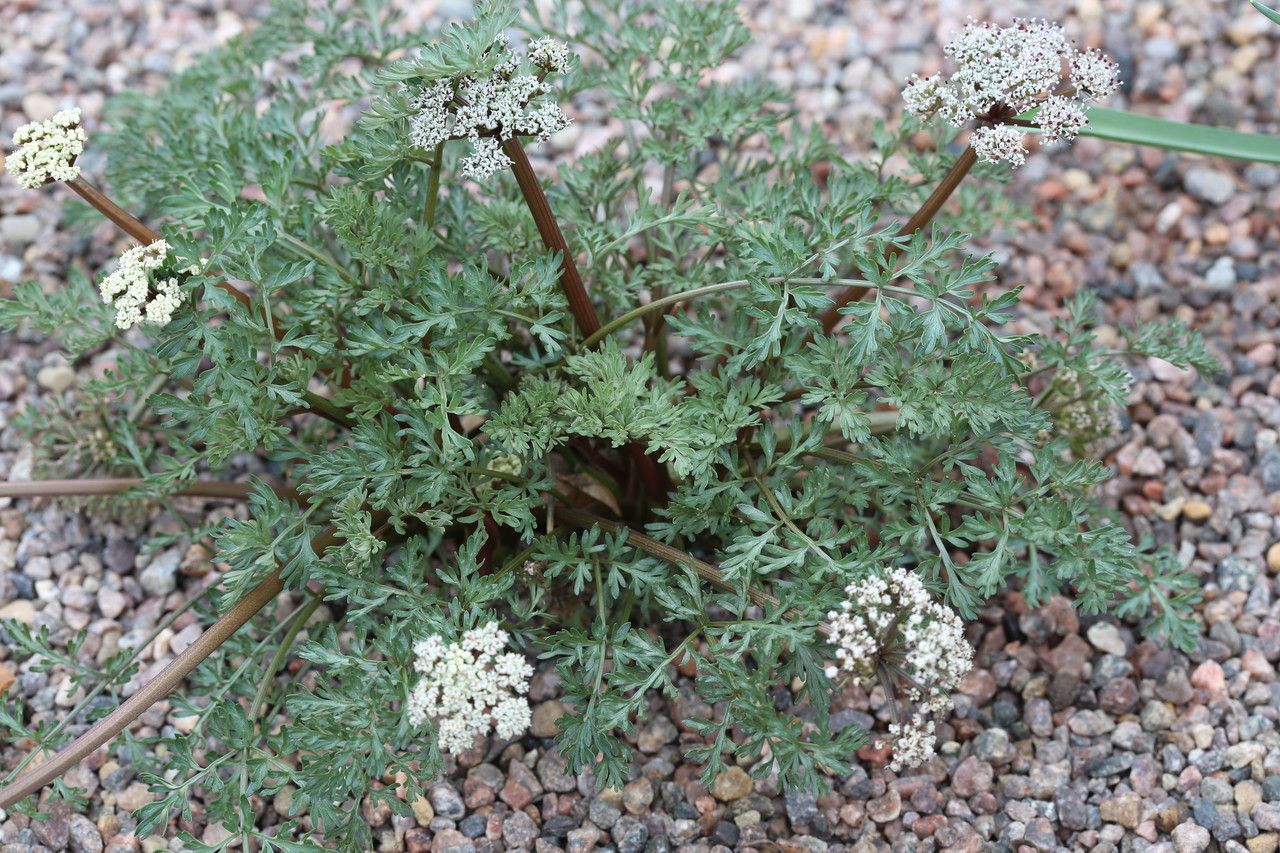
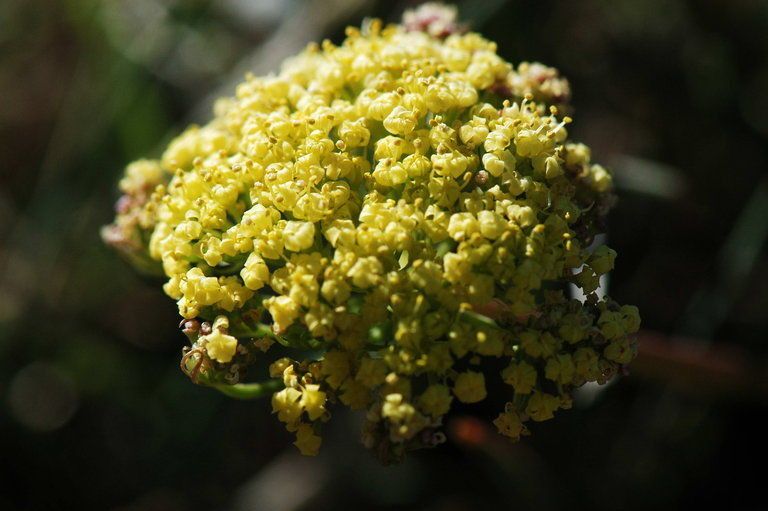
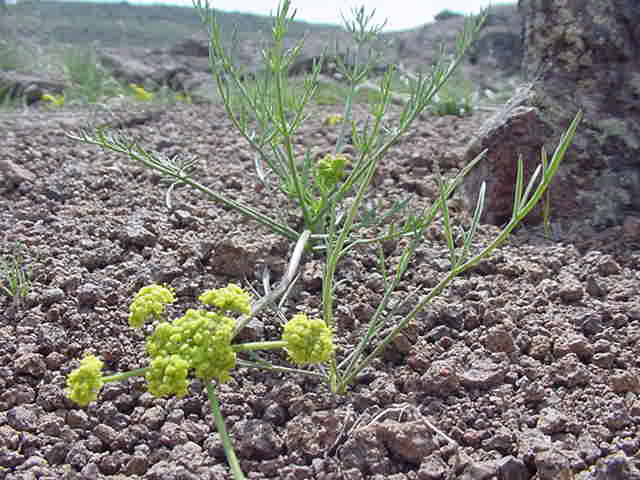
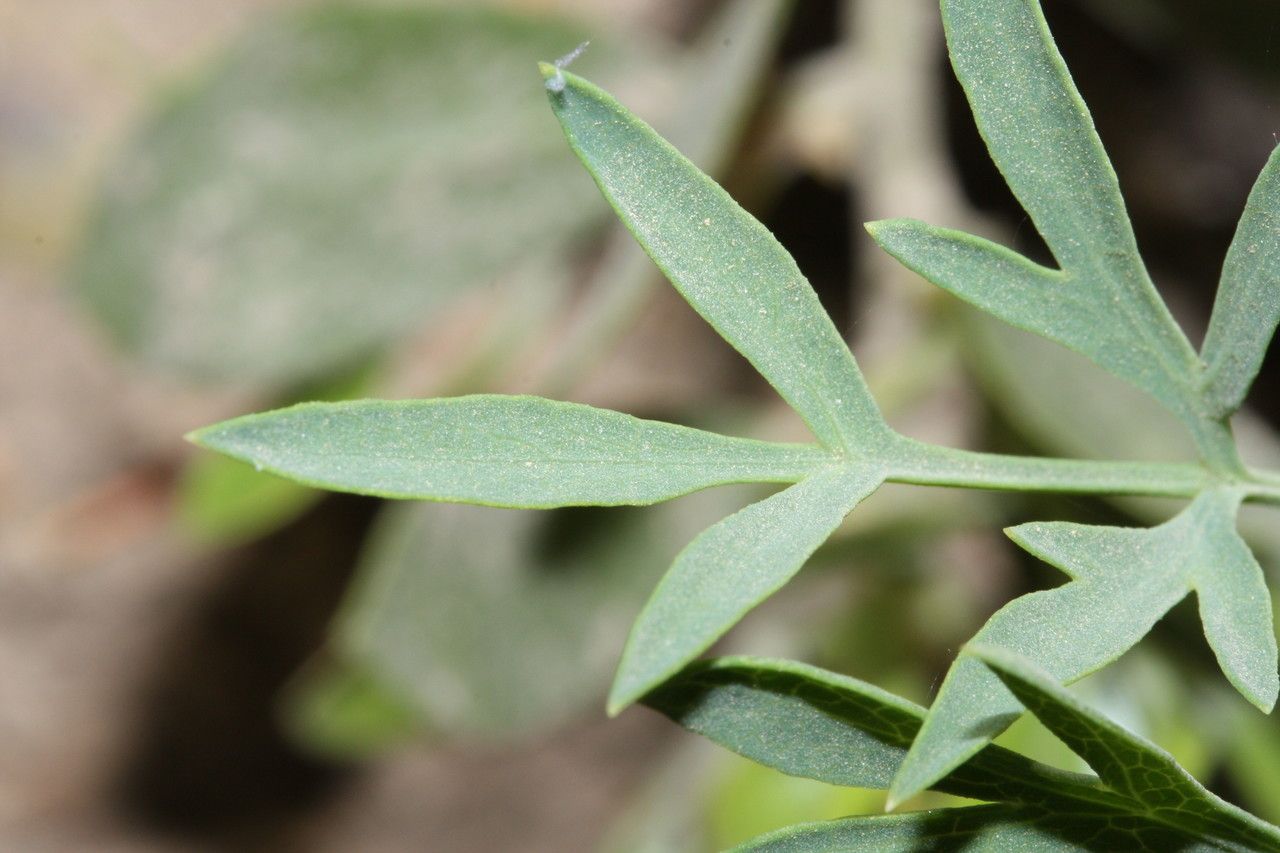
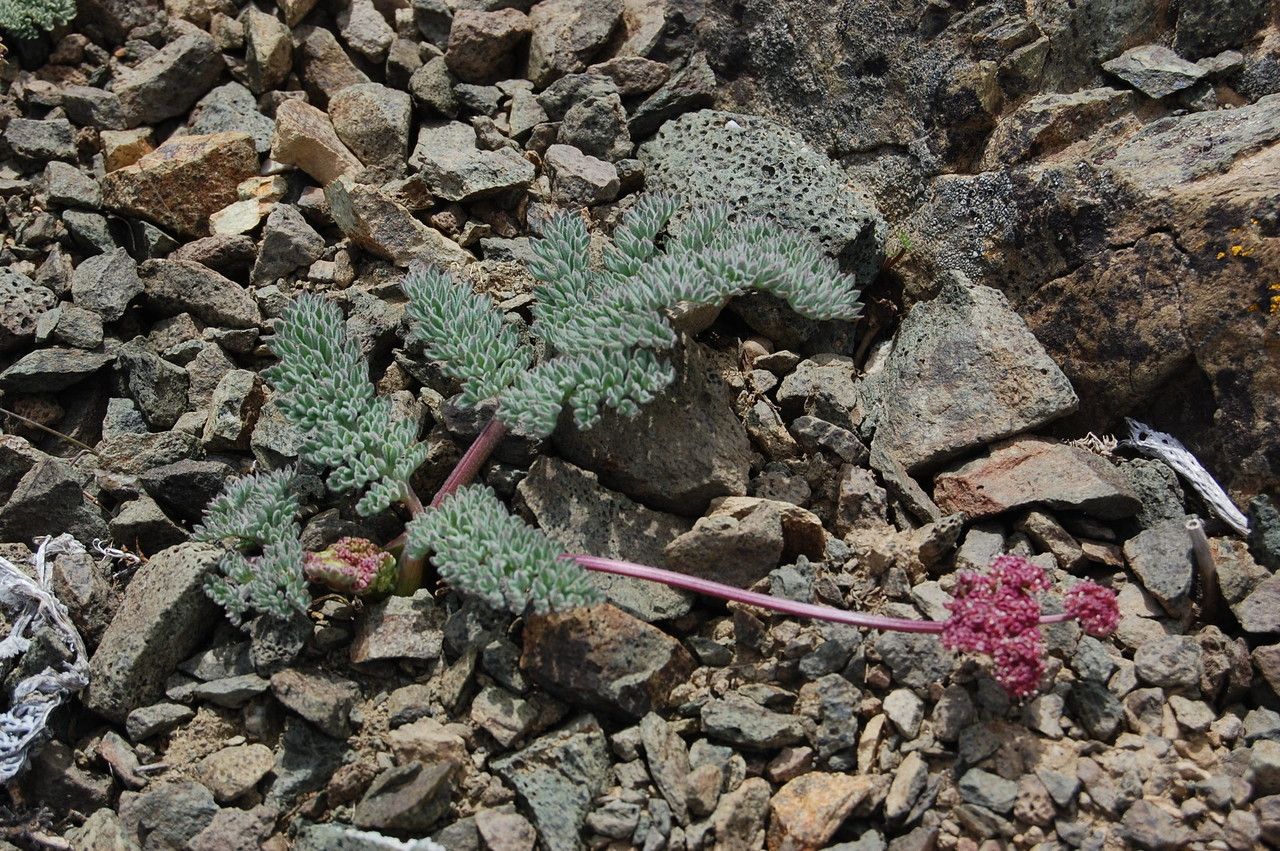
Lomatium canbyi is a species of flowering plant in the carrot family known by the common name Canby's biscuitroot (lúukš in the Sahaptin language and qeqíit in the Nez Perce language). It is native to the Pacific Northwest of the United States and northeast California, where it grows in sagebrush-covered plateau habitat and barren flats. It is a perennial herb growing up to about 25 centimeters tall. It lacks a stem, producing erect leaves and inflorescences from ground level. The leaves are up to 15 centimeters long and divided into many highly divided leaflets. The inflorescence is topped with a dense umbel of whitish flowers. The Klamath and Modoc peoples use the roots of this plant as food.
Canby's biscuitroot is relatively disease-resistant and generally not prone to illness. However, it can be vulnerable to pests and diseases present in its surroundings. Those infections are typically not severe. Regarding care, this plant requires moderate maintenance. It should be pruned regularly to maintain a good appearance and healthy growth. Fertilizing can also help encourage flowering. Canby's biscuitroot is appropriate for anyone with an outdoor area, such as a garden or patio, and does not demand extensive experience in plant care. It may need more attention when cultivated indoors.
How to keep Lomatium Canbyi.
Light
Canby's biscuitroot is a sun-loving perennial herbaceous plant that comes from open habitats and is frequently found growing in meadows and grasslands. It prefers full sun but can also tolerate partial sun.
Water
Canby's biscuitroot thrives in semi-arid climates due to its high drought tolerance, needing only a bit of water once a week. It grows best when cultivated outdoors, as it benefits from natural rainfall. Its growth cycle is in sync with seasonal rainfall, which helps the plant transition smoothly between periods of dormancy and active growth.
Fertilizer
Typically, a single fertilizer application in spring is adequate for Canby's biscuitroot, although multiple feedings can boost growth. Fertilize approximately every one to one and a half months. Fertilization improves the leaves' appearance and function, helping maintain uniform color and a healthy texture. It also encourages root development and nutrient uptake for the plant's long-term health.
Pruning
Canby's biscuitroot features fern-like foliage and clusters of yellow flowers. To maintain a healthy plant, prune it from early to late spring to remove dead growth and shape it, which will also improve air circulation and reduce the risk of disease. Light trimming encourages healthy growth, but be sure to avoid heavy pruning to preserve the plant's ability to flower. For the best results, consult reputable gardening guides for more specific practices.
Botanical profile.
Other names.
Reader questions.
What's the difference between watering my Canby's biscuitroot inside and outside?
For gardeners who live in non-temperate and non-tropical regions, it's advisable to grow the Canby's biscuitroot indoors. It's important to note that soil in containers tends to dry out faster than ground soil. Additionally, if there are drying elements like air conditioning units present, the Canby's biscuitroot will require more frequent watering compared to if it were planted outside. In the latter case, it's likely that minimal watering will be needed, especially if regular rainfall occurs. On the other hand, for those growing this plant indoors, more frequent watering will be necessary since relying on rainwater to nourish the soil is not possible.
What are the sunlight requirements for Canby's biscuitroot?
Canby's biscuitroot demands full sun exposure, needing over 6 hours of sunlight per day to thrive optimally. It's important to observe your garden's sun exposure throughout the day to find spots that offer the right balance of light and shade, ensuring your plants remain healthy and happy. Partial sun conditions are also tolerable for this plant, making it a versatile addition to various garden spots.
What is Canby's biscuitroot?
Canby's biscuitroot is a plant species known scientifically as Lomatium canbyi. However, the provided information does not include details about its essentials or symptoms associated with it or its uses.
What essentials should I know about growing Canby's biscuitroot?
Canby's biscuitroot is a perennial herb that loves the sun. Originating from open habitats like meadows and grasslands, it flourishes under full sun but can also adapt to partial sun. When sunlight is insufficient, especially during winter or in less sunny areas, artificial lighting such as LED lights, which can be customized to the needs of your plants, serve as an ideal solution. Optimal growth under artificial lights requires adjusting the light's intensity, duration, and placement to mimic natural conditions as much as possible.
What are common symptoms of insufficient light in Canby's biscuitroot?
When Canby's biscuitroot does not receive enough light, several symptoms may appear, including smaller new leaves, leggy or sparse growth, faster leaf drop, and halted growth. Insufficient light may also lead to lighter-colored or yellowing leaves (chlorosis), sunscald, leaf curling, wilting, and leaf scorching. These symptoms indicate the plant is struggling with its environment and requires immediate attention to address its lighting conditions.
What solutions can help Canby's biscuitroot with insufficient sunlight?
To address insufficient sunlight for Canby's biscuitroot, gradually move the plants to sunnier locations, aiming for at least 6 hours of direct sunlight daily. If moving the plant is not feasible, consider using artificial lighting to supplement light needs. Outdoors, ensure gradual exposure to prevent sunburn. Additionally, for ground-planted specimens, reducing sunlight obstructions and considering transplantation to sunnier spots during the plant's dormant period can significantly benefit the plant's health and growth.