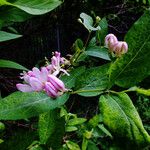
Lonicera bella
Showy fly honeysuckle · Bell'S Honeysuckle · Bella Honeysuckle · Whitebell Honeysuckle · White-Bell Honeysuckle
Description
Source: leafsnapLonicera × bella, known as Bell's honeysuckle and showy fly honeysuckle, is a hybrid species of flowering plant in the family Caprifoliaceae. It was first described by Hermann Zabel in 1889. Zabel reported that he grew it in cultivation from seeds obtained from a plant of Lonicera morrowii, but that its appearance suggested the influence of L. tatarica. It has escaped from cultivation and become an aggressive invasive species in central and eastern parts of the United States.
Care Guide
💧 Water
The showy fly honeysuckle thrives in moderately moist soil and needs watering every 1-2 weeks. It's important to let the soil dry out slightly between waterings. While this plant is drought-tolerant, it benefits from consistent moisture, particularly during its growing season when there's sufficient rainfall.
☀️ Light Full sun
🌡️ Temperature 0–32.2°C
The flashy fly honeysuckle showcases impressive flexibility in adapting to diverse weather conditions, be it burning hot summers or freezing cold winters. Nevertheless, there is a suitable temperature range in which the plant's growth thrives best. When temperatures soar to intense highs, the plant is susceptible to damage from heat and humidity, potentially leading to its death. In geographical areas where temperatures near the plant’s lowest cold endurance level, it's crucial to utilize insulation techniques to safeguard the plant.
💨 Humidity
🪴 Soil 6-7
🌱 Fertilizer
The scheduling of fertilizing Showy fly honeysuckle is critical. Begin fertilization in the early spring and continue on a monthly basis until the early summer. Fertilizer aids in the creation of beautiful flowers and supplies energy during both dormant and active growth periods.
🪴 Pot & Repot
✂️ Pruning
Prune the showy fly honeysuckle in the fall after the leaves have dropped to encourage new growth. After the plant blooms, applying fertilizer can help promote additional flowers. Lightly prune the stronger branches, but prune the weaker ones more aggressively. Remove any dry branches to encourage younger growth. Pruning the middle of the plant improves air circulation and sunlight exposure, which leads to even blooming and makes harvesting easier.
🌿 Propagating
🐛 Diseases & pets
☠️ Toxicity
Characteristics
- Plant Type
- Shrub
- Life Cycle
- Perennial
- Genus
- Lonicera
- Family
- Caprifoliaceae
- Hardiness Zone
- 3-7
- Mature Height
- 0.91 m to 3.66 m
- Mature Spread
- 4.88 m
- Leaf Type
- Semi-evergreen
- Flower Color
- White, Red, Purple, Pink