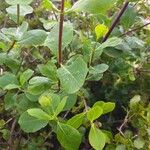
Lonicera etrusca
Etruscan Honeysuckle · Coral honeysuckle
Description
Source: leafsnapLonicera etrusca, commonly known as the Etruscan honeysuckle, is a deciduous climbing plant in the Caprifoliaceae family. Native to Italy, it thrives in various habitats, including woodlands, scrublands, and rocky areas. This vigorous plant can grow up to 6 meters in height. The leaves of Lonicera etrusca are oval-shaped with pointed tips, arranged opposite each other on the stem. They feature a dark green color on top and lighter undersides. The plant produces tubular flowers with five petals, ranging in color from pinkish-white to yellowish-white. Blooming from May through July, Lonicera etrusca attracts pollinators such as bees and butterflies with its sweet fragrance. The plant's fruit consists of red or black berries containing several small seeds. In traditional medicine, Lonicera etrusca has been valued for its anti-inflammatory properties, used to treat conditions such as respiratory infections, fever, and sore throat. However, some parts of the plant may be toxic if ingested. Overall, Lonicera etrusca is an attractive climbing vine known for its fragrant flowers, making it an excellent addition to any garden or landscape design.
🌳 A lesser-known characteristic of etruscan honeysuckle is its ability to serve as a bioindicator, especially for certain soil metals. The plant's growth patterns and condition can subtly indicate concentrations of metals like copper and zinc, a trait that can be used for bio-monitoring and phytoremediation in its native habitats across the Mediterranean regions and Western Europe.
Care Guide
💧 Water Every 7 days
Etruscan honeysuckle, native to the Mediterranean, is well-suited for dry conditions due to its high drought tolerance. This plant requires minimal watering, about once every three weeks, and thrives in well-draining soil to avoid root rot. Adapted to sporadic rainfall, Etruscan honeysuckle can withstand low moisture levels throughout its growth cycle.
Should I change how often I water my Etruscan honeysuckle depending on the time of year or the weather?
The Etruscan honeysuckle does best when it receives rainwater outdoors, but it may need additional watering during persistently dry weather. During the spring and fall, the soil should be kept moist but not waterlogged, with alternating dry and moist conditions being beneficial. In the summer, hot weather can cause water to evaporate quickly, so extra watering may be needed if there is a lack of rainfall. Generally, less water is needed during the winter when the honeysuckle is dormant. Well-draining soil mixtures, like terracotta, can help the water evaporate more quickly during this time. Once the honeysuckle begins to leaf out and go dormant in the spring, watering can be skipped as it can rely on fall and winter rains to survive. Good drainage is important throughout the year, especially during winter, to prevent ponding. If the honeysuckle is in a pot, regular watering is necessary, especially in the summer. Deep soaks once or twice a week, depending on the weather, are recommended. Shallow sprinkles are discouraged as they encourage fungal growth and do not reach the roots properly. Even during dormancy, the honeysuckle should not be allowed to completely dry out in the fall or winter. Avoid overwatering as well, as the plants do not like sitting in water for too long and may die if the soil does not drain well. Applying mulch can help reduce stress, conserve water, and promote healthy blooms.
How should I water my Etruscan honeysuckle plant in the best way?
To ensure excellent root development, it is recommended to place a garden hose at the base of the plant. Avoid spraying the leaves directly, especially if the plant is outdoors and exposed to direct sunlight. Instead, consider using bubblers or soaker hoses to moisten the roots. When adding or removing plants, use soaker hoses that cover the entire garden or bed to ensure deep root penetration. After watering, drain any excess water and allow the soil to dry before watering again. To prevent diseases, water at ground level rather than spraying the leaves. On sunny days, it may be beneficial to spray the entire bush with water. Whether the plant is in a pot or in the ground, it is important to remember that Etruscan honeysuckle prefers deep watering rather than light sprinkling.
What do I do if I give Etruscan honeysuckle too much or too little water?
If an Etruscan honeysuckle is overwatered, it may develop yellow, wilting leaves that eventually drop off. The plant may also appear dull and unhealthy with mushy stems. When these signs begin to show, it's best to adjust your watering schedule as needed. However, wilting can also be a sign of under watering. Under these circumstances, the leaves may become crispy and dry. It's important to check the soil for dryness and provide a thorough watering when necessary. Sufficient water will help the Etruscan honeysuckle recover, but the plant may still have dry, yellow leaves for a few days due to damage to the root system. Once the plant returns to normal, the yellowing of the leaves will cease. Indoors, always monitor the moisture levels of the pot when growing Etruscan honeysuckle. Avoid overwatering and be alert for signs of black spots. If present, allow the soil to dry by refraining from watering for a few days. Overwatering can lead to root rot, so it may be necessary to transfer the plant to a different pot if discolored and slimy roots are observed. Preventing root rot and avoiding excessively soggy soil is crucial. When planting Etruscan honeysuckle outdoors, dig slightly deeper and check the soil moisture with your fingers. If the soil is too dry, it likely indicates underwatering, and adequate watering is necessary for the plant's recovery.
How often do I need to water my Etruscan honeysuckle?
The Etruscan honeysuckle prefers deep and infrequent watering. When planted in pots, it's important to soak them with a gallon of water each time because the water storage in pots is limited and the soil dries out quickly. In cold regions, watering is required every 3 to 5 days. Watering should be done early in the morning when the soil is dry, whether you're watering indoors or outdoors. You can check the soil inside the pot to see if watering is needed - if the top 2-3 inches of soil is dry, it's time for a full watering. On hot days, check the moisture daily as the heat can quickly dry out the soil. If you have a garden, you also need to irrigate the soil. In hot climates, you may need to water once a week. Look for signs that the top 2-3 inches of soil are too dry before watering. Be mindful of rainfall - if there's a lot of rain, additional watering may not be necessary to avoid root rot. Etruscan honeysuckle typically grows in spring and fall, so when planting outdoors, add a 3 to 4-inch deep layer of mulch to conserve water. Sandy soil drains faster, so water plants more frequently in this type of soil. Conversely, clay soil requires less frequent watering - you can wait 2-3 days for the plant to dry out before watering again to avoid root rot. To keep track of watering frequency, mark the date on a calendar and be mindful of drooping leaves, as it could indicate the need for watering.
How much water does my Etruscan honeysuckle need?
The Etruscan honeysuckle typically needs about a gallon of water on a regular basis. For potted plants, it is recommended to water them deeply until water starts dripping from the bottom of the pot. Then, wait for the soil to dry out before watering again. You can use a water calculator or a moisture meter to determine how much water your plant gets in a week. During the flowering period, make sure to provide plenty of water but allow the moisture to evaporate to prevent root rot. If the Etruscan honeysuckle is planted outside and receives adequate rainfall, it may not need additional watering. However, when the honeysuckle is young or newly planted, ensure it receives 1-2 inches of rain per week. As the honeysuckle grows, it can survive solely based on rainfall. Only in extremely hot weather or when there is no rainfall for 2-3 weeks, consider watering the honeysuckle fully during cooler parts of the day to avoid heat damage. Additional watering will be necessary during extended dry periods.
☀️ Light Full sun
Etruscan honeysuckle does best with abundant sunlight, though it tolerates partially shaded conditions. Native to areas with high light levels, this plant's growth and vigor may be reduced if it gets too little light. By contrast, excessive light does not harm it.
What are the sunlight requirements for Etruscan honeysuckle?
Etruscan honeysuckle requires full sun, meaning it thrives best with above 6 hours of sunlight daily, but it can also manage in partial sun, about 3-6 hours of sunlight. It's essential to monitor how sunlight moves through your garden and find spots that offer a balance of light and shade, ensuring the plant's health and happiness. Originating from environments with abundant light, its growth might be compromised in too little light, though it generally handles an overabundance of light well.
How does artificial lighting affect the growth of indoor Etruscan honeysuckle plants?
For indoor Etruscan honeysuckle plants, where natural sunlight is insufficient, artificial lighting serves as a vital solution. LED lights are favorable for providing the specific wavelengths needed for optimal plant growth. Full-sun plants require 30-50W/sq ft of artificial light, partial-sun plants need 20-30W/sq ft, and full-shade plants require 10-20W/sq ft. Setting up the light source 12-36 inches above the plant can mimic natural sunlight conditions. Ensuring the plant gets 8-12 hours of light per day can promote faster, healthier growth.
What are the important symptoms indicating that Etruscan honeysuckle is not getting enough light?
When Etruscan honeysuckle does not get enough light, it may show various symptoms such as smaller new leaves, leggy or sparse growth, faster leaf drop, slower or stopped growth, and lighter-colored new leaves. These signs indicate a deficiency in light exposure, essential for the plant's photosynthesis and general well-being. Additionally, overexposure to sunlight can lead to chlorosis, sunscald, leaf curling, wilting, and leaf scorching, reflecting the necessity of balancing sunlight exposure.
How can I address light deficiency or overexposure symptoms in Etruscan honeysuckle?
To tackle symptoms of light deficiency or overexposure in Etruscan honeysuckle, begin by gradually increasing sunlight exposure for indoor plants by moving them to sunnier spots or using artificial lights for at least 8 hours daily. For outdoor plants, acclimate them to sunnier locations to avoid sunburn gradually. Pruning or removing obstacles that block sunlight can also help. If plants are small enough, consider transplanting during their dormant period to areas with better light and drainage. While parts of the plant that suffered might not recover, new growth should be healthy with improved light conditions.
🌡️ Temperature 5–25°C
Etruscan honeysuckle is native to regions with mild climates. It does best when temperatures range from 41 to 77 °F (5 to 25 °C). In hotter or colder periods, it is advisable to adjust its surroundings to replicate these conditions for optimal growth.
What is the native climate for Etruscan honeysuckle?
Etruscan honeysuckle, botanically known as Lonicera etrusca, is native to environments that have moderate climates. It thrives best in temperatures ranging from 41 to 77 °F (5 to 25 °C). For optimal growth, it's important to adjust its surroundings to mimic these conditions during hotter or cooler seasons.
How does Etruscan honeysuckle handle cold weather?
Etruscan honeysuckle is highly cold-tolerant and doesn't require additional frost protection measures. However, to prepare for winter, it's recommended to water the plant generously before the first freeze of autumn. This ensures the soil stays moist as it enters a frozen state, helping to prevent drought and water scarcity for the plant during the winter and early spring.
What should you do if Etruscan honeysuckle is exposed to temperatures below -30°C?
If the Etruscan honeysuckle experiences temperatures below -30°C, it's still extremely cold-tolerant, but you may not notice changes during winter. However, in spring, the branches might become brittle and dry, and no new shoots will emerge. To address this, prune away any dead branches that have failed to produce new leaves in spring.
How should you care for Etruscan honeysuckle in high temperatures?
Etruscan honeysuckle is not tolerant to high temperatures. When the temperature exceeds 25°C, the plant may suffer significant leaf drop, and in severe cases, it may wither and die. To care for it in such conditions, trim away the sunburned and dried-up parts. Move the plant to a location that provides shade during the midday and afternoon sun, or use a shade cloth to protect it. It's also important to water the plant in the morning and evening to keep the soil moist.
💨 Humidity
🪴 Soil 6-7
🌱 Fertilizer
Timing matters for fertilizing Etruscan honeysuckle. Apply fertilizer in early spring and continue once a month through early summer. Fertilizer encourages attractive blooms and supplies energy during both dormant and active growth periods.
Why is it necessary to add fertilizer to my Etruscan honeysuckle plant?
To help your Etruscan honeysuckle flourish and produce beautiful blooms, it is important to fertilize it. The best time to fertilize is in early spring, as this will ensure excellent flowers during the season. Fertilizer provides the plant with energy that it can store in the ground during periods of dormancy. By giving your Etruscan honeysuckle extra nutrients during fall planting or late spring, it will have more energy to use when it begins to grow again.
When should I fertilize my Etruscan honeysuckle for the best results?
To ensure effective fertilization of Etruscan honeysuckle and prevent waste and pollution, it is crucial to time the application correctly. Applying fertilizer too early while the plant is still dormant will not be effective and will be washed away by rainwater. The best time to start fertilizing is in early spring, and it should be repeated on a monthly basis until early summer.
When is the best time to not fertilize my Etruscan honeysuckle?
To ensure optimal growth and blooming of Etruscan honeysuckle, it is important to be mindful of the type and timing of fertilizer application. Avoid using a fertilizer high in nitrogen, as this can result in excessive leaf growth but minimal flower production. Instead, opt for a fertilizer with a lower nitrogen content in comparison to other nutrients. It is also crucial to refrain from fertilizing the plant after early autumn, as this can foster excessive growth just before winter, which may harm the plant. Additionally, avoid fertilizing during hot and dry periods, as dry soil is less effective at delivering nutrients to the plant. Fertilizing during this time can also stimulate growth, necessitating more water that may not be readily available. It is best to apply fertilizer earlier in the season when temperatures are cooler. Lastly, bear in mind that Etruscan honeysuckle can absorb fertilizer applied to neighboring plants or lawns, so take care not to accidentally provide the honeysuckle with a double-dose of fertilizer.
What kind of plant food does my Etruscan honeysuckle require?
The ideal fertilizer for an Etruscan honeysuckle is one that has a balanced mix of the three main plant nutrients, with slightly higher amounts of phosphorus. Some gardeners choose to improve their Etruscan honeysuckle's soil by adding organic materials like compost, worm castings, and manure. Experienced gardeners may supplement with water-soluble fertilizers containing phosphorus when flower buds start to appear. This promotes better flower development and larger, longer-lasting blooms. Fertilizers for Etruscan honeysuckle can come in various forms, but liquid or powdered forms are often recommended. Regardless of the form used, it is important to dilute the fertilizer and apply it while watering the plant.
How can I give nutrients to my Etruscan honeysuckle?
To properly fertilize your Etruscan honeysuckle, it's important to follow the instructions specific to the type of fertilizer you're using and conduct some research. Over-fertilizing can harm your plant, so it's crucial to determine the right amount to use. A general guideline is to consider the tree's age or trunk diameter. Estimate using about one-tenth of a pound of fertilizer per year or per inch of trunk, with a maximum of one pound. When applying granular or organic fertilizers like blood meal, sprinkle the substance around the tree's base, covering the area below the outermost branches (known as the drip line). Avoid letting fertilizers come into direct contact with the trunk. Over time, the granules will break down and seep into the soil, being absorbed by the roots. After fertilizing, spread a layer of compost around the base, measuring about one inch in depth, and water the tree thoroughly.
🪴 Pot & Repot
✂️ Pruning
To care for your Etruscan honeysuckle, it's important to prune it in early spring. Start by cutting back one-third of the growth from the previous year. This will help enhance flowering and improve the plant's overall health. Additionally, remove any dead wood and thin out crowded branches to improve air circulation. This will promote a vigorous growth and a well-structured plant, which will lead to optimal bloom displays in the warmer months.
🌿 Propagating
🐛 Diseases & pets
☠️ Toxicity
Characteristics
- Plant Type
- Vine
- Life Cycle
- Perennial
- Genus
- Lonicera
- Family
- Caprifoliaceae
- Hardiness Zone
- 4-6
- Mature Height
- 3.05 m to 4.57 m
- Mature Spread
- 1.22 m to 2.44 m
- Leaf Color
- Green, Silver, Blue, Gray
- Leaf Type
- Deciduous
- Flower Color
- Yellow, White
- Flower Size
- 3.05 cm to 5.08 cm
- Bloom Time
- Late spring, Early summer, Mid summer
- Planting Time
- Spring, Autumn
- Harvest Time
- Mid summer
- Native Area
- Libya, Turkey, Montenegro, Croatia, Morocco, Slovenia, Russia, France, Portugal, Saudi Arabia, Tunisia, Cyprus, Bulgaria, Greece, Serbia, Lebanon, Syria, Italy, Spain, Albania, Algeria