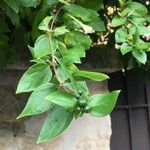
Lonicera japonica
پیچ امین الدوله · یاس امین الدوله · گل یاس · Honeysuckle · Japanese honeysuckle
Description
Source: leafsnapLonicera japonica, commonly known as Japanese honeysuckle, is a fast-growing vine native to eastern Asia. Its attractive foliage and fragrant flowers have made it a popular ornamental plant worldwide. The leaves are dark green and oval-shaped, while the flowers, which bloom in late spring or early summer, are white or yellow. The plant also produces small black berries that are toxic to humans but provide food for birds and other wildlife. Japanese honeysuckle can grow up to 30 feet long if left unchecked, making it an excellent choice for covering walls or trellises. However, it can become invasive if not properly managed, as it spreads rapidly through underground runners and seeds dispersed by birds. Despite its invasive tendencies, Lonicera japonica remains a favored choice among gardeners due to its beauty and adaptability. It thrives in various soil types and can grow in both full sun and partial shade conditions.
💡 Honeysuckles typically bloom from spring to summer, and their fragrance is delightful. Additionally, these flowers possess a unique characteristic: each flower contains two stamens that remain inseparable, much like a couple. Because of this, the honeysuckle represents true love.
🌳 Many people consider japanese honeysuckle an ornamental garden plant or a medicinal herb, but its capacity to produce sweet nectar is often overlooked. By gently drawing from the base of the blossom, one can sample its pleasant sweetness. This characteristic has led japanese honeysuckle to lend its flavor to various spirits. In addition, the attractive aroma of its oils has been incorporated into scented soaps and lotions, indicating broader uses in making pleasingly fragrant products.
🎭 Devotion to love
Care Guide
💧 Water Every 7 days
Japanese honeysuckle does best in humid subtropical areas where it can receive consistent moisture and grow in well-hydrated soil. For optimal growth, water it weekly. Although the plant can become moderately drought-tolerant once it is established, applying mulch is beneficial. Mulching helps retain soil moisture and reduces the need for frequent watering, which supports the plant's vigorous climbing habit.
When Should I Water My Japanese Honeysuckle?
Proper and timely watering is essential for the health and development of Japanese honeysuckle, influencing its growth, flower production, and disease resistance. To determine when to water, check the soil's moisture content by inserting your finger 1 to 2 inches deep into the soil; if the soil feels dry, the plant needs water. Wilting leaves, changes in leaf color to dull or yellow, poor growth, and premature flower dropping are indications the plant requires water. Watering needs also vary with temperature and humidity, increasing in hot, dry weather. Avoid watering too early to prevent root diseases and too late to avoid stressing the plant.
How Should I Water My Japanese Honeysuckle?
Japanese honeysuckle benefits from being watered deeply and infrequently to encourage deep root growth and ensure plant health. When watering, focus on getting water to the root zone, ideally the top 6 to 12 inches of soil, without wetting the foliage to prevent fungal diseases. Using a watering can with a long, narrow spout allows for more precise watering at the plant’s base, meeting its specific needs without excess moisture on the leaves.
How Much Water Does Japanese Honeysuckle Really Need?
The optimal water quantity for Japanese honeysuckle depends on factors like pot size, plant size, and root depth. Generally, the plant requires 1-2 inches of water per week, with adjustments necessary based on environmental conditions. Signs of adequate hydration include vibrant green leaves, firm stems, and abundant flowers, while overwatering or underwatering will manifest as yellow or wilting leaves and poor plant health. To promote health, ensure well-draining soil and adjust watering based on soil moisture and seasonal changes.
What Kind of Water is Best for Japanese Honeysuckle?
Japanese honeysuckle thrives with rainwater or filtered tap water, both of which naturally contain a beneficial balance of minerals. Chlorinated tap water can be used if allowed to sit until the chlorine evaporates to minimize root damage. Highly fluoridated water should be avoided over time, and a moderate hardness level is preferred to maintain balanced mineral content. Water temperature should be ambient to prevent root shock, emphasizing the importance of water quality in supporting the plant's health.
How Do Japanese Honeysuckle's Watering Needs Change with the Seasons?
Seasonal changes significantly affect the watering needs of Japanese honeysuckle. In spring, increased watering supports new growth, with caution against overwatering. Summer demands more frequent water due to evaporation, while autumn requires reduced watering as the plant prepares for dormancy. In winter, less water is needed, focusing on preventing the soil from completely drying out. The seasonal approach to watering ensures the plant receives the right amount of moisture throughout the year for optimal health.
☀️ Light Partial sun
Japanese honeysuckle prefers locations with moderate sunlight. It can cope with direct sunlight but it is not a necessity. Its roots lie in habitats with diverse lighting conditions, hence it grows well without the need for high-intensity sunlight. Nevertheless, its growth may be marginally affected with too little or too much light.
What are the sunlight requirements for Japanese honeysuckle?
Japanese honeysuckle thrives in environments where it can receive moderate sunlight. It can withstand full sun exposures that last over 6 hours but doesn't necessarily need such intense light to grow healthily. The plant is adaptable to varying light conditions, originating from regions that offer a mix of light and shade. Essentially, ensuring the plant receives about 3-6 hours of sunlight would be ideal for its growth. It's important to observe the sunlight movement through your garden to pick spots that provide an optimal balance of light and shade, catering to the plant's needs and promoting its wellbeing.
How can artificial lighting benefit indoor Japanese honeysuckle plants?
Indoor Japanese honeysuckle plants benefit significantly from adequate artificial lighting, especially when natural sunlight is limited during winter or in less sunny spaces. Artificial lights, such as LED, are advantageous as they can be customized to supply specific wavelengths needed for the plant's growth. For full sun plants, 30-50W/sq ft is recommended; partial sun plants need 20-30W/sq ft, while full shade plants require 10-20W/sq ft of artificial light. The correct placement of the light source should be 12-36 inches above the plant to mimic natural sunlight conditions, and the lighting duration should replicate natural daylight hours, generally 8-12 hours per day, to promote faster and healthier growth.
What are the symptoms of light deficiency in Japanese honeysuckle?
When Japanese honeysuckle is grown indoors with insufficient light, it may exhibit several symptoms of light deficiency. These include the development of smaller new leaves compared to the mature ones, leggy or sparse growth due to longer spaces between leaves or stems, early dropping of older leaves as a resource conservation measure, slowing or cessation of new growth indicating the plant's entry into survival mode due to poor lighting, pale or irregularly colored new leaves suggesting a lack of chlorophyll and nutrients, and symptoms like chlorosis, sunscald, leaf curling, wilting, and leaf scorching which respectively indicate issues due to excessive light or improper exposure.
How can you address light-related issues for Japanese honeysuckle?
Addressing light-related issues for Japanese honeysuckle involves a few strategic steps. Indoors, gradually shifting the plant to sunnier spots each week until it receives 3-6 hours of direct sunlight daily can help it adapt to brighter conditions. If the plant is large or not easily movable, consider using artificial light by keeping a lamp on for at least 8 hours a day or investing in grow lights. Outdoors, move your plants to sunnier locations gradually to avoid sunburn. For plants in the ground, identify and minimize obstructions like trees by pruning, or transplant smaller plants during their dormant period to locations with better sunlight and drainage. It’s crucial to note that parts of the plant already affected by insufficient light may not recover, but new growth should be healthy following these adjustments.
🌡️ Temperature 5–35°C
The Japanese honeysuckle thrives best in a moderate climate, ideally between 41 ℉ (5 ℃) and 95 ℉ (35 ℃). To maximize growth and bloom, it is suggested to maintain the temperature within these limits. During the colder months, while the plant can withstand cooler conditions, it may fare better with some protection against severe cold. Conversely, during hotter months, shielding it from harsh heat can be beneficial for the plant's health.
What is the ideal temperature range for Japanese honeysuckle growth?
The ideal temperature range for Japanese honeysuckle (Lonicera japonica) growth is between 41°F (5°C) and 95°F (35°C). Keeping the temperature within this range ensures optimal growth and flowering. The plant shows strong cold resistance, so special frost protection is usually not necessary. However, in extreme cold, particularly if temperatures are expected to drop below the plant's cold tolerance limit, it's important to protect the plant by wrapping its trunk and branches with non-woven fabric or cloth. Before the first freeze of autumn, it's recommended to water the plant abundantly to keep the soil moist and prepared for winter conditions.
How should I protect and care for Japanese honeysuckle in winter?
In winter, Japanese honeysuckle can generally withstand cool temperatures without special frost protection measures, thanks to its strong cold resistance. Nonetheless, when temperatures are forecasted to fall below the plant's cold tolerance threshold, it is beneficial to protect it. This involves wrapping the trunk and branches with insulating materials such as non-woven fabric or cloth. Additionally, before the onset of the first autumn freeze, the plant should be watered abundantly to ensure the soil remains moist and enters a frozen state, which helps prevent drought and water scarcity during the colder months.
What symptoms indicate Japanese honeysuckle is experiencing unsuitable temperatures, and what are the solutions?
Japanese honeysuckle shows specific symptoms when exposed to temperatures outside its suitable range, indicating stress. In low temperatures, below the plant's cold tolerance, branches may become brittle and dry by spring, failing to produce new shoots. The solution is to prune away any dead branches in spring. In high temperatures, above the plant's optimal range, leaves may lighten in color, tips may become dry and withered, and the plant may suffer from sunburn. The solution includes trimming away sunburned and dried parts, moving the plant to a shaded location or using a shade cloth to protect it from intense sun, and watering in the morning and evening to keep the soil moist.
💨 Humidity normal (40-60%)
This plant will thrive in moderate humidity, which is probably the level in your home. However, misting it a few times a week can be very beneficial. Make sure the room has good ventilation.
🪴 Soil 6-7
🌱 Fertilizer
The timing is key when fertilizing Japanese honeysuckle. Begin fertilization early in the spring, and continue on a monthly basis until early summer. Fertilizer aids in generating beautiful flowers and gives power during both dormant and active growth stages.
Why should I add fertilizer to my Japanese honeysuckle?
Fertilizing your Japanese honeysuckle has several important benefits. The main reason is that it helps the plant produce beautiful blooms. To achieve this, it's best to fertilize in early spring. This ensures that your honeysuckle will have excellent flowers during that season. Additionally, fertilizer provides your honeysuckle with the energy it needs for its dormant growth phases. By giving it extra nutrients in the fall or late spring, you can help the plant store more energy to use once it resumes active growth.
When should I put fertilizer on my Japanese honeysuckle plant for it to grow well?
To ensure effective fertilization of Japanese honeysuckle, it is important to consider the timing. Applying fertilizer too early, when the plant is still dormant, will result in ineffective use of the fertilizer and it being washed away by rainwater, leading to waste and pollution. The recommended approach is to apply the first round of fertilizer in early spring and continue with monthly applications until early summer.
When is the best time to not fertilize my Japanese honeysuckle?
To ensure optimal blooming, it is important to be mindful of the type and timing of fertilizer used for Japanese honeysuckle. Excessive nitrogen can promote leaf growth at the expense of blooms, so it is advisable to choose a fertilizer with a lower nitrogen level compared to other nutrients. Additionally, it is best to avoid fertilizing after early autumn as this can encourage excessive growth just before winter. Similarly, it is not recommended to fertilize Japanese honeysuckle during hot and dry periods when the soil is not adequately moist. Fertilizing during such times can result in increased growth which necessitates more water, potentially causing water shortage. It is preferable to apply fertilizer during the earlier part of the season when temperatures are cooler. Lastly, it is important to exercise caution while applying fertilizer as Japanese honeysuckle can absorb excess amounts from nearby plants or lawns. Consequently, one should be mindful to prevent inadvertently providing the tree or shrub with an excessive dose of fertilizer.
What kind of fertilizer should I use for my Japanese honeysuckle?
The best fertilizer for a Japanese honeysuckle should have a balanced mix of nutrients, with slightly more phosphorus. Another option is to enrich the soil with organic materials like compost, worm castings, and manure. Experienced gardeners may also use water-soluble fertilizers containing phosphorus when the flower buds appear, leading to better flower development and longer blooming. Fertilizers can come in different forms, but liquid or powdered ones work best for Japanese honeysuckle. It's important to dilute the fertilizer and apply it while watering the plant.
How do I feed my Japanese honeysuckle plant?
To effectively fertilize your Japanese honeysuckle, make sure to carefully follow the specific instructions for the type of fertilizer you are using. It is crucial not to over-fertilize, so you need to determine the correct amount to use. You can calculate this by considering either the age of the tree or the diameter of the trunk. As a general rule, use around one-tenth of a pound of fertilizer per year or per inch of trunk, with a maximum of one pound. When using granular fertilizers or organic options like blood meal, sprinkle the substance around the tree's base, extending all the way to the drip line (the area underneath the outermost branches). Avoid direct contact between the fertilizer and the trunk. Over time, the granules will break down and seep into the soil, where they can be absorbed by the roots. Once you have applied the fertilizer, spread a one-inch layer of compost around the tree's base and water thoroughly.
🪴 Pot & Repot Every 12 months
For Japanese honeysuckle to thrive in pots, excellent drainage is essential. Good drainage ensures healthy root systems and prevents waterlogging.
✂️ Pruning
To control the invasive growth of Japanese honeysuckle, regular pruning is essential. The best time to prune is early spring. Focus on cutting back to healthy buds and removing any weak stems. This practice improves air circulation, promotes plant health, and helps prevent disease. For optimal results, always use clean, sharp tools.
🌿 Propagating
🐛 Diseases & pets
☠️ Toxicity
Characteristics
- Plant Type
- Vine
- Life Cycle
- Perennial
- Genus
- Lonicera
- Family
- Caprifoliaceae
- Hardiness Zone
- 4-10
- Mature Height
- 2.13 m to 9.14 m
- Mature Spread
- 0.91 m to 1.83 m
- Leaf Color
- Green
- Leaf Type
- Semi-evergreen
- Flower Color
- White, Yellow
- Flower Size
- 2.03 cm to 6.35 cm
- Bloom Time
- Late spring, Early summer, Mid summer
- Planting Time
- Spring, Autumn
- Harvest Time
- Summer, Early fall
- Native Area
- Koppen, Japan, South Korea