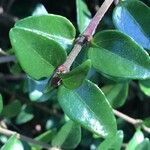
Lonicera ligustrina
Indian cluster berry · Indian cluster berry (నీలి గుత్తుల చెట్టు) · Privet-leaf Honeysuckle · Box Honeysuckle · Boxleaf Honeysuckle
Description
Source: leafsnapLonicera ligustrina, commonly known as privet honeysuckle, is a deciduous shrub from the Caprifoliaceae family. Native to eastern Asia, it is found in China, Japan, and Korea. The plant typically grows up to 3 meters in height, with a spreading habit and arching branches. The leaves of Lonicera ligustrina are ovate or elliptic, with a glossy dark green appearance on top and a lighter green underside. It produces fragrant white or yellowish-white flowers that bloom from May to June. These flowers are followed by small black berries that ripen from August to September. Lonicera ligustrina prefers moist soils but can tolerate dry conditions once established. It thrives best in full sun or partial shade but can also adapt to full shade conditions. This plant is commonly used as an ornamental shrub because of its attractive foliage and fragrant flowers. In traditional Chinese medicine, Lonicera ligustrina has been used for its medicinal properties, such as treating fever, throat inflammation, coughs, colds, and flu symptoms, due to its anti-inflammatory effects. Overall, Lonicera ligustrina is an attractive ornamental shrub with medicinal properties, making it a popular choice for gardeners who value both aesthetics and the functionality of plants.
Care Guide
💧 Water Every 7 days
Hedge honeysuckle, which naturally grows in moist woodlands, thrives in consistently damp environments. To keep the soil evenly moist, it needs to be watered twice a week. When planted outdoors in garden hedges, its growth is influenced by rainfall patterns and relies on a strong root system for efficient water absorption.
☀️ Light Partial sun
Hedge honeysuckle is native to habitats such as forest understories and rocky areas, where it grows in natural shade. It prefers partial sun but can tolerate both full sun and full shade, demonstrating its versatility and hardiness.
What are the sunlight requirements for Hedge Honeysuckle (Lonicera ligustrina)?
Hedge Honeysuckle (Lonicera ligustrina) thrives in environments that meet specific sunlight requirements. For the plant to flourish, it should receive full sun, which is defined as more than 6 hours of sunlight per day. However, it can also tolerate partial sun, meaning it can grow well with about 3-6 hours of sunlight each day. When planning where to plant your Hedge Honeysuckle, it's essential to observe the movement of sunlight through your garden. Finding locations that offer the right mix of light and shade will help ensure your plants grow healthy and happy. Always remember to consider the unique lighting conditions your garden offers when choosing the best spot for your Hedge Honeysuckle.
🌡️ Temperature 5–35°C
Hedge honeysuckle is highly adaptable to a range of climate conditions, from very hot summers to cold winters. However, it does have a preferred temperature range for healthy growth. When temperatures become too high, the plant is susceptible to heat and humidity stress, which can kill it. In areas where temperatures approach the lower limit of its cold tolerance, it is important to provide insulation to protect the plant.
What is the Hedge Honeysuckle?
The Hedge Honeysuckle, scientifically known as Lonicera ligustrina, doesn't have specific essential information, symptoms of issues, or additional details provided. Its mention suggests a plant of interest perhaps for its horticultural value or botanical characteristics. However, without further information, the details about its cultivation, care, or importance within its ecosystem remain unspecified.
💨 Humidity normal (40-60%)
This plant will thrive in moderate humidity, which is probably the level in your home. However, misting it a few times a week can be very beneficial. Make sure the room has good ventilation.
🪴 Soil 6-7
🌱 Fertilizer Every 180 days
The timing of fertilizing hedge honeysuckle is important. Fertilize in early spring and continue once a month until early summer. Fertilizer promotes attractive blooms and supplies energy during both dormant and active growth periods.
🪴 Pot & Repot
✂️ Pruning
To keep hedge honeysuckle healthy and attractive, prune it in early spring. Focus on thinning the plant to improve air circulation, removing dead wood, and shaping the hedge. This method encourages robust growth and flowering, while reducing plant stress. Regular pruning also helps prevent overgrowth and maintains the hedge's appearance and manageability.
🌿 Propagating
🐛 Diseases & pets
☠️ Toxicity
Characteristics
- Plant Type
- Shrub
- Life Cycle
- Perennial
- Genus
- Lonicera
- Family
- Caprifoliaceae
- Hardiness Zone
- 5-9
- Mature Height
- 2.13 m to 3.05 m
- Mature Spread
- 1.52 m to 2.13 m
- Leaf Color
- Yellow, Green, Variegated
- Leaf Type
- Semi-evergreen
- Flower Color
- White
- Flower Size
- 1.02 cm to 1.52 cm
- Bloom Time
- Late spring, Early summer
- Planting Time
- Spring, Summer, Autumn
- Harvest Time
- Late summer, Early fall
- Native Area
- Nepal, India, Myanmar, Bhutan, China