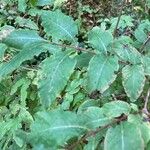
Lonicera nigra
Black-fruited honeysuckle · Black-berried honeysuckle · Blackberried Honeysuckle
Description
Source: leafsnapLonicera nigra, known in English as black-berried honeysuckle is a bush honeysuckle native to the mountains of central and southern Europe.
🌳 Many people consider japanese honeysuckle an ornamental garden plant or a medicinal herb, but its capacity to produce sweet nectar is often overlooked. By gently drawing from the base of the blossom, one can sample its pleasant sweetness. This characteristic has led japanese honeysuckle to lend its flavor to various spirits. In addition, the attractive aroma of its oils has been incorporated into scented soaps and lotions, indicating broader uses in making pleasingly fragrant products.
🎭 Devotion to love
Care Guide
💧 Water
Black-berried honeysuckle flourishes in moist, well-drained soil under the cover of trees. It needs watering twice a week, but care should be taken to avoid waterlogging. Once the plant is established, it becomes moderately drought-tolerant and benefits from seasonal rainfall in temperate regions, which supports its growth and overall health.
☀️ Light Partial sun
Japanese honeysuckle prefers locations with moderate sunlight. It can cope with direct sunlight but it is not a necessity. Its roots lie in habitats with diverse lighting conditions, hence it grows well without the need for high-intensity sunlight. Nevertheless, its growth may be marginally affected with too little or too much light.
🌡️ Temperature 5–35°C
The Japanese honeysuckle thrives best in a moderate climate, ideally between 41 ℉ (5 ℃) and 95 ℉ (35 ℃). To maximize growth and bloom, it is suggested to maintain the temperature within these limits. During the colder months, while the plant can withstand cooler conditions, it may fare better with some protection against severe cold. Conversely, during hotter months, shielding it from harsh heat can be beneficial for the plant's health.
💨 Humidity
🪴 Soil 6-7
🌱 Fertilizer
The timing is key when fertilizing Japanese honeysuckle. Begin fertilization early in the spring, and continue on a monthly basis until early summer. Fertilizer aids in generating beautiful flowers and gives power during both dormant and active growth stages.
🪴 Pot & Repot
✂️ Pruning
Black-berried honeysuckle benefits from regular pruning in early spring to encourage healthy growth and maintain an attractive shape. To promote plant health, remove any dead or diseased branches. Prune older branches to enhance vigor. Making clean cuts is crucial as it prevents disease and improves air circulation and light penetration. This care routine helps black-berried honeysuckle grow robustly.
🌿 Propagating
🐛 Diseases & pets
☠️ Toxicity
Characteristics
- Plant Type
- Vine
- Life Cycle
- Perennial
- Genus
- Lonicera
- Family
- Caprifoliaceae
- Hardiness Zone
- 4-10
- Mature Height
- 2.13 m to 9.14 m
- Mature Spread
- 0.91 m to 1.83 m
- Leaf Color
- Green
- Leaf Type
- Semi-evergreen
- Flower Color
- White, Yellow
- Flower Size
- 2.03 cm to 6.35 cm
- Bloom Time
- Late spring, Early summer, Mid summer
- Planting Time
- Spring, Autumn
- Harvest Time
- Summer, Early fall
- Native Area
- Koppen, Japan, South Korea