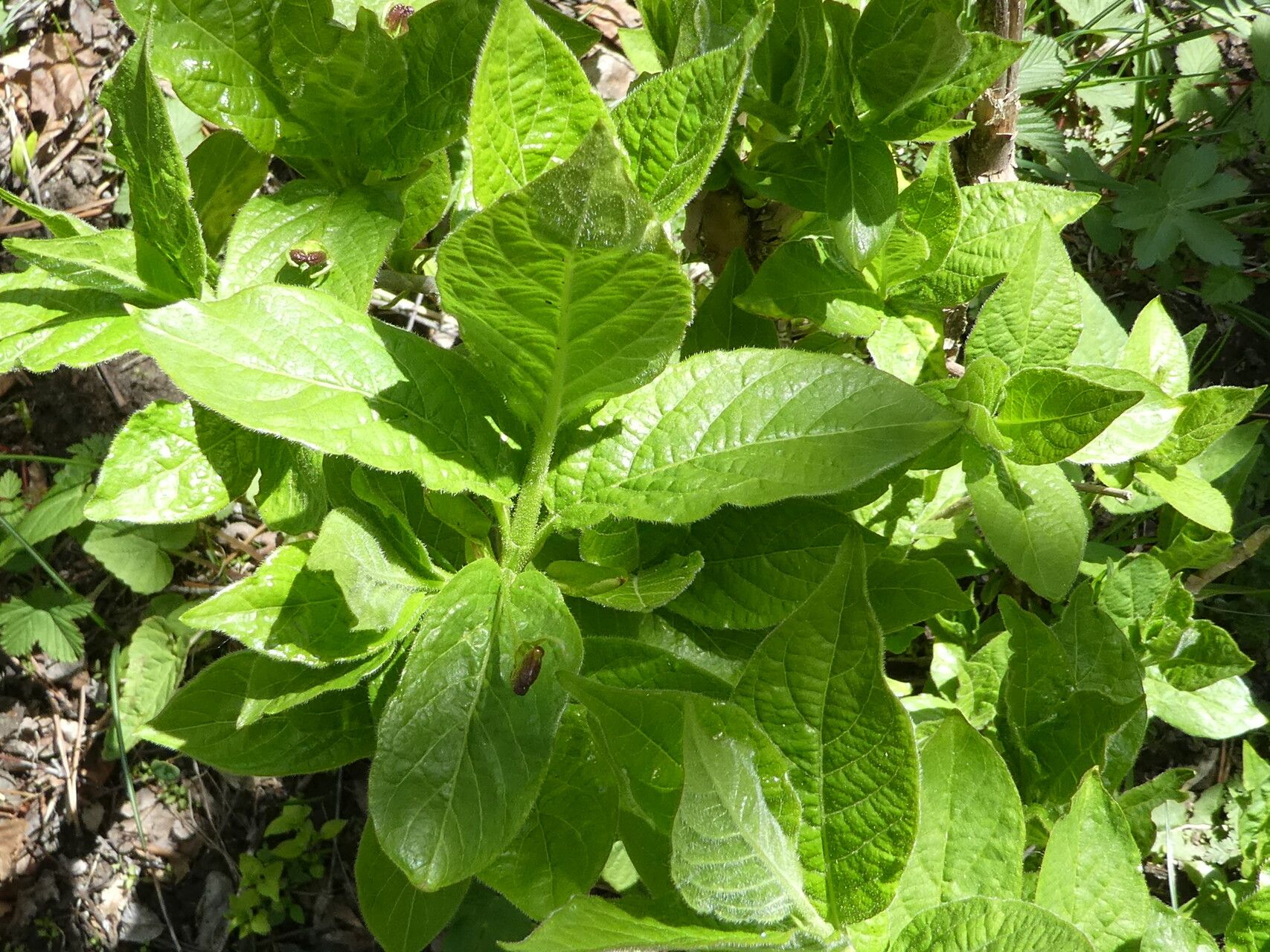
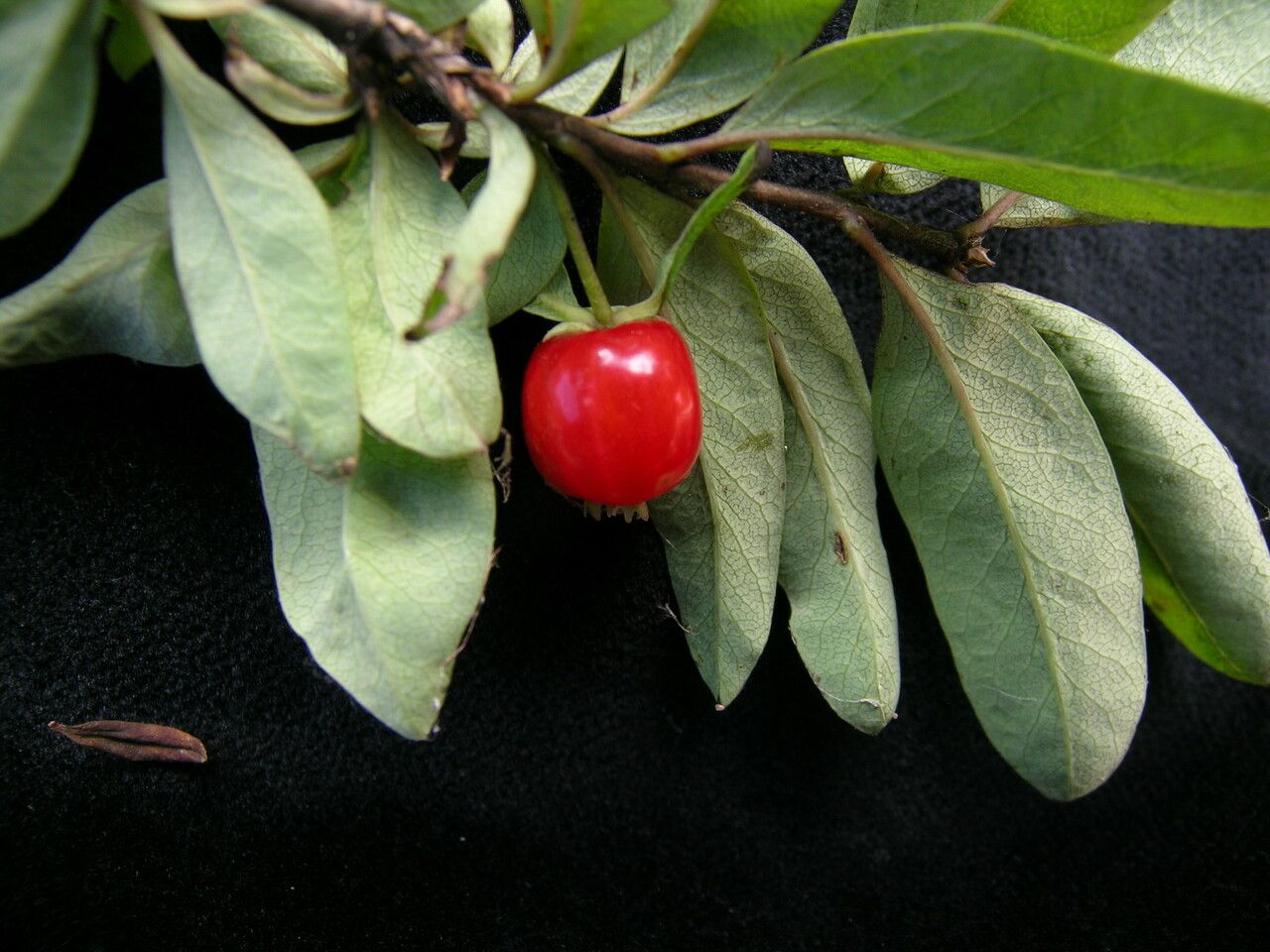
Lonicera pileata, commonly known as boxleaf honeysuckle, is a low-growing evergreen shrub that belongs to the Caprifoliaceae family. Native to China, it has become a popular ornamental plant worldwide due to its attractive foliage and easy maintenance.
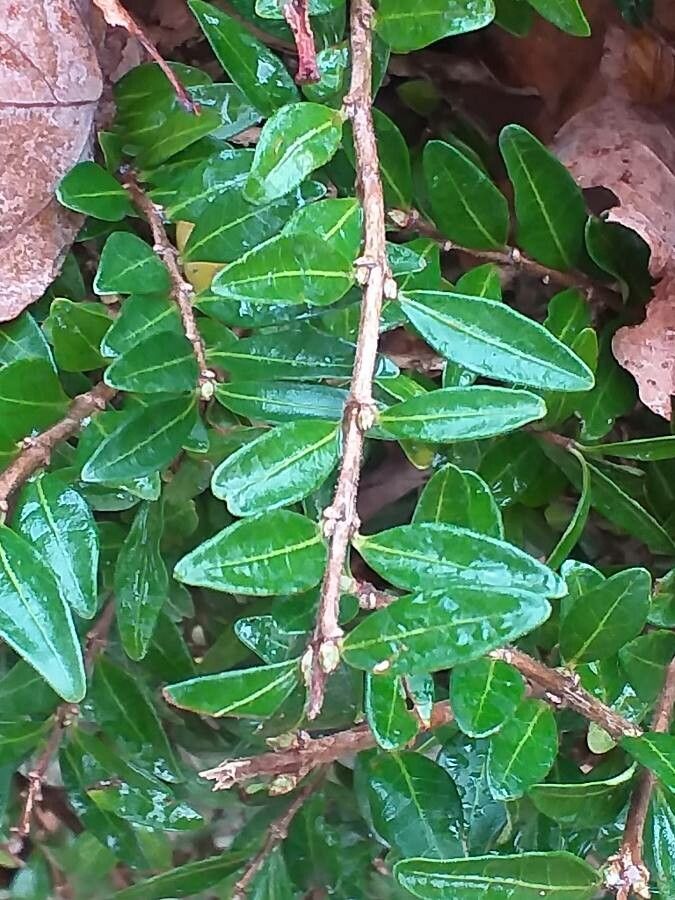
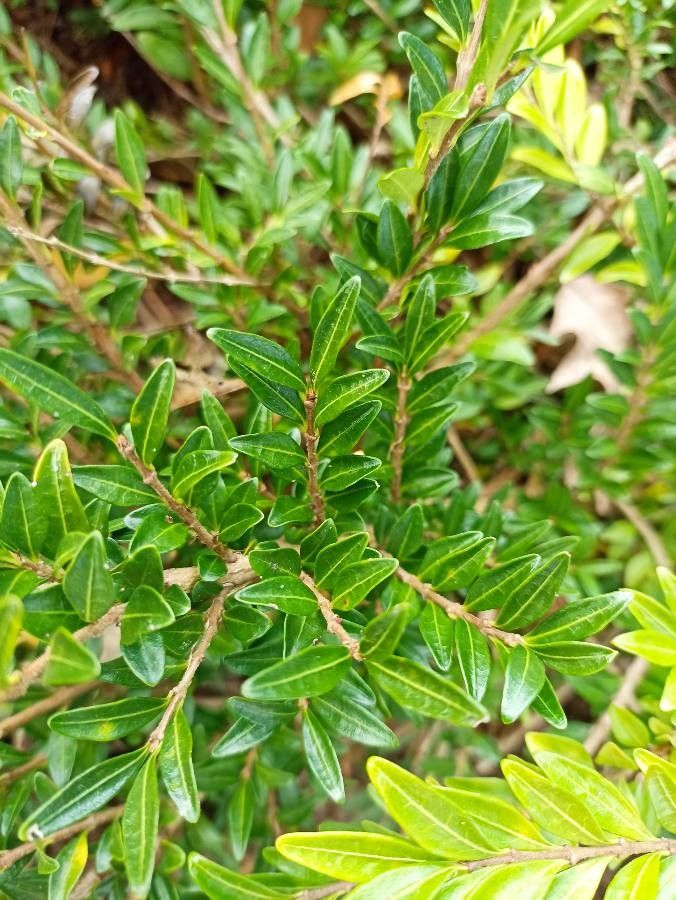
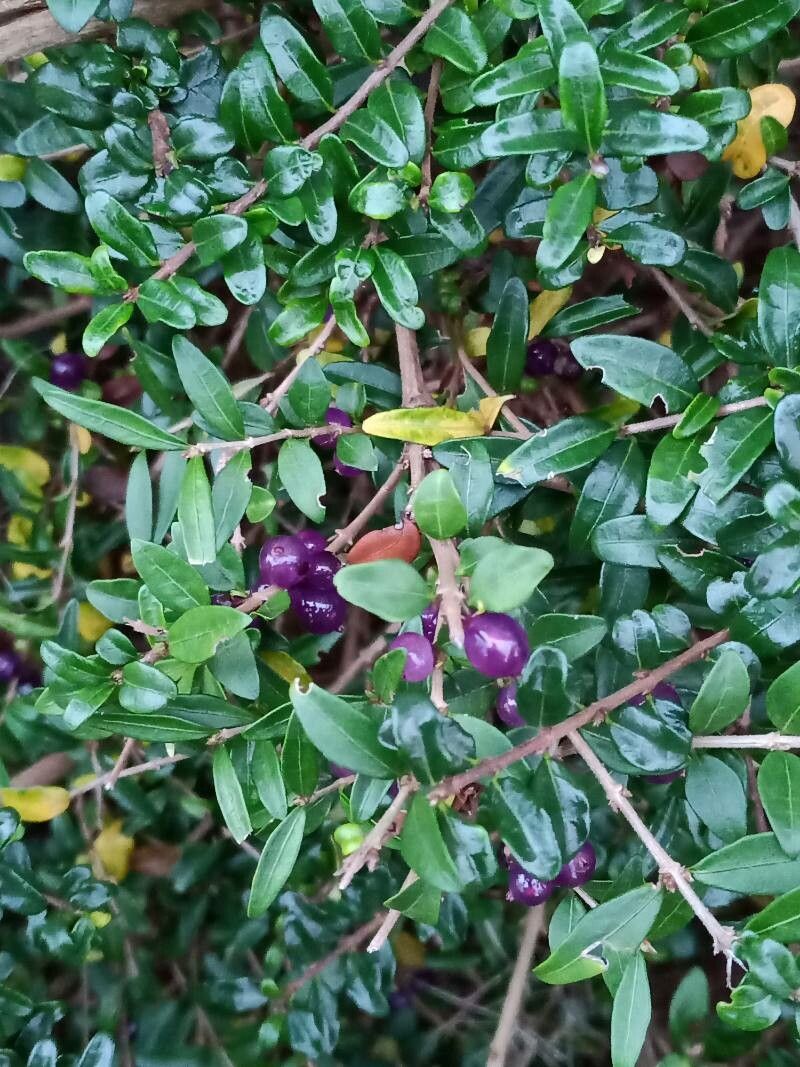
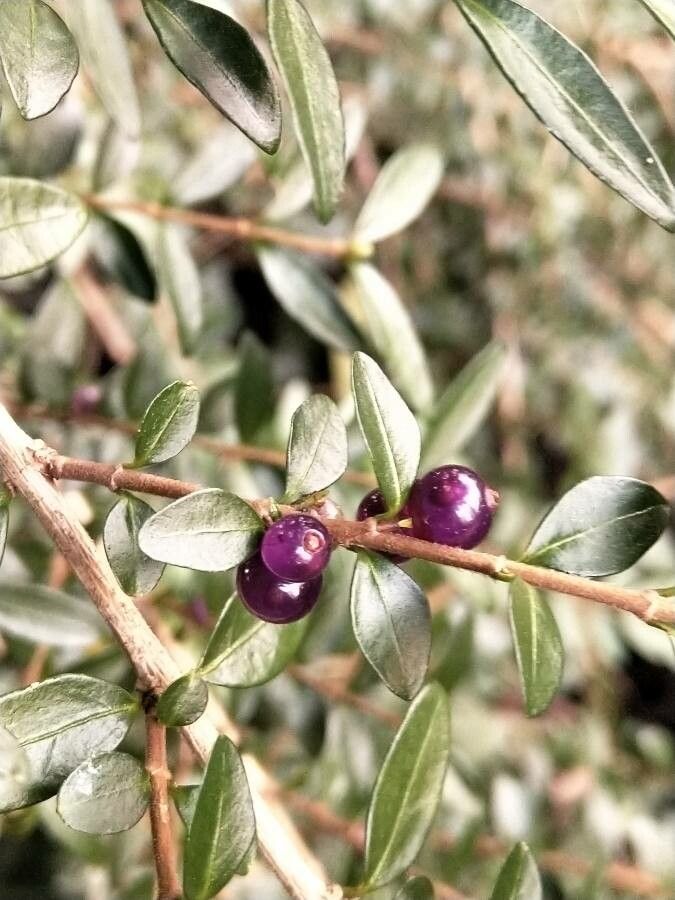
Typically, the plant grows to a height of 2-3 feet and spreads 6-8 feet wide. It features small, glossy dark green leaves that are oval-shaped with pointed tips. The leaves are arranged in opposite pairs on the stem and have a leathery texture.
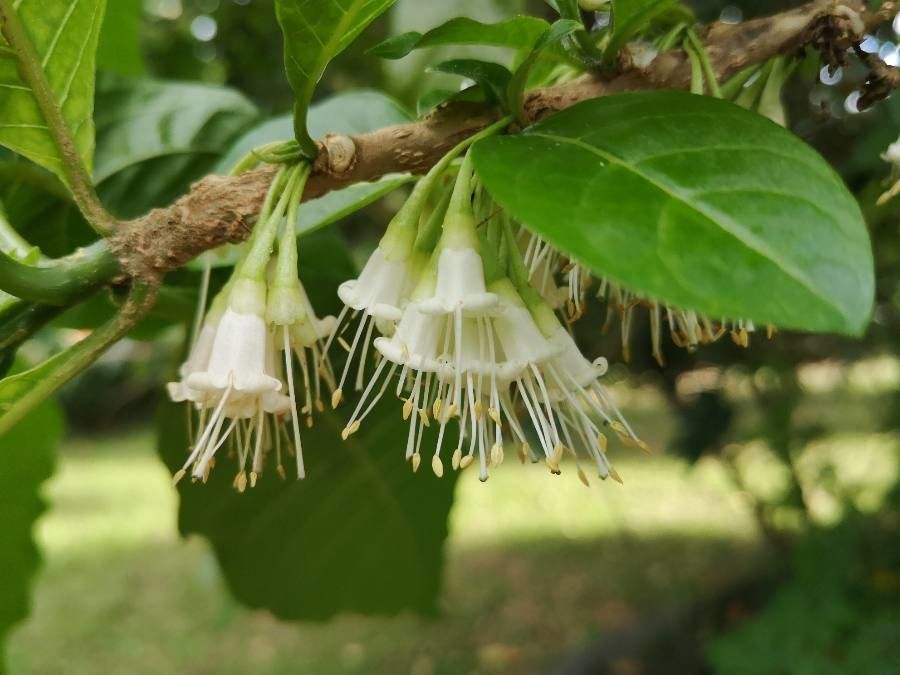
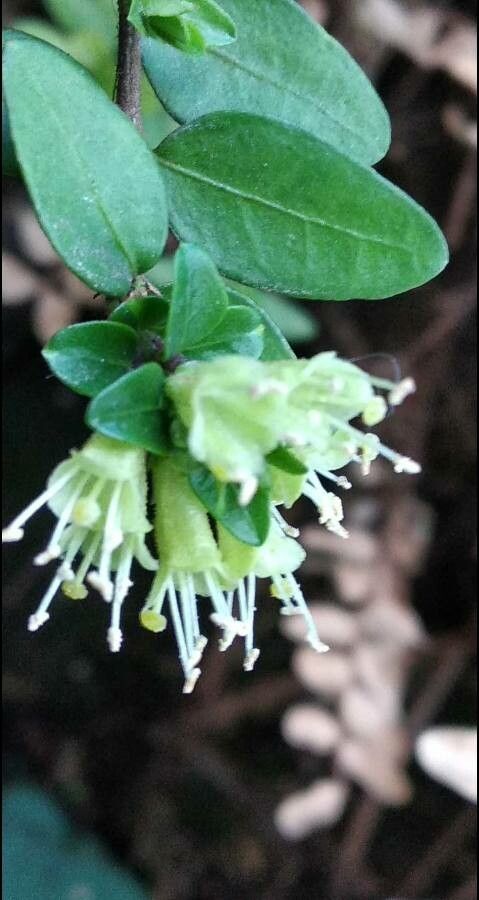
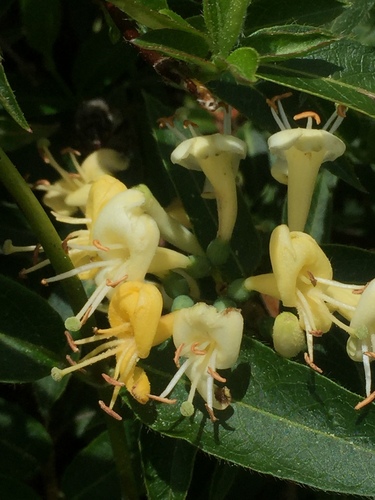
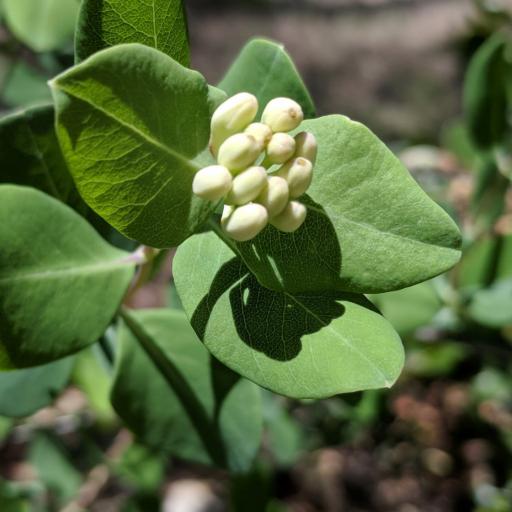
In late spring or early summer, Lonicera pileata produces small, creamy-white flowers that are fragrant, though not particularly showy. These flowers eventually give way to black berries in late summer or early fall.
Boxleaf honeysuckle prefers well-drained soil with moderate moisture levels but is drought-tolerant once established. It thrives best in full sun or partial shade but can also adapt to full shade.
Due to its low-growing habit and ability to spread quickly through underground stems called rhizomes, Lonicera pileata is commonly used as ground cover. It also serves well as a border plant or hedge when planted closely together.
Overall, Lonicera pileata is an attractive evergreen shrub that requires minimal maintenance once established, adding year-round interest with its glossy foliage.
Box-leaved honeysuckle has strong disease resistance and is generally not prone to diseases. In terms of care, this plant is fairly low-maintenance. When grown outdoors, it requires minimal watering, and larger plants typically do not need pruning. Smaller plants, however, should be pruned after they have finished blooming. Box-leaved honeysuckle is suitable for anyone with outdoor space, such as a garden or deck, and does not require a lot of care experience.
How to keep Lonicera Pileata.
Light
Box-leaved honeysuckle comes from open habitats, like sunny meadows and forest margins, where light is abundant. It does best in Full Sun but can also tolerate Partial Sun, adjusting well to different light conditions.
Water
Originally from woodland understories, box-leaved honeysuckle thrives with regular, moderate watering, ideally every 1-2 weeks. As an evergreen plant, its waxy leaves help retain moisture, making it well-suited for outdoor growth in areas with limited water availability. It is also resilient to short dry spells.
Temperature
Box-leaved honeysuckle is highly adaptable to a variety of climates, from scorching summers to cold winters. Still, it has an ideal temperature range for growth. If temperatures become too high, the plant can experience heat and humidity stress, which may lead to its death. In areas where temperatures approach the lower limit of its cold tolerance, insulating the plant is important to protect it.
Fertilizer
Proper timing is important when fertilizing Box-leaved honeysuckle. Apply fertilizer in early spring and then once a month until early summer. Fertilizer promotes attractive blooms and supplies energy both during dormant periods and active growth.
Pruning
Box-leaved honeysuckle boasts dense, evergreen foliage that benefits from pruning between early and late winter. Pruning during this time helps maintain the plant's size and shape while promoting air circulation, which reduces the risk of disease. Additionally, regular pruning during the plant's dormant period encourages vigorous growth and helps achieve a neat, compact appearance in your landscape.
Botanical profile.
- Plant Type
- Shrub
- Life Cycle
- Perennial
- Genus
- Lonicera
- Family
- Caprifoliaceae
- Hardiness Zone
- 4-8
- Mature Height
- 61 cm to 91 cm
- Mature Spread
- 1.52 m to 2.44 m
- Leaf Color
- Green
- Leaf Type
- Evergreen
- Flower Color
- White
- Flower Size
- 2.54 cm
- Bloom Time
- Mid spring, Late spring
- Planting Time
- Spring, Summer, Autumn
- Harvest Time
- Late summer, Early fall, Mid fall
- Native Area
- China
Other names.
Reader questions.
What's the difference between watering my Box-leaved honeysuckle inside and outside?
If you have a Box-leaved honeysuckle growing outside, it might not need any extra watering if you get enough rain. However, if you live in an area with little rain, make sure to water it about every two weeks. If you're outside the plant's natural hardiness zone, it's better to grow it indoors. When indoors, keep an eye on the soil moisture since it can dry out faster in containers or near HVAC units like air conditioners. These drying factors mean you should water the plant a little more often than if it were grown outdoors.
When is it best to not add fertilizer to my Box-leaved honeysuckle?
There are specific times throughout the year when it is best to avoid fertilizing your Box-leaved honeysuckle. The first of these is during the early and mid-winter months when the plant is dormant and does not require any additional nutrients. It is also not recommended to fertilize the plant in late spring and throughout the entire summer. During these months, the weather tends to be hotter and drier, which can have a negative impact on the plant if fertilized. To prevent any issues, it's advisable to stick to a fertilization schedule that focuses on feeding only during early spring and early fall.
What are the sunlight requirements for Box-leaved honeysuckle?
Box-leaved honeysuckle thrives best in Full Sun, requiring above 6 hours of sunlight a day, but can also tolerate Partial Sun, with about 3 to 6 hours of sunlight. Observing how sunlight moves through your garden can help you choose spots that provide the perfect balance of light and shade for these plants, ensuring their health and happiness.
What is the optimal growing condition for Box-leaved honeysuckle?
Box-leaved honeysuckle, or Lonicera pileata, thrives exceptionally well across a range of climate conditions, from hot summers to cold winters. However, this plant does have a preferred temperature range for optimal growth. It is robust against cold weather, so special frost protection measures are generally not required, but it's vulnerable to high temperature and humidity, which can lead to stress or even death of the plant. To safeguard in extreme low temperatures, especially when dropping below -30°C, wrapping the trunk and branches with fabric materials is advisable to provide cold protection. Also, ensuring the soil is moist before it freezes can help the plant mitigate drought conditions during winter and early spring.
How should I water my Box-leaved honeysuckle?
Your Box-leaved honeysuckle is not particular about how you water it. You can use any common watering tool, such as watering cans, hoses, or cups. It is best to water this plant by directly applying the water to the soil. Make sure to evenly moisten all areas of the soil to provide water to all parts of the root system. Using filtered water is recommended, as tap water may contain harmful particles. Watering the plant with water at or slightly above room temperature is also beneficial, as water that is too cold or hot can shock the Box-leaved honeysuckle. However, this plant generally responds well to any type of water.
Why should I add fertilizer to my Box-leaved honeysuckle?
No matter what type of Box-leaved honeysuckle you have, regular fertilization is important for overall plant health. Providing the right nutrients promotes strong growth and helps the plant withstand challenging conditions and resist diseases and pests. Since the foliage of Box-leaved honeysuckle is its standout feature, it's important to maintain it. This involves following a specific fertilization schedule to encourage vibrant, lush leaves.
How does Box-leaved honeysuckle adapt to different sunlight conditions?
Originating from open environments such as sunny meadows and forest edges, Box-leaved honeysuckle adapts well to various sunlight conditions. It thrives in full sun but can also manage well in partial sun. This adaptability makes it a versatile plant for different garden locations.
How should you care for Box-leaved honeysuckle in low temperatures?
Box-leaved honeysuckle is cold-tolerant and ideally should be kept above 5°C. However, during winter, temperatures should not fall below -25°C. If temperatures plummet below -30°C, the plant may not show immediate signs of distress during the winter, but come spring, you might notice the branches become brittle, dry, and fail to produce new shoots. The recommended solution for this is to prune away any dead branches in the spring that have not produced new leaves, thus promoting healthier growth and maintaining the plant's aesthetic appeal.
What should I do if I give my Box-leaved honeysuckle too much or too little water?
When it comes to outdoor plants, especially newly planted ones or seedlings, it's common for them to not get enough water. Remember to consistently water them for a few months when they are small or recently planted. This is important because once the roots are established, Box-leaved honeysuckle can usually rely on rain for hydration. On the other hand, when you have a Box-leaved honeysuckle planted in a pot, overwatering can be a problem. If you accidentally overwater your plant, you need to act promptly to fix the situation. First, stop watering the plant immediately to minimize the negative effects. Then, take the plant out of its pot to examine the roots. If you find that none of the roots have rot, you can put the plant back in the pot. However, if there are signs of root rot, you should trim affected roots and consider using a fungicide to prevent further damage. Finally, repot the Box-leaved honeysuckle in soil that drains well. Alternatively, if the Box-leaved honeysuckle is underwatered, simply water it more frequently. This is generally an easy problem to fix. When a plant is underwatered, its leaves will droop, dry out, and fall off. However, with sufficient watering, the leaves will quickly return to their normal fullness. Be sure to adjust your watering schedule as soon as you notice the plant is underwatered.
When should I fertilize my Box-leaved honeysuckle?
To ensure healthy growth for your Box-leaved honeysuckle, it is recommended to fertilize it during late winter or early spring. This provides the necessary nutrients for the plant to start growing once the weather becomes warmer. In addition, if you live in a warm climate region, it is beneficial to give your Box-leaved honeysuckle another fertilizer feeding during early fall. This helps add more nutrients to the soil for the following growing season and enhances the plant's ability to withstand winter cold without foliage damage. Fertilizing earlier in the fall ensures that new branches have enough time to grow and be more resistant to the cold winter.
Can artificial lighting be used for Box-leaved honeysuckle, and how?
Yes, artificial lighting can be utilized for Box-leaved honeysuckle, especially when natural sunlight is insufficient. Adequate lighting is crucial for optimal growth. LED lights are recommended because they can be customized to provide specific wavelengths needed by the plants. For Full Sun plants, 30-50W/sq ft of artificial light is needed; for Partial Sun plants, 20-30W/sq ft; and for Full Shade plants, 10-20W/sq ft. The light source should be placed 12-36 inches above the plant, and the duration should mimic natural daylight hours, usually 8-12 hours per day.
How to protect Box-leaved honeysuckle from high temperatures?
During the summer, it's crucial to ensure that the Box-leaved honeysuckle's temperature remains below 32°C. When the temperature climbs above 35°C, the plant is at risk of its leaves lightening in color, tips drying and withering, and increased susceptibility to sunburn. To mitigate these risks, trim the sunburned and dry parts of the plant. Relocate it to a shaded area, particularly during the midday and afternoon sun, or implement a shade cloth for protection. Additionally, watering the plant in the morning and evening will help keep the soil adequately moist, thereby helping the Box-leaved honeysuckle stay healthy and vibrant throughout the high temperature periods.