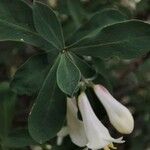
Lonicera pyrenaica
Pyrenean honeysuckle
Description
Source: leafsnapLonicera pyrenaica, commonly known as Pyrenean honeysuckle, is a species of honeysuckle native to the eastern Pyrenees and the Balearic Islands. It is widely cultivated as a garden plant.
🌳 Besides its decorative value, tatarian honeysuckle fulfills ecological functions that are frequently overlooked. Its berries provide food for a variety of bird species and help with seed dispersal. Additionally, tatarian honeysuckle has potential as a phytoindicator: its presence can reflect certain soil characteristics, acting as a natural measure of soil health and composition. This role offers environmentally minded insights for both conservationists and land managers.
🎭 Kindness, fondness
Care Guide
💧 Water Every 7 days
Pyrenean honeysuckle thrives best with moderate moisture and regular watering. Ideally, water it every three weeks, allowing the soil to dry out slightly between waterings. The plant is drought-tolerant and is typically grown outdoors. It enters dormancy during seasonal changes, at which point its water needs decrease.
Should I change how often I water my Pyrenean honeysuckle depending on the time of year or the weather?
The Pyrenean honeysuckle needs to be watered based on rainfall, with only persistent dry weather requiring watering. During the spring and fall growing seasons, keep the soil moist but not soggy. Alternating dry and moist soil conditions will help the Pyrenean honeysuckle grow well. In the summer, hot weather can cause water to evaporate quickly, so if there is a lack of rainfall, water the plant more frequently to keep it moist. Generally, the Pyrenean honeysuckle needs less water in the winter when it is dormant. To help water evaporate quicker during this time, use well-draining but moisture-retentive soil like terracotta. Once the plant begins to leaf out and go dormant, you can stop watering completely as it can rely on fall and winter rains to survive. After the spring, encourage growth and blooming by cultivating the plant when it gets warmer. The Pyrenean honeysuckle does not like ponding or drought while it is flowering, so ensure good drainage, especially in the winter. When in a pot, the plant has limited root growth, so keep it well-watered, especially in the summer. Avoid cold and wet roots by providing adequate drainage, particularly while the plant is still growing. Water the Pyrenean honeysuckle diligently, making sure to deep soak the entire root system at least once or twice a week, depending on the weather. Shallow sprinkles that reach the leaves should be avoided since they promote fungi growth and do not reach the roots deeply. Even during dormancy in the fall or winter, do not let the plants dry out completely. Avoid overwatering, as the plants do not like being in water for too long. Poor soil drainage can cause the plants to die during winter. Applying mulch whenever possible can help reduce stress, conserve water, and promote healthy blooms.
What is the best way to water my Pyrenean honeysuckle?
To ensure excellent root development, it's best to use a garden hose at the base of your plants. Avoid spraying the leaves directly, as this can lead to more watering needs, especially if the plants are outdoors and exposed to direct sunlight. Using bubblers or soaker hoses can help moisten the roots effectively. If you're adding or removing plants, consider using soaker hoses that cover the entire garden or bed to encourage deep root growth. After watering, make sure to drain any excess water and wait for the soil to dry before watering again. Watering at ground level is recommended to prevent diseases. On sunny days, it can be beneficial to spray the entire bush with water. Whether your plants are potted or in the ground, keep in mind that Pyrenean honeysuckle prefers deep watering rather than light sprinkling.
What should I do if I give Pyrenean honeysuckle too much or too little water?
Overwatering a Pyrenean honeysuckle can cause yellowing, dropping, and wilting of leaves. The plant may also appear dull and unhealthy, with mushy stems. Adjusting the watering schedule as needed is recommended when these signs appear. Wilting can also indicate under watering, characterized by crispy and dry leaves compared to the soft and wilted leaves of an overwatered plant. If the soil is dry and simply watering is not enough, a thorough watering is needed to revive the plant. However, the damaged root system may still cause the plant to have dry and yellow leaves after a few days. Once the plant is back to normal, the yellowing of leaves will stop. When keeping a Pyrenean honeysuckle indoors, regularly check the moisture levels in the pot and avoid overwatering. Look for black spots, and if present, allow the soil to dry out for a few days before watering again. Overwatering can lead to root rot, so it's important to prevent this by ensuring the soil doesn't become too soggy. When planting a Pyrenean honeysuckle outdoors, dig deeper and check the soil moisture by feeling it with your fingers. If it's too dry, it may indicate underwatering, and appropriate watering is necessary for the plant to recover.
How much water does my Pyrenean honeysuckle need?
The Pyrenean honeysuckle prefers deep and infrequent watering. If planted in pots, be sure to soak them in a gallon of water each time, as the water storage in pots is limited and the soil dries out faster. In cold regions, water is needed every 3 to 5 days. Water in the morning when the soil is dry, both indoors and outdoors. Check the soil inside the pot to determine if watering is necessary - if the top 2-3 inches of soil are dry, it's time for a full watering. On hot days, check the moisture level daily as the heat can quickly dry out the soil. If you have a garden, irrigation of the soil is also necessary. In hot climates, water once a week when about 2 to 3 inches of soil become too dry. Be mindful of rainwater and avoid adding water if there is already sufficient rainfall to prevent root rot. Pyrenean honeysuckle generally grows in spring and fall. When planted outdoors, add 3 to 4 inches of mulch to conserve water. Sandy soil requires more frequent watering due to its fast-draining nature, while clay soil requires less watering (about every 2-3 days) to avoid root rot. Keep track of your watering schedule and observe the leaves - if they start to droop, it may be an indicator that you need to water the plant soon.
How much water is necessary for my Pyrenean honeysuckle?
The Pyrenean honeysuckle generally needs about a gallon of water on a regular schedule. If you have potted plants, it's best to water them deeply until you see water dripping from the bottom of the pot. After that, wait for the soil to dry before watering again. To determine how much water you've given your plant in a week, you can use a water calculator or a moisture meter. During the flowering period, make sure to provide plenty of water, but allow the moisture to evaporate afterwards to prevent root rot. If you're planting Pyrenean honeysuckle outdoors and there is adequate rainfall, it may not need additional watering. However, when the Pyrenean honeysuckle is young or newly planted, make sure it receives 1-2 inches of rain per week. As it grows, it can rely solely on rainfall. Only when the weather is very hot or there is no rainfall for 2-3 weeks, should you consider giving the Pyrenean honeysuckle a thorough watering during the cooler part of the day to prevent damage from high heat. Additional watering will be necessary during prolonged dry periods.
☀️ Light Full sun
The tatarian honeysuckle flourishes when it receives plenty of sunlight and can also survive in locations where sunlight isn't as ample. Originating from conditions where light varied, the plant has adapted to these changes in sunlight for its optimal growth. Despite this, exposure to insufficient light may hamper the plant's growth, while excessive and intense sunlight could induce stress on the plant and cause the leaves to scorch.
What are the sunlight requirements for Pyrenean honeysuckle?
Pyrenean honeysuckle requires full sun, which refers to above 6 hours of sunlight per day, but can also thrive in conditions of partial sun, meaning about 3-6 hours of sunlight per day. The plant flourishes best under direct, unobstructed sunlight throughout the day, yet is adaptable to intermittently sunlit conditions. Insufficient light can adversely affect its growth, while too much direct exposure may lead to sunscald. Observing how sunlight moves through your garden to choose locations that provide a suitable balance of light and shade is crucial for plant health.
How should artificial lighting be used for Pyrenean honeysuckle?
When natural sunlight is insufficient, especially during winter or in less sunny spaces, artificial lighting offers a significant solution for indoor plants, including Pyrenean honeysuckle. It's recommended to use LED lights, which can be adjusted to provide the specific wavelengths needed for plant growth. For full sun plants, 30-50W per square foot is ideal; partial sun plants require 20-30W per square foot, and full shade plants need 10-20W per square foot. Place the light source 12-36 inches above the plant, mimicking natural sunlight as closely as possible, and ensure it receives 8-12 hours of light daily.
What are the symptoms of improper lighting for Pyrenean honeysuckle?
When Pyrenean honeysuckle is exposed to suboptimal lighting, it may exhibit several symptoms indicating distress, such as smaller new leaves, leggy or sparse growth, accelerated leaf drop, halted growth, paler new leaves, chlorosis, sunscald, leaf curling, wilting, and leaf scorching. These signs can range from the physical appearance of the plant to more severe health issues like chlorosis and sunscald, which negatively impact the plant's photosynthetic abilities and overall well-being.
What solutions exist for addressing insufficient sunlight for Pyrenean honeysuckle?
To combat insufficient sunlight, gradually acclimate your Pyrenean honeysuckle to receive at least 6 hours of direct sunlight daily. If moving the plant to a sunnier location isn't feasible, especially for large or indoor plants, consider supplementing with artificial light, keeping lamps on for a minimum of 8 hours per day. For outdoor plants, avoid abrupt light intensity changes to prevent sunburn. Removing obstructions or transplanting to a sunnier spot can also help. It's important to note that damaged parts may not recover, but new growth will be healthier following adjusted light exposure.
🌡️ Temperature 5–35°C
The tatarian honeysuckle plant flourishes in temperatures ranging from 41 to 95 ℉ (5 to 35 ℃). It's well-suited to a temperate climate and can prosper in a variety of soil conditions. If you're transferring it across seasons, ensure it's sufficiently watered in warm summers and appropriately protected during frosty winters to evade shock.
What is the Pyrenean Honeysuckle?
The Pyrenean Honeysuckle, known botanically as Lonicera pyrenaica, is a plant species. Detailed information about its essentials and symptoms wasn't provided.
💨 Humidity
🪴 Soil 6-7
🌱 Fertilizer
For optimal growth, nourish your Tatarian honeysuckle at the onset of spring. Consistent fertilization reinforces general health, leading to robust growth, sturdiness in harsh climates, and increased resistance to diseases and pests. Stick to a particular fertilization routine for your Tatarian honeysuckle to guarantee brightly colored leaves and a rich appearance.
🪴 Pot & Repot 2-3 years
When transplanting Tatarian honeysuckle, select a container that is 1-2 inches (2.5-5 cm) bigger and has sufficient drainage. Employ a potting mixture that drains well. Perform the transplant in spring or autumn, making sure the root mass sits somewhat below the flowerpot's brim. Once transplanted, water it thoroughly and position it in a warm location where it will receive indirect sunlight.
✂️ Pruning
Pyrenean honeysuckle is a deciduous shrub known for its fragrant flowers. To maintain its health and promote better airflow, prune it in early spring by removing dead stems and overcrowded branches. This annual pruning encourages flowering and prevents the plant from becoming leggy. Regular inspections can also help manage pests, contributing to a healthier garden.
🌿 Propagating
🐛 Diseases & pets
☠️ Toxicity
Characteristics
- Plant Type
- Shrub
- Life Cycle
- Perennial
- Genus
- Lonicera
- Family
- Caprifoliaceae
- Hardiness Zone
- 4-9
- Mature Height
- 3.05 m
- Mature Spread
- 3.05 m to 3.66 m
- Leaf Color
- Green, Blue
- Leaf Type
- Deciduous
- Flower Color
- Pink, White
- Flower Size
- 1.78 cm to 2.54 cm
- Bloom Time
- Late spring, Early summer
- Planting Time
- Spring, Autumn
- Harvest Time
- Mid summer
- Native Area
- Kyrgyzstan, Kazakhstan, Mongolia, Turkmenistan, China