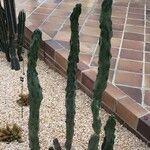
Lophocereus schottii
Senita cactus · Senita · Whisker Cactus · Old-man cactus · Totem Pole Cactus
Description
Source: leafsnapLophocereus schottii, commonly known as the senita cactus, is a slow-growing, columnar cactus native to the Sonoran Desert in Mexico and Arizona. This species can reach heights of up to 20 feet and widths of 6 feet, featuring a cylindrical shape that branches out near the top. The plant displays a bluish-green hue and boasts clusters of white spines along its ridges. The senita cactus blooms from late spring to early summer, producing white or pinkish flowers that measure approximately 2 inches in diameter. These blossoms are followed by small red fruits that are edible but not commonly consumed. Well-adapted to desert conditions, the senita cactus can survive prolonged droughts by storing water in its stem. It thrives in well-draining soil with full sun exposure, though it can also tolerate partial shade. This cactus carries cultural significance for indigenous communities, who use it for medicinal purposes, building materials, and spiritual practices. However, habitat loss due to urbanization and agricultural development has rendered this species vulnerable within its natural range. Overall, Lophocereus schottii is an impressive desert plant, notable for its unique appearance and cultural importance. It also plays a vital role in maintaining ecological balance within arid environments.
Care Guide
💧 Water
☀️ Light Full sun
🌡️ Temperature 20–37.8°C
💨 Humidity
🪴 Soil 6-7
🌱 Fertilizer
🪴 Pot & Repot
✂️ Pruning
🌿 Propagating
🐛 Diseases & pets
☠️ Toxicity
Characteristics
- Plant Type
- Succulent, Shrub
- Life Cycle
- Perennial
- Genus
- Lophocereus
- Family
- Cactaceae
- Hardiness Zone
- 9-12
- Mature Height
- 3.66 m
- Mature Spread
- 1.83 m
- Leaf Color
- Dark Green, Gray
- Leaf Type
- Evergreen
- Flower Color
- Pink
- Flower Size
- 2.54 cm to 5.08 cm
- Bloom Time
- Early summer, Mid summer
- Planting Time
- Spring, Summer
- Harvest Time
- Mid summer, Late summer
- Native Area
- Mexico