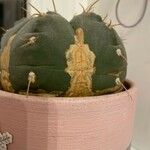
Lophophora williamsii
Peyote · Indian-dope · Cactus pudding · Devil's-root · Diabolic-root
Description
Source: leafsnapLophophora williamsii, commonly known as peyote, is a small, spineless cactus native to Mexico and the southwestern United States. It is a slow-growing plant that typically reaches a height of 2-6 cm and spans a diameter of 4-12 cm. The cactus features a blue-green or gray-green coloration and produces small white or yellowish flowers that bloom in the summer. For centuries, indigenous people have used peyote for its psychoactive properties. The active ingredient in peyote is mescaline, which induces hallucinogenic effects when consumed. Peyote is considered sacred by many Native American tribes and is used in their religious ceremonies. Due to its psychoactive properties, peyote is classified as a controlled substance in many countries, including the United States. However, members of certain Native American tribes are legally permitted to harvest and consume it for religious purposes. In addition to its cultural significance, peyote contains several alkaloids with potential medicinal properties, such as anti-inflammatory effects and pain relief. However, further research is needed to substantiate these potential benefits. Overall, Lophophora williamsii (peyote) remains an important cultural symbol with potential medicinal benefits. Its psychoactive nature has led to legal restrictions, yet it continues to be a significant species from both cultural and scientific research perspectives.
🌳 Beyond its role in traditional medicine and rituals, peyote has been used in various handcrafted and religious artifacts. The plant is sometimes incorporated into artworks or employed as a symbol in cultural and spiritual paraphernalia. The intricate patterns of the peyote buttons have inspired designs in native textiles. Additionally, its ability to survive in arid conditions makes it a symbol of resilience for some local peoples.
Care Guide
💧 Water Every 7 days
Peyote flourishes in arid environments due to its excellent drought tolerance. It requires minimal watering, about once every three weeks. Native to desert regions, peyote has the ability to store water for extended periods of drought. It is often cultivated outdoors to take advantage of natural rainfall during its active growth cycles.
☀️ Light Partial sun
🌡️ Temperature 15–37.8°C
The ideal temperature for plant growth ranges from 68-95°F (20-35°C). When the temperature falls below this range, the plant enters a dormant state, causing its growth to slow down.
💨 Humidity normal (40-60%)
This plant will thrive in moderate humidity, which is probably the level in your home. However, misting it a few times a week can be very beneficial. Make sure the room has good ventilation.
🪴 Soil
🌱 Fertilizer
During the growing seasons of spring, summer, and fall, apply liquid fertilizer to peyote plants once a month. In winter, fertilization is unnecessary. When repotting, incorporate a slow-release fertilizer into the soil. Use a fertilizer low in nitrogen during the seedling stage, and switch to higher phosphate and potassium content before and after blooming. If the base of the plant turns yellow, discontinue fertilization immediately.
🪴 Pot & Repot Every 3 years
✂️ Pruning
Peyote doesn't need much pruning. Simply concentrate on removing any withered flowers and branches so the plant can direct its nutrients toward healthy growth.
🌿 Propagating
🐛 Diseases & pets
☠️ Toxicity
Characteristics
- Plant Type
- Succulent
- Life Cycle
- Perennial
- Genus
- Lophophora
- Family
- Cactaceae
- Hardiness Zone
- 8-11
- Mature Height
- 2 cm to 6 cm
- Mature Spread
- 4 cm to 11 cm
- Leaf Color
- Green Yellow, Light Green
- Leaf Type
- Evergreen
- Flower Color
- Pink, White
- Flower Size
- 2.54 cm
- Bloom Time
- Late spring, Early summer, Mid summer
- Planting Time
- Spring, Summer, Autumn
- Harvest Time
- Mid summer
- Native Area
- Mexico