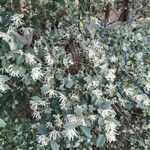
Loropetalum chinense
Chinese fringe flower · Hazelberry
Description
Source: leafsnapLoropetalum chinense, commonly known as the Chinese fringe flower, is a stunning evergreen shrub that belongs to the witch hazel family. Native to China and Japan, it has gained popularity worldwide as an ornamental plant, admired for its attractive foliage and striking flowers. The plant features an upright growth habit with arching branches that can reach up to 10 feet in height. Its leaves are oval-shaped, glossy, and dark green, with serrated edges. In the spring, it produces clusters of fragrant flowers that resemble small pink or white tassels. Loropetalum chinense thrives in well-drained soil and partial shade but can also tolerate full sun exposure. It is relatively low maintenance, requiring regular pruning to maintain its shape. Due to its dense growth habit, the Chinese fringe flower is often used as a hedge or border plant. It also makes an excellent specimen shrub for gardens or containers on patios and balconies. Overall, Loropetalum chinense is an attractive ornamental shrub that adds color and texture to any landscape design while demanding minimal care.
💡 The Chinese fringe flower is truly a standout plant, not just for its dazzling blooms, but also for its intriguing foliage. New branches and leaf growth display a pinkish hue, while the mature foliage can range in color from deep green to plum, burgundy, or brown-red. Often, you can see all these colors at once, creating a vibrant display.
🌳 The vibrant flowers and leaves of the Chinese fringe flower contain pigments that could be used as natural dyes, providing an eco-friendly alternative to synthetic colors. Although it is not widely known for this application, exploring how to utilize these pigments could help bring about more sustainable practices in the textile industry.
Care Guide
💧 Water Every 7 days
The Chinese fringe flower, native to China, thrives in environments with moderate humidity and consistent moisture. While it has some tolerance for drought, it benefits from being watered every 1-2 weeks depending on how dry the soil is. As an evergreen plant, it requires careful watering during the growing season to promote vibrant growth and flowering.
How often should I give water to my Chinese fringe flower plant?
Most plants can grow naturally with rainfall, but if your area doesn't get enough rain, you should water your plants every 2 weeks in the spring and fall. In the summer, you'll need to water more often. In the winter, when plants don't need as much water, you should water less frequently or not at all. If you have a young or newly planted Chinese fringe flower, you should water it more often to help it establish and become more adaptable to drought. For potted Chinese fringe flowers, you have two options for determining when to water. One option is to follow a set schedule, like watering once a week or every other week. However, this may not always work because it doesn't take into account the specific conditions of your plant's environment. The other option is to check the soil moisture. Wait until the top two to four inches of soil have dried out completely before giving more water. This approach can vary depending on the season, as the plant will need more water in the summer.
How do I properly water my Chinese fringe flower all year round?
The watering needs of your Chinese fringe flower will be influenced by the changing seasons. In the hot summer months, especially if the plant is exposed to a lot of sunlight, you will likely have to water it more often because the soil can dry out quickly. On the other hand, during the winter when the plant is not actively growing, it will require much less water. Watering once every 2 to 3 weeks or even less frequently may be sufficient. If you are growing the plant indoors, be mindful of appliances like air conditioners as they can cause the plant to dry out faster, meaning you may need to water it more frequently.
How should I water my Chinese fringe flower?
Your Chinese fringe flower is not picky about how you water it. You can use any common watering tool like cans, hoses, or cups. When watering, make sure to water directly on the soil and evenly moisten all areas. Filtered water is recommended, as tap water can be harmful. Use water at room temperature or slightly above, as extreme temperatures can shock the plant. However, the Chinese fringe flower is typically resilient and will respond well to any water you provide.
What do I do if I give too much or too little water to my Chinese fringe flower?
Outdoor plants, especially newly planted ones or seedlings, are prone to lack of watering. It is important to water them adequately for a few months when they are small or recently planted. Once the roots are established, Chinese fringe flowers can rely on rain most of the time. When Chinese fringe flowers are planted in pots, overwatering is often a problem. If you accidentally overwater your plant, take immediate action to fix the situation. Stop watering right away to minimize the impact of overwatering. Then, remove the plant from its pot to check the roots. If there is no root rot, you can return the plant to its container. However, if there are signs of root rot, trim away affected roots and consider applying a fungicide to prevent further damage. Repot the Chinese fringe flower in well-draining soil. For underwatered Chinese fringe flowers, simply water them more frequently. This is an easy fix. When underwatered, the plant's leaves will droop, dry out, and fall off. However, they will regain fullness quickly after sufficient watering. Adjust your watering frequency as soon as you notice signs of underwatering.
How much water does my Chinese fringe flower require?
To water your Chinese fringe flower properly, it's important to note that it doesn't always require a lot of water. If only a few inches of soil have dried since the last watering, giving it about five to ten ounces of water each time will promote healthy growth. To determine the appropriate water volume, monitor the soil moisture and check how many inches have dried out between waterings. A reliable approach is to ensure that all the soil layers that have dried out since the previous watering are moistened. If over half of the soil is dry, consider giving more water, and continue until you see excess water draining from the pot's holes. If the plant is situated in an area that receives ample rainfall, additional watering may not be necessary. However, when the Chinese fringe flower is young or establishing, it should ideally receive 1-2 inches of rain per week. As it matures, it can rely on rainwater, except in hot weather with no rainfall for 2-3 weeks, which may require a thorough watering to prevent stress.
☀️ Light Full sun
Chinese fringe flower needs ample daylight to reach its full potential, though it can tolerate lower light levels. Being native to bright regions, it ultimately performs best under that natural canopy. Insufficient light can result in weaker growth, while too much may damage the leaves. Its light requirements stay the same throughout its life.
Are there any things to be careful about or suggestions for sunlight and Chinese fringe flower?
When you recently transplant a Chinese fringe flower, it may go through a period of shock. It is important to take good care of it during this time. Keep it shaded from the intense afternoon sun or place it in a protected area. On very hot days, you might notice the leaves of the flower drooping. This is typically not a cause for concern as the plant is simply sending water down to its roots to protect them from the heat. However, if the leaves are still drooping in the evening or the next morning, it means the plant needs water. Avoid watering the plant during the hottest times of the day since sunlight can easily scorch wet leaves. An underwatered Chinese fringe flower will be weaker and its roots may not be able to protect the leaves during hot, sunny summer days. To care for an underwatered plant, give it a deep watering and allow the top two inches of soil to dry out before watering again. Even if the plant loses its leaves, with proper care, it will grow new ones.
How many hours of sunlight should Chinese fringe flower get each day to grow well?
Chinese fringe flower requires a minimum of 3-6 hours of sun per day for healthy growth. However, this is just the minimum requirement as these plants can actually thrive in full sun too. They are more flexible than plants that need full sun or part shade because they need less light for photosynthesis.
What kind of sunlight does Chinese fringe flower require?
Chinese fringe flower thrives with full or part sun exposure. It flourishes when it receives direct morning light, but during summer, it requires shielding from the intense afternoon sun. Excessive hot afternoon sun in moderate climates can scorch the leaves, causing harm to the plant's overall look and well-being.
Can Chinese fringe flower be harmed by sunlight? How can Chinese fringe flower be kept safe from damage caused by the sun and heat?
Indoor Chinese fringe flower plants are sensitive to direct sunlight when they are moved outside. To prevent sun damage, it is recommended to gradually transition the pots from a shaded area to a brighter spot. However, even plants accustomed to the sun can be harmed by intense heat. During a heatwave, it is crucial to keep the soil consistently moist to help the plants tolerate high temperatures. If extreme weather conditions persist, it is advisable to move container plants to areas with afternoon shade or cover them with a shade cloth to protect the delicate Chinese fringe flower.
Does Chinese fringe flower need to avoid sun exposure?
Chinese fringe flower benefits from bright morning sun and some full sun exposure. However, it cannot handle the harsh, hot midday sun during the summer. When planted in the ground, the plant can gradually adapt to the increasing intensity of the summer sun. However, if the plant has been in a pot indoors or in a protected location, it may be injured if suddenly exposed to direct summer sun during the hottest part of the day. To protect the plant from the intense afternoon sun, it is recommended to plant or place it in a shady location, such as under taller trees or plants, or near a building or landscape feature.
🌡️ Temperature 15–35°C
Chinese fringe flower originates from areas with climates between 59 and 95 °F (15 to 35 ℃), showing a preference for moderate to high temperatures. Seasonal adjustments might only be required to protect it from extreme heat.
Should I change the temperature for Chinese fringe flower at different stages of growth?
According to research, Chinese fringe flower tends to experience stunted growth when exposed to extended periods of higher temperatures, particularly while axillary buds are developing and main shoots are growing. To promote healthy growth after germination or transplanting, it is recommended to maintain consistent and cooler temperatures, around 65℉ (18℃).
How do I protect Chinese fringe flower from being harmed by temperature?
To protect Chinese fringe flower during summer heat, provide it with added shade and water to cool its leaves, roots, and soil. In case of cold snaps or freezes during the growing season, protect vulnerable budding vegetation by using frost cloth or sprinkler systems. If the temperature will only dip slightly below freezing for a brief period, water the plant a few hours before the freeze. However, if the temperature is expected to stay below freezing for a longer time, keep the sprinkler on until the temperature rises above freezing the next day.
What temperature is best for Chinese fringe flower?
The Chinese fringe flower thrives best in temperatures between 65~80℉ (18~27℃). During the primary growing phase, it can tolerate temperatures as high as 95℉ (35℃) and as low as 15℉ (-10℃). This species is also able to withstand freezing winters. The recommended temperature range for optimal growth is: Perfect: 65~80℉ (18~27℃), Highest: 85~95℉ (30~35℃), Lowest: -5~15℉ (-20~-10℃) or below.
How can I protect Chinese fringe flower from the cold?
Chinese fringe flower can tolerate freezing temperatures when planted in the ground, as long as the temperature does not drop below 15℉(-10℃). However, if it is planted in a pot or container, the roots need to be shielded from the cold weather. This can be done by wrapping the container in a blanket or by bringing it indoors to provide full protection from the elements.
If the temperature is too high or too low, what harm will Chinese fringe flower experience?
Chinese fringe flower is more negatively affected by consistently high temperatures compared to low temperatures. When it becomes too hot, heat stress triggers hormonal changes that reduce seed germination and photosynthesis efficiency. This can be observed through wilting, leaf browning, and even death of the plant. On the other hand, if the plant becomes too cold, vital functions like nutrient uptake and photosynthesis stop, potentially leading to plant death. If there is a single freezing event during the growing season, a membrane phase transition may occur, resulting in the cessation of plant functions and the death of the plant.
💨 Humidity
🪴 Soil 5-6
🌱 Fertilizer
The timing of fertilizing the Chinese fringe flower is important. Apply fertilizer in early spring and continue once a month through early summer. Fertilizer encourages attractive blooms and provides energy both during dormant periods and in times of active growth.
Why should I put plant food on my Chinese fringe flower?
There are a few important reasons why you should fertilize a Chinese fringe flower. One obvious reason is that fertilizer helps the flower produce beautiful blooms. Fertilizing in early spring is ideal for ensuring excellent flowers during that season. Additionally, fertilizer provides the flower with energy that it can store in the ground during dormant growth phases. Supplying extra nutrients during fall planting or late spring will help the flower store more energy to use when active growth begins again.
When should I fertilize my Chinese fringe flower for the best results?
To ensure effective fertilization of Chinese fringe flower, the timing is crucial. Applying fertilizer too early, while the plant is still dormant, would result in ineffective use as it would be washed away by rainwater, leading to waste and pollution. The optimal time for the first application of fertilizer is in early spring, followed by monthly fertilization until early summer.
When is the best time to not fertilize my Chinese fringe flower?
To ensure optimal growth and blooming of Chinese fringe flowers, it is important to be mindful of the type and timing of fertilization. Avoid using a nitrogen-rich fertilizer as it can encourage leaf growth rather than blooming. Look for a fertilizer with a lower nitrogen content compared to other nutrients. Additionally, it is advisable to refrain from fertilizing after early autumn to prevent excessive growth before winter. Moreover, during hot and dry seasons, fertilization should be avoided as dry soil is less effective in delivering nutrients. Fertilizing during this time can also stimulate growth that requires additional water, which may not be readily available. It is recommended to apply fertilizer in earlier seasons when temperatures are cooler. Lastly, keep in mind that Chinese fringe flowers can absorb nearby fertilizers meant for other plants or lawns, so caution should be exercised to avoid unintentionally providing excessive fertilizer.
Which fertilizer is best for my Chinese fringe flower?
To ensure optimal growth for your Chinese fringe flower, it's important to provide the right nutrients. An ideal fertilizer should have a balanced mix of the main plant nutrients, with a slightly higher concentration of phosphorus. Alternatively, you can enhance the flower's soil by incorporating organic materials like compost, worm castings, and manure. Experienced gardeners often supplement with water-soluble fertilizers containing phosphorus 1-2 times when flower buds emerge. This promotes better flower development, larger blooms, and longer flowering periods. When it comes to choosing a fertilizer, various forms are available, all of which can be effective for your Chinese fringe flower. However, liquid or powdered fertilizers are considered some of the best options. Whichever form you prefer, remember to dilute the fertilizer and apply it while watering your Chinese fringe flower.
How can I give my Chinese fringe flower plant the necessary nutrients?
When using fertilizer for your Chinese Fringe Flower, it's important to follow the specific directions and do some research. Avoid over-fertilizing by determining the correct amount to use. One helpful guideline is to use the age of the tree or the trunk diameter. Estimate around one-tenth of a pound of fertilizer per year or inch of trunk, with a maximum of one pound. Sprinkle granular or organic fertilizers, like blood meal, around the base of the tree up to the drip line. Be careful not to let the fertilizer touch the trunk. Over time, the granules will break down and sink into the soil, where the roots can absorb them. After fertilizing, spread a one-inch layer of compost around the base and water thoroughly.
🪴 Pot & Repot 2-3 years
Repot the Chinese fringe flower every 2-3 years during spring, using a pot that is 2-3 inches larger than the current one. After repotting, keep the soil consistently moist and place the plant in partial shade. Allow the plant some time to adjust to its new environment, as it requires patience for the Chinese fringe flower to settle in.
✂️ Pruning
The Chinese fringe flower showcases vibrant blooms and benefits from periodic pruning, ideally from early to late winter, after it has finished flowering. During pruning, remove any dead or crossing branches and thin out dense growth to improve air circulation. To prevent disease, ensure that your tools are sterilized before use. For more detailed guidance on maintaining the health and appearance of your Chinese fringe flower, consult reliable gardening resources.
🌿 Propagating
🐛 Diseases & pets
☠️ Toxicity
Characteristics
- Plant Type
- Tree, Shrub
- Life Cycle
- Perennial
- Genus
- Loropetalum
- Family
- Hamamelidaceae
- Hardiness Zone
- 7-10
- Mature Height
- 1.52 m to 1.83 m
- Mature Spread
- 1.83 m to 3.05 m
- Leaf Color
- Green
- Leaf Type
- Evergreen
- Flower Color
- Pink
- Flower Size
- 2.54 cm
- Bloom Time
- Spring, Early summer
- Planting Time
- Spring, Autumn
- Harvest Time
- Early summer, Mid summer
- Native Area
- Japan, India, Thailand, China