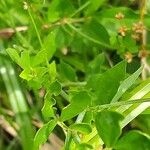
Lotus pedunculatus
Greater Bird's-foot-trefoil · Greater bird's-foot trefoil · Big trefoil · Marsh bird's foot trefoil · Greater birdsfoot-trefoil
Description
Source: leafsnapLotus pedunculatus (formerly Lotus uliginosus), the big trefoil, greater bird's-foot-trefoil or marsh bird's-foot trefoil, is a member of the pea family (Fabaceae). It is a herbaceous perennial growing throughout Europe in damp, open locations. As one common name suggests, it is a larger plant than related Lotus species, growing 20–80 cm (8–30 in) tall, with leaflets 10–25 mm (0.4–1 in) long and 10–20 mm (0.4–0.8 in) broad. Five to twelve golden-yellow flowers 10–18 mm (0.4–0.7 in) long are borne in an umbel at the tip of the upright stem. Unlike related species, the stem is always hollow, and the sepals turn back at their tips – these sepal tips form a characteristic "green star" at the end of the flower bud. The peak flowering period in the United Kingdom is June and July.Lotus pedunculatus occurs in a wide range of neutral, damp, open habitats, including certain fen-meadow plant associations such as Juncus subnodulosus-Cirsium palustre fen-meadow habitat.Lotus pedunculatus is also a host plant for ovipositioning of the wood white butterfly, Leptidea sinapis.
🌳 Big trefoil plays a specialized role in wetland restoration. Its vigorous growth in waterlogged soils helps stabilize the ground and supports biodiversity. Notably, big trefoil can signal soil nitrogen levels, providing farmers with a natural gauge for fertilizer needs. Its symbiotic relationship with nitrogen-fixing bacteria emphasizes big trefoil's ecological value beyond forage.
Care Guide
💧 Water
The big trefoil flourishes in moist environments and needs to be watered weekly to keep the soil damp. It benefits from the extra humidity near water bodies, and maintaining adequate moisture during its growing season is essential for optimal growth and flowering.
How much water does my Big trefoil plant require?
To ensure proper watering for your Big trefoil, it's important not to hold back on the amount of water you give. When the top two to three inches of soil are dry, it's time for a thorough watering. Make sure the water saturates the entire soil. A good indicator is if excess water flows out of the drainage holes in the pot. If you don't see any excess water, it means you haven't watered enough. However, be cautious not to let water accumulate in the soil as it can harm the plant. On the other hand, if water doesn't drain through the pot, it could mean the soil doesn't drain well which is bad for the plant's health. If the plant is outdoors, 1 inch of rainfall per week should be sufficient.
How do I water my Big trefoil plant effectively?
To properly water the Big trefoil, it is best to use filtered water at room temperature. Tap water may contain harmful particles that could affect the plant's health. It is important to use room temperature or slightly warmer water because the Big trefoil is accustomed to a warm environment and cold water can be a shock. Avoid overhead watering as it can lead to issues with the foliage. Instead, gently water the soil with your filtered room temperature water until it is completely soaked. This helps to moisturize the roots and support their growth and nutrient absorption.
What do I do if I give my Big trefoil too much water or too little water?
Overwatering is a common problem for Big trefoil plants and can cause wilting, yellowing leaves, and diseases like root rot, mold, and mildew. Underwatering is less common but can result in brittle, brown leaves. It's important to notice and address signs of overwatering promptly, as some diseases may not be reversible if left unchecked. Reduce watering immediately if you see early signs of overwatering and consider improving soil drainage. If signs of underwatering are present, simply increase watering until the symptoms improve.
How often do I need to water my Big trefoil plant?
If your Big trefoil plant is in a pot, the best way to know if it needs water is by sticking your finger into the soil. If the top two to three inches of soil are dry, it's time to water it. If you grow your Big trefoil outdoors, you can use the same method. When the top few inches of soil are dry, it's time to water. In the spring and early fall, you'll usually need to water once a week. In very hot weather, you may need to water twice a week or more. However, mature, well-established Big trefoil plants can handle drought well.
How do I water my Big trefoil when it's growing at different stages?
The water needs of the Big trefoil can vary depending on its growth stages. In the initial years and after transplanting to a new location, you will need to provide more water than usual. During these stages, the Big trefoil focuses on developing new roots to support future growth, so they require additional moisture. As the plant matures, it will require less water. Additionally, during the bloom period, the Big trefoil may need increased watering as the flowers utilize a significant amount of moisture.
☀️ Light Full sun
Big trefoil thrives with steady sunlight. Its presence in open habitats led it to become suited to very bright conditions. Such light supports healthy growth and key biological functions. Severe shortage or excessive sunlight can impair growth and metabolism, so steady exposure is important.
How much sunlight does Big Trefoil require?
Big Trefoil requires full sun, which means it should receive above 6 hours of sunlight daily. This consistent exposure to sunlight is essential for its healthy growth and vital biological processes, as it originates from open habitats suited to maximal light. It's crucial to watch how sunlight moves through your garden to ensure that you place your plants in spots that provide the perfect balance of light and shade, ensuring their happiness.
What are the benefits of artificial lighting for indoor plants?
Artificial lighting plays a crucial role in supporting the optimal growth of indoor plants, especially when natural sunlight is insufficient, such as in winter or in less sunny spaces. It promotes faster, healthier growth by providing the necessary light conditions that mimic natural sunlight. LED lights are a popular choice because they can be customized to provide specific wavelengths of light needed by your plants. Recommended artificial light intensities are 30-50W/sq ft for full sun plants, 20-30W/sq ft for partial sun plants, and 10-20W/sq ft for full shade plants. The light source should be placed 12-36 inches above the plant, and the duration should mimic the plant species' natural daylight hours, typically 8-12 hours per day.
What are the symptoms of light deficiency in Big Trefoil?
Symptoms of light deficiency in Big Trefoil include smaller new leaves compared to mature ones, leggy or sparse growth, faster leaf drop, slower or no new growth, and lighter-colored new leaves. These symptoms occur because the plant enters a survival mode under poor light conditions, conserving resources and halting growth. Chlorosis, sunscald, leaf curling, wilting, and leaf scorching are also possible symptoms reflecting either excessive sunlight exposure or severe light deficiency, impacting the plant's ability to photosynthesize and maintain healthy growth.
How can I address light deficiencies in Big Trefoil?
To address light deficiencies in Big Trefoil, gradually increase its exposure to sunlight by moving it to a sunnier location each week, aiming for at least 6 hours of direct sunlight daily. For indoor plants, using artificial light, such as keeping a desk or ceiling lamp on for at least 8 hours daily or investing in professional plant grow lights, can provide the additional light needed. For outdoor plants, moving them to the best spot for sunlight gradually helps them adapt without risking sunburn. Reducing obstructions, like pruning trees, or transplanting smaller plants during their dormant period can also improve sunlight exposure. Note that parts of the plant affected by insufficient sunlight may not recover, but new growth following increased light exposure should be healthy.
🌡️ Temperature 5–35°C
Big trefoil can tolerate a wide range of temperatures, but its range may still be constrained by different combinations of moisture and heat. It does best in warm summer climates with sufficient rainfall or watering. Extended periods of cloudy, rainy weather or prolonged high temperatures can raise the chance of Big trefoil dying. In winter, suitable protection from cold can increase the plant's survival rate.
What is the botanical name of Big Trefoil?
The botanical name of Big Trefoil is Lotus pedunculatus. It is a plant species recognized by its unique attributes and classification under the genus Lotus.
💨 Humidity
🪴 Soil 6-7
🌱 Fertilizer
The best time to fertilize Big trefoil is in early spring, as it comes out of dormancy and begins active growth. Fertilization supplies essential nutrients for healthy development. Although Big trefoil has relatively low fertilizer requirements, applying fertilizer annually can improve its survival and help produce better, longer-lasting flowers.
Why should I put fertilizer on my Big trefoil?
The leaves of the Big trefoil are an important part of its structure. Fertilization is a key way to make sure these leaves not only look great but also function well. Proper fertilization results in consistent leaf color and a healthy texture. Additionally, fertilization benefits the Big trefoil beneath the soil too. It helps the plant develop new roots and maintain existing ones in its root system. This means that fertilization not only keeps the plant healthy in the present but also improves its ability to absorb soil nutrients over time.
When should I fertilize my Big trefoil plant for the best results?
When you grow your Big trefoil outdoors each year, it will start growing new leaves in early spring. This is a cue that it's time to start fertilizing for the year. Usually, one round of fertilization is enough for a Big trefoil in the spring. However, if you want to encourage maximum growth, you can fertilize it multiple times during the spring and early summer. If you go this route, you can feed your Big trefoil approximately once every month to a month and a half.
When should I not put fertilizer on my Big trefoil?
During the late fall and winter, your Big trefoil goes into a dormant phase, stopping new growth. You should avoid fertilizing it during this time. In spring and summer, if you choose to fertilize, gradually reduce the amount as summer approaches and the growth rate slows. It's not a good idea to fertilize your Big trefoil during extremely hot weather or when the soil is very dry. This can cause stress and premature death.
What kind of fertilizer does my Big trefoil plant need?
Choosing the best fertilizer for a Big trefoil is actually quite simple. These plants thrive with a general-purpose garden fertilizer that has equal amounts of nitrogen, phosphorus, and potassium, like a 10-10-10 ratio. Avoid fertilizers with high nitrogen levels if you're unsure. Granular fertilizers are usually the best for Big trefoil and should be slow-release, making them easy to apply to the soil. Additionally, using organic soil amendments like compost can be beneficial for your Big trefoil's growth.
How should I fertilize my Big trefoil?
Wait until early spring when your Big trefoil starts poking its first leaves through the soil's surface. Once you see this sign, apply a granular slow-release fertilizer with a balanced formula to the soil around the base of your Big trefoil. If you prefer, you can repeat this process later in the season. Remember to apply the fertilizer to the soil at the base of the plant, not directly to the plant itself. You may need to move some leaves aside to access the soil above the roots. It's also a good idea to water your Big trefoil before and after you fertilize it.
🪴 Pot & Repot
✂️ Pruning
The Big Trefoil is known for its vibrant flowers and sprawling growth habit. To keep it healthy and visually appealing, prune it in early to mid-spring. This helps remove dead stems and overgrown branches, promoting new growth and improving air circulation while reducing the risk of disease. Regular pruning also helps maintain its shape and enhance its overall appearance.
🌿 Propagating
🐛 Diseases & pets
☠️ Toxicity
Characteristics
- Plant Type
- Herb
- Life Cycle
- Perennial
- Genus
- Lotus
- Family
- Fabaceae
- Hardiness Zone
- 5-9
- Mature Height
- 20 cm to 76 cm
- Mature Spread
- 91 cm
- Leaf Color
- Green, Blue
- Leaf Type
- Deciduous
- Flower Color
- Yellow
- Flower Size
- 7.62 cm
- Bloom Time
- Late spring, Early summer, Mid summer
- Planting Time
- Spring, Summer, Autumn
- Harvest Time
- Mid summer
- Native Area
- Libya, Turkey, Austria, Slovakia, Montenegro, Croatia, Slovenia, Morocco, Belarus, Germany, Estonia, Romania, Latvia, Belgium, Portugal, Netherlands, France, Tunisia, Czech Republic, Bulgaria, Poland, Greece, Ukraine, Serbia, Lithuania, Italy, Spain, Switzerland, Denmark, Albania, Ireland, Algeria