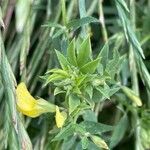
Lotus tenuis
آهو ماش ظریف، · Narrowleaf bird's-foot trefoil · Narrow-leaf bird's-foot trefoil · Slender trefoil · Narrow-leaf trefoil
Description
Source: leafsnapLotus tenuis is a flowering plant of the pea family Fabaceae, native to western and southern Europe and southwest Asia. Some botanists treat it as a subspecies of Lotus corniculatus, as L. corniculatus subsp. tenuifolius. Its tolerance of salt and poor soil make this plant useful for marginal conditions. It has become naturalised in many other locations, including the Pampas of Argentina, and parts of the United States. Common names include narrowleaf trefoil, narrow-leaved bird's-foot-trefoil, slender trefoil, creeping trefoil, or prostrate trefoil.
Care Guide
💧 Water
Narrowleaf trefoil thrives in wetlands and floodplains because it needs consistent moisture, though it can handle short dry periods. To keep the plant healthy, watering once a week is ideal to prevent over-saturation. Its natural outdoor habitat supplies necessary hydration, particularly during the active growing season when the plant's water needs increase.
How should I water my Narrowleaf trefoil plant?
When watering the Narrowleaf trefoil, it is important to use filtered water at room temperature. Tap water can have harmful particles for the plant, so filtered water is preferred. The water should be at room temperature or slightly warmer because the plant comes from a warm environment and cold water can be a shock to its system. It is also best to avoid overhead watering as it can cause foliage problems. Instead, simply apply filtered room temperature water to the soil until it is completely soaked. This helps moisten the roots and allows them to spread and gather necessary nutrients.
What should I do if I give too much or too little water to my Narrowleaf trefoil plant?
Overwatering is a common issue for Narrowleaf trefoil and can cause wilting, yellowing leaves, and diseases like root rot, mold, and mildew. On the other hand, underwatering is less common but can make leaves brittle and brown. It's important to address overwatering quickly, as some diseases cannot be corrected if left too long. Reduce watering immediately if you notice signs of overwatering and consider improving soil drainage. If your plant is underwatered, simply water more regularly until the symptoms improve.
How often should I water my Narrowleaf trefoil plant?
If your Narrowleaf trefoil plant is in a pot, the most precise way to determine if it needs water is by checking the soil moisture. To do this, simply stick your finger into the soil. If the top two to three inches feel dry, it's time to water it. If your Narrowleaf trefoil plant is growing outdoors in the ground, you can use a similar method to test the soil moisture. Once again, check if the top few inches of soil have dried out before watering. Typically, during the spring and early fall seasons, watering your Narrowleaf trefoil once a week is usually sufficient. However, during periods of extremely hot weather, you may need to increase the frequency to twice or more per week. It's important to note that mature and well-established Narrowleaf trefoil plants have a remarkable ability to tolerate drought conditions.
How much water does my Narrowleaf trefoil plant need?
To water your Narrowleaf trefoil effectively, you need to be generous with the amount of water you provide. Make sure that the top two to three inches of soil are dry before watering. It's important to thoroughly saturate the soil, allowing the water to seep through the drainage holes in the pot. If you don't see any excess water draining from the pot, it means you haven't provided enough water. However, be cautious not to let water accumulate and sit in the soil, as this can harm the plant. Additionally, if water is not draining properly from the pot, it could indicate that the soil is not well-draining, which is not good for the plant's health. Lastly, if the plant is kept outdoors, one inch of rainfall per week should be sufficient.
How do I water my Narrowleaf trefoil at different stages of growth?
The water needs of the Narrowleaf trefoil can vary at different growth stages. In the first few years or after transplanting, it requires more water as it focuses on root development for future growth. These young roots need extra moisture. However, as the plant matures, it will require less water. Additionally, during its blooming period, the Narrowleaf trefoil may need increased watering due to the significant moisture required for flower development.
☀️ Light Partial sun
Narrowleaf trefoil prefers moderate sunlight, though it can tolerate stronger light. Coming from areas with variable light conditions, it performs best where the sun isn’t too intense. Too little sun can restrict its growth, while excessive sunlight can damage its foliage.
What are the sunlight requirements for narrowleaf trefoil?
Narrowleaf trefoil thrives in moderate sun exposure but can adapt to more intense light conditions. It originates from areas with varying light exposure and performs best when not subjected to overly intense sunlight. Too little sun can inhibit its growth, whereas too much can cause damage to its leaves. It's essential to monitor the plant's exposure to sunlight, aiming for a balance. For indoor plants, especially during winter or in less sunny spaces, artificial lighting can supplement natural light, with specific recommendations on the type of light, wattage per square foot, and duration of exposure to mimic natural conditions effectively.
What are the signs of insufficient or excessive sunlight in narrowleaf trefoil?
Signs of insufficient sunlight in narrowleaf trefoil include smaller new leaves, leggy or sparse growth, faster leaf drop, slower or halted growth, and lighter-colored or iridescent new leaves, indicating lack of chlorophyll and essential nutrients. Excessive sunlight can lead to chlorosis, where leaves lose their green color, sunscald with damaged plant tissue, leaf curling as a defense mechanism, wilting due to increased water loss, and leaf scorching characterized by dry, brown patches on the leaves. These symptoms highlight the plant's distress under inappropriate light conditions.
How can I address light-related issues for my narrowleaf trefoil?
To address light-related issues in narrowleaf trefoil, gradually acclimate your plant to the appropriate light conditions. For indoor plants, shift them to incrementally sunnier spots each week until they receive 3-6 hours of sunlight daily or use artificial lighting for plants that are large or difficult to move. For outdoor plants, avoid sudden changes in light intensity by gradually moving them to sunnier spots. If sunlight is obstructed, consider pruning or transplanting smaller plants during their dormant period to sunnier locations. Remember, while parts of the plant that suffered due to poor light may not recover, new growth should be healthy with improved light conditions.
🌡️ Temperature 20–37.8°C
Narrowleaf trefoil is native to temperate regions and prefers temperatures between 68 and 100°F (20 and 38℃). Seasonal adjustments may be necessary if temperatures fall outside that range.
What is the ideal temperature range for Narrowleaf trefoil?
Narrowleaf trefoil, also known by its botanical name Lotus tenuis, is native to temperate regions and thrives best within a temperature range of 68 to 100°F (20 to 38°C). It is an extremely heat-loving plant, and temperatures falling outside this range may require seasonal adjustments to ensure the plant's health. During the colder months, especially in autumn, if the plant is grown outdoors, it is recommended to bring it indoors and place it near a bright window, but not too close to heaters. Keeping the temperature above 20°C during winter is beneficial for its growth, while temperatures nearing 5°C can be detrimental.
How does low temperature affect Narrowleaf trefoil and what can be done?
Narrowleaf trefoil is sensitive to low temperatures and performs best when the temperature is maintained above 20°C. It is crucial to keep the plant above 5°C during winter months. Exposure to temperatures below 1°C may result in the leaves lightening in color, eventually turning brown or black with symptoms of wilting and drooping after frost damage. To mitigate these effects, it's advised to trim off the frost-damaged parts and move the plant to a warmer environment indoors immediately for cold protection. Placing the plant near a south-facing window can ensure ample sunlight while avoiding proximity to heaters or air conditioning vents to prevent the air from becoming excessively dry.
What should be done when Narrowleaf trefoil is exposed to high temperatures?
During the hotter months, it is crucial to ensure that Narrowleaf trefoil's environment does not exceed 38°C. Exposure to temperatures beyond 43°C can make the leaves lighter in color and increase the plant's susceptibility to sunburn. In such cases, trim away the sunburned and dried-up parts to promote healthier growth. Additionally, relocating the plant to a shaded area that protects it from the intense midday and afternoon sun can be beneficial. It's also important to water the plant in the morning and evening to maintain soil moisture, helping the plant cope with high temperatures more effectively.
💨 Humidity
🪴 Soil 6-7
🌱 Fertilizer
Narrowleaf trefoil needs the most fertilizer during its active growth period, which takes place mainly in spring, summer, and early fall. Fertilization is required to supply essential nutrients that the soil may lack, encouraging healthy root and stem development and supporting the attractive foliage that is a notable feature of this plant.
🪴 Pot & Repot
✂️ Pruning
Narrowleaf trefoil has slender leaves and clusters of yellow flowers. It benefits from pruning between early and late spring. To encourage growth and improve air circulation, remove spent flowers and overcrowded stems. Be sure to use clean tools, and follow up with balanced fertilization to promote vigor and fullness.
🌿 Propagating
🐛 Diseases & pets
☠️ Toxicity
Characteristics
- Plant Type
- Herb
- Life Cycle
- Perennial
- Genus
- Lotus
- Family
- Fabaceae
- Hardiness Zone
- 10-12
- Mature Height
- 20 cm to 91 cm
- Mature Spread
- 91 cm
- Leaf Color
- Green
- Leaf Type
- Evergreen
- Flower Color
- Yellow
- Flower Size
- 0.76 cm to 1.27 cm
- Bloom Time
- Summer, Early fall
- Planting Time
- Spring, Summer, Autumn
- Harvest Time
- Late summer, Fall
- Native Area
- Libya, Turkey, India, Austria, Slovakia, Montenegro, Pakistan, Slovenia, Morocco, Croatia, Russia, Iraq, Germany, Romania, Belgium, Portugal, Netherlands, France, Tunisia, Czech Republic, Cyprus, Bulgaria, Poland, Armenia, Greece, Ukraine, Lebanon, Serbia, China, Afghanistan, Syria, Italy, Kazakhstan, Spain, Switzerland, Denmark, Iran, Albania, Azerbaijan, United Kingdom, Hungary, Algeria, Turkmenistan