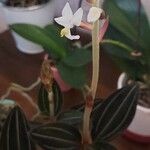
Ludisia discolor
Jewel-orchid · ว่านน้ำทอง
Description
Source: leafsnapLudisia discolor, commonly known as the jewel orchid, is a stunning plant native to Southeast Asia. Belonging to the orchid family, it is highly prized for its beautiful foliage. The plant features dark green leaves with striking deep red veins, giving it a unique and appealing look. The jewel orchid can grow up to 30 cm (12 inches) in height and produces small white flowers on long stems during the summer months. However, it is primarily cultivated for its foliage rather than its flowers. Ludisia discolor thrives in warm temperatures ranging from 18-24°C (65-75°F) and high humidity levels of around 60%. It prefers well-draining soil with regular watering but can also endure periods of drought. This plant can be grown indoors as a houseplant or outdoors in tropical climates, where it is commonly used as ground cover or planted under trees. It is relatively easy to care for but does require regular fertilization during the growing season. Overall, Ludisia discolor is an excellent choice for anyone seeking an attractive indoor or outdoor ornamental plant that adds color and texture to any space.
🌳 The jewel orchid attracts attention not for conventional uses but for its distinctive ornamental qualities. Unlike typical orchids, which are often valued for their delicate flowers, the jewel orchid is notable for its strikingly patterned foliage — dark green leaves veined with pinks and reds. This visual appeal has made it a popular houseplant, even among people who do not usually collect orchids. It is not known for other uses such as oils or spices; its potential lies in its aesthetic charm and low maintenance as a decorative indoor plant.
Care Guide
💧 Water Every 7 days
The jewel orchid thrives in high humidity and moist soil, requiring consistent watering twice a week. Primarily grown indoors for its ornamental beauty, it is essential to maintain adequate humidity, especially during the active growing season, to support its lush foliage.
How should I water my Jewel orchid to keep it healthy?
How you water your Jewel orchid depends on its growth phase. During active growth, water the soil and occasionally water overhead if it's warm. In winter or cool/wet weather, stick to watering the soil directly. Signs of needing more water include dry/damaged roots and leaves. Overwatered orchids look mushy. Use a well-draining potting mix and water multiple times per week during the growing season. Water should drain quickly to avoid standing water. The size of the pot affects the watering frequency. Use rainwater or distilled water that matches the air temperature.
What should I do if I give my Jewel orchid too much or too little water?
To avoid killing your Jewel orchid, it's important to prevent the soil from staying too moist for too long. While these plants need frequent watering during active growth, they also require well-draining soil. Overwatering can lead to mushy roots and root rot. If this happens, you should use sterile pruning shears to remove any rotted roots. Afterward, repot the orchid in a container with good drainage using a fast-draining potting mix. However, excessive repotting can harm the plant, so it's crucial to get the watering right. An underwatered Jewel orchid will start to shrink and feel dry. If this happens, it means the soil is drying too quickly, and you should increase your watering frequency.
How frequently should I give water to my Jewel orchid?
During the active growth stage in spring and summer, water your Jewel orchid once or twice per week. Increase watering to three times per week or more during hot and dry weather. In winter, water your Jewel orchid, but not as much. Watering two to three times per month should be enough during the coldest months. If you keep your Jewel orchid indoors, the soil may dry quicker, so you may need to increase the number of monthly waterings. In fall, gradually reduce watering frequency from multiple times per week to the reduced winter schedule.
What things do I need to think about when watering my Jewel orchid during different times of the year and when it's growing?
When planning the watering schedule for your Jewel orchid, consider two important growth phases. The first phase is the active growth period, which occurs in spring and summer. During this time, the plant should be watered multiple times per week. The second phase is the rest period, which lasts for about two to three months in winter. During this period, the Jewel orchid requires less water and fertilization. Water it about once or twice per month. In the fall, gradually decrease the watering frequency from multiple times per week to once or twice per month to match the winter period.
How should I water my Jewel orchid if I keep it inside?
The Jewel orchid needs a relatively humid growing environment. Unfortunately, most indoor locations lack the necessary air moisture, causing the plant and soil to dry out quickly. To address this, you can use a humidifier in the room where you grow the orchid and increase watering frequency. However, it's important to note that the orchid also requires proper air circulation to avoid excessive moisture and potential diseases. You can ensure adequate air circulation by including a fan in the room along with the humidifier.
☀️ Light Partial sun
Jewel orchid grows best with moderate sunlight, resembling the understory conditions of tropical forests. It can still maintain healthy growth even under very low or no light. Excessive light may lead to leaf discoloration, while too little light can slow its growth rate.
What are the sunlight requirements for a Jewel orchid?
Jewel orchids require moderate sunlight exposure, echoing their natural habitat in the understory of tropical forests. They thrive in partial sun, about 3-6 hours of sunlight, and can also grow in full shade, with less than 3 hours of sunlight. Excessive light can lead to leaf discoloration, whereas too little light might slow growth. It's vital to observe the movement of sunlight in your garden to find spots that offer the right balance of light and shade, ensuring the plants' health and happiness.
How can artificial lighting benefit indoor Jewel orchids?
Artificial lighting is crucial for Jewel orchids, especially when natural sunlight is insufficient, like in winter or less sunny spaces. It fosters faster, healthier growth by providing the needed light spectrum. LED lights are recommended due to their customization options for specific wavelengths. The appropriate artificial light intensity varies: full sun plants require 30-50W/sq ft, partial sun plants need 20-30W/sq ft, and full shade plants 10-20W/sq ft. The light source should be 12-36 inches above the plant, mimicking natural sunlight. Most plants will benefit from having artificial light for 8-12 hours per day.
What are the signs of insufficient light in Jewel orchids?
Signs of insufficient light in Jewel orchids include smaller new leaves, leggy or sparse growth, faster leaf drop, slower or halted growth, and lighter-colored or yellow (chlorotic) new leaves. These symptoms indicate the plant is not receiving enough light, impacting its growth and health negatively. Adjusting light exposure is crucial to address these issues.
How does excessive sunlight affect Jewel orchids?
Excessive sunlight can negatively affect Jewel orchids, causing conditions like chlorosis, where leaves lose their green color, sunscald with pale or necrotic areas on leaves or stems, leaf curling as a defense mechanism to reduce surface area exposure, wilting from increased water loss, and leaf scorching, characterized by brown, dry edges or patches on leaves. These symptoms suggest that the plant is receiving more light than it can handle, leading to a drop in health and photosynthetic capacity.
What solutions are available for managing light conditions for Jewel orchids?
To manage light conditions for Jewel orchids, you can gradually shift them to sunnier spots each week to achieve 3-6 hours of direct sunlight daily, allowing them to adapt. For large or immovable plants, consider artificial lighting, keeping lamps on for at least 8 hours a day or investing in professional grow lights. Outdoor plants should also be moved gradually to prevent sunburn. Minimize obstructions or consider transplanting to ensure ample sunlight. Note that parts of the plant affected by insufficient light may not recover, but new growth should be healthy with improved light conditions.
🌡️ Temperature 20–37.8°C
The jewel orchid originates from warm-climate habitats, so it does best at temperatures between 68 and 100 °F (20 and 38 ℃). Care should be taken to maintain these conditions year-round to ensure healthy growth.
What is the ideal temperature range for Jewel orchids?
Jewel orchids originate from warm climates and thrive in temperatures ranging from 68 to 100 °F (20 to 38 °C). To ensure healthy growth, it's important to maintain these temperature conditions throughout the year. During winter, if temperatures drop below 5°C, it's recommended to bring the Jewel orchid indoors for cultivation, maintaining indoor temperatures above 20°C. Placing the plant near a south-facing window will ensure it receives ample sunlight, and it's beneficial to regularly mist the plant or use a humidifier to maintain humidity levels. For outdoor overwintering, it's crucial to place orchids in a sheltered position that receives sunlight and consider setting up a temporary greenhouse or wrapping the plants with protective materials such as plastic film or fabric during colder temperatures.
How should you care for a Jewel orchid when temperatures fall below its tolerance?
When temperatures fall below the Jewel orchid's tolerance level, significant symptoms like extensive water-soaked necrosis, wilting, and drooping of leaves can occur, especially when the temperature drops below 1°C. The solution includes trimming off the frostbitten areas and immediately relocating the orchid to a warm indoor environment for protection against the cold. It's best to place the plant near a south-facing window to ensure it receives sufficient sunlight while avoiding placing it near heaters or air conditioning vents to prevent the air from becoming excessively dry.
What measures should be taken if a Jewel orchid is exposed to high temperatures?
During the summer, it's crucial to ensure that Jewel orchid's exposure to temperatures does not exceed 38°C. Temperatures beyond 43°C can halt the plant's growth, cause the leaves to gradually wilt, increase susceptibility to root rot, and increase the risk of sunburn from direct sunlight. To mitigate these effects, trim away the sunburned and dried-up parts of the plant. Moving the plant to a shaded location, especially away from the midday and afternoon sun, will help. Additionally, watering the plant in the morning and evening will help keep both the plant and the environment moist, providing some relief from the high temperatures.
💨 Humidity high (>60%)
This plant needs special care because it loves high humidity levels of 60-80% or more. The best way to achieve this is by placing a humidifier near the plant. Daily misting is also essential! Make sure the room has good ventilation.
🪴 Soil 5-6
🌱 Fertilizer
Proper fertilization is essential for a Jewel orchid's health and appearance. Feed the Jewel orchid during summer, applying fertilizer once a month throughout the season. Nutrients support growth and help preserve the plant's parts. Fertilizing improves the Jewel orchid's flower display, ensuring the best blooms.
When is it best to not add fertilizer to my Jewel orchid?
To support Jewel orchid growth, it is important to avoid root burn. During the spring and summer, when the plant is actively growing, extra nutrients are needed. However, during the fall and winter, when the plant enters its dormancy stage, it is time to stop fertilizing.
Why should I add plant food to my Jewel orchid?
Fertilizer and soil nutrients are essential for your Jewel orchid's growth. Plants, including the Jewel orchid, use the nutrients in the soil to develop new material and maintain their existing components. For the Jewel orchid, fertilization specifically helps it produce attractive flowers. Gardeners are often eager to ensure the flowers appear in their best form, and fertilization is a reliable method to achieve this.
What is the ideal time to add fertilizer to my Jewel orchid?
The Jewel orchid has two main phases in a year. The first phase is the dormant phase, which occurs during winter and has minimal new growth. The second phase is the active growth phase, which happens in spring and fall and requires more fertilization. It is recommended to start fertilizing the Jewel orchid in spring, repeating it monthly until late summer. As fall approaches, the fertilization rate can be reduced.
What kind of fertilizer does my Jewel orchid need?
To ensure proper nutrition for your Jewel orchid, it is recommended to use a fertilizer that has a well-balanced mix of the three main plant nutrients, with a slightly higher amount of phosphorus. Additionally, some gardeners opt to enrich the soil of their Jewel orchid by incorporating organic materials like compost, worm castings, and manure. Fertilizers are available in various forms, and most of them will work effectively for your Jewel orchid. However, the top choices for Jewel orchid fertilizers are usually either liquid or powdered. Regardless of the form you choose, it is essential to dilute the fertilizer and apply it while watering your Jewel orchid.
How should I fertilize my Jewel orchid?
To learn how to apply fertilizer to your Jewel orchid, follow these steps. Firstly, find a suitable fertilizer and determine the ideal fertilization schedule for your plant. Once you have done this, the most reliable method is to mix the liquid fertilizer with water before applying it to the soil. Each fertilizer may come with specific instructions on how to feed your plants, so it's best to follow the manufacturer's guidance. These instructions should also include how to properly dilute the fertilizer to prevent overfertilization. Mixing the fertilizer with water is a simple process, and once done, you can pour the mixture into the soil where your Jewel orchid is located.
🪴 Pot & Repot Every 12 months
When repotting a jewel orchid, select a pot that is only slightly larger and provides good drainage, ideally a clear orchid pot. Use a well-draining, orchid-specific mix that includes bark or moss. Carefully clean the roots and prune any that are dead or rotting. Repot after flowering, usually in spring or fall, water thoroughly, and place the plant in bright, indirect light. Avoid disturbing the roots once repotted.
✂️ Pruning
The Jewel Orchid is known for its attractive foliage and is easy to care for. To encourage healthy growth, it’s best to prune the plant from late winter to early spring. During pruning, remove any dead leaves and trim back leggy stems. Regular pruning helps promote bushy growth, improves the plant’s appearance, enhances light and air circulation, and reduces the risk of disease.
🌿 Propagating
🐛 Diseases & pets
☠️ Toxicity
Characteristics
- Plant Type
- Herb
- Life Cycle
- Perennial
- Genus
- Ludisia
- Family
- Orchidaceae
- Hardiness Zone
- 10-11
- Mature Height
- 10 cm to 25 cm
- Mature Spread
- 15 cm
- Leaf Color
- Green, Red, Gold, Purple
- Leaf Type
- Evergreen
- Flower Color
- White
- Flower Size
- 0.76 cm
- Bloom Time
- Early spring, Fall, Winter
- Planting Time
- Spring, Summer, Autumn, Winter
- Harvest Time
- Spring
- Native Area
- Malaysia, Indonesia, Cambodia, Vietnam, Myanmar, Philippines, Laos, Thailand, China