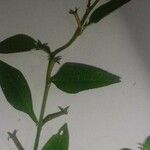
Ludwigia perennis
Care Guide
💧 Water
The perennial water primrose thrives in high humidity and damp conditions, needing daily watering to flourish. It performs best in wet soil during its growing season, emphasizing its strong preference for moisture.
☀️ Light Full sun
Mexican Primrose-Willow grows best with abundant sunlight, though it can also survive in moderate sun. Adequate light supports its growth and health, mirroring the conditions of its native habitat. Conversely, too much or too little light can harm this plant.
What kind of sunlight does Perennial water primrose need?
The Perennial water primrose thrives in full sunlight. To ensure even sun exposure, avoid crowding the plants. It is important to provide enough sunlight for the leaves, so avoid starved sunlight. If planted in pots, place the herbaceous flowers in windows with direct sun to ensure they receive full sunlight throughout the year. Partial or filtered light may weaken the stems and hinder flower growth, so it's best to always expose the Perennial water primrose to the sun.
🌡️ Temperature 20–37.8°C
Mexican Primrose-Willow is native to warm habitats and does best at temperatures of 68 to 100.4 °F (20 to 38 °C). If grown in cooler regions, make sure the Mexican Primrose-Willow can still reach that temperature range, perhaps by cultivating it indoors or in heated greenhouses during winter.
💨 Humidity
🪴 Soil 6-7
🌱 Fertilizer
Appropriate fertilization is essential for Mexican Primrose-Willow's health and appearance. Fertilize Mexican Primrose-Willow in summer, repeating the application monthly throughout the season. Nutrients drive growth and support the plant's tissues. Fertilizing improves Mexican Primrose-Willow's floral display, ensuring the best blooms.
🪴 Pot & Repot
✂️ Pruning
Perennial water primrose thrives in moist environments, displaying vibrant yellow flowers. To promote optimal growth and air circulation, prune any dead or leggy stems from early to late spring. Using clean, sharp tools helps minimize the risk of disease. Regular pruning not only encourages healthy growth but also helps control its invasive nature.
🌿 Propagating
🐛 Diseases & pets
☠️ Toxicity
Characteristics
- Plant Type
- Herb, Shrub
- Life Cycle
- Perennial
- Genus
- Ludwigia
- Family
- Onagraceae
- Hardiness Zone
- 9-11
- Mature Height
- 3.05 m
- Mature Spread
- 0.61 m to 1.22 m
- Leaf Color
- Green, Dark Green
- Leaf Type
- Deciduous
- Flower Color
- Yellow
- Flower Size
- 2.03 cm to 3.05 cm
- Bloom Time
- Late spring, Summer
- Planting Time
- Spring, Summer, Autumn, Winter
- Harvest Time
- Mid summer, Late summer, Early fall
- Native Area
- Sri Lanka, Burkina Faso, Belize, India, Mexico, Madagascar, Nigeria, Guinea-Bissau, Uganda, Tanzania, Fiji, Benin, Sierra Leone, Indonesia, Cameroon, Mozambique, Central African Republic, Malawi, Honduras, Peru, Philippines, Bangladesh, Laos, Panama, Chad, China, Colombia, Japan, Togo, El Salvador, Senegal, Eswatini, Côte d'Ivoire, Ecuador, Costa Rica, Gambia, Congo (DRC), Angola, Malaysia, Namibia, Rwanda, Kenya, Niger, Jamaica, Zimbabwe, Mali, Cuba, Cambodia, Equatorial Guinea, Liberia, Burundi, Venezuela, Brazil, Ghana, Botswana, Congo, Nepal, South Africa, Zambia, Sudan, Guinea, Bahamas, Bolivia, Vietnam, Myanmar, Guyana, Bhutan, Nicaragua, Thailand, Gabon