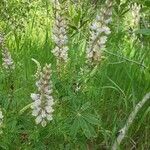
Lupinus albicaulis
Pine lupine · Sickle-keel lupine · Sicklekeel lupine
Description
Source: leafsnapLupinus albicaulis is a species of lupine known by the common name sicklekeel lupine. It is native to the western United States from Washington to California, where it grows mostly in mountain habitat. It is a hairy, erect perennial herb often exceeding a meter in height. Each palmate leaf is made up of 5 to 10 leaflets each up to 7 centimetres (2+3⁄4 in) long. The inflorescence is up to 44 centimetres (17 in) long, bearing whorls of flowers each 1 to 1.6 centimetres (1⁄3 to 2⁄3 in) long. The flower is purple to yellowish or whitish in color and has a sickle-shaped keel. The fruit is a silky-hairy legume pod up to 5 centimetres (2 in) long containing several seeds. In Oregon, where the plant is native, it has been cultivated for several uses, including reforestation and revegetation of roadsides and other disturbed habitat.
Care Guide
💧 Water
Sickle-keel lupine flourishes when it receives proper drainage and is watered regularly, about 1 inch (25 mm) per week, during the growing season. Inadequate watering can lead to premature seeding and damage to seedlings, whereas excessive watering may cause root rot and decrease nitrogen fixation. Therefore, maintaining balanced soil moisture is essential for optimal growth.
☀️ Light Full sun
Sickle-keel lupine is a sun-loving herbaceous perennial that comes from open habitats and commonly grows in meadows and grasslands. It prefers full sun but can also tolerate partial sun.
🌡️ Temperature 5–32.2°C
Sickle-keel lupine can tolerate a wide range of temperatures, but its distribution may still be constrained by various combinations of water and heat. It grows best in warm summers with adequate rainfall or watering. Long periods of cloudy, rainy weather and extended high temperatures can raise the chance of Sickle-keel lupine dying. In winter, proper protection from cold can increase the plant's survival rate.
💨 Humidity
🪴 Soil 6-8
🌱 Fertilizer
A single fertilizer application in spring is generally adequate for Sickle-keel lupine, but repeated feedings can promote maximum growth. Feed every four to six weeks. Fertilizing improves the appearance and function of the leaves, supporting even color and a healthy texture. It also encourages root development and nutrient uptake for the plant's long-term health.
🪴 Pot & Repot
✂️ Pruning
To ensure the healthy growth of sickle-keel lupine, it's important to prune it properly. The best time to do this is in early spring before new growth begins. Start by removing any dead stems and thinning out congested areas to enhance the plant's health and improve air circulation. Regular pruning encourages vigorous growth and abundant flowering. Be sure to use clean, sharp tools for the best results.
🌿 Propagating
🐛 Diseases & pets
☠️ Toxicity
Characteristics
- Plant Type
- Herb
- Life Cycle
- Perennial
- Genus
- Lupinus
- Family
- Fabaceae
- Hardiness Zone
- 4-8
- Mature Height
- 30 cm to 76 cm
- Mature Spread
- 20 cm to 40 cm
- Leaf Color
- Green, Dark Green
- Leaf Type
- Deciduous
- Flower Size
- 1.02 cm to 2.03 cm
- Bloom Time
- Mid spring, Late spring, Early summer
- Planting Time
- Autumn
- Harvest Time
- Mid summer, Late summer, Early fall