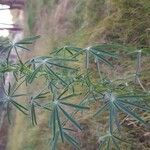
Lupinus angustifolius
European blue lupine · New Zealand blue lupin · Blue lupine · Narrow-leaf lupin · Sweet lupinseed
Description
Source: leafsnapLupinus angustifolius is a species of lupin known by many common names, including narrowleaf lupin, narrow-leaved lupin and blue lupin. It is native to Eurasia and northern Africa and naturalized in parts of Australia and North America. It has been cultivated for over 6000 years as a food crop for its edible legume seeds, as a fodder for livestock and for green manure.
🌳 Apart from its edible seeds, narrow-leaved lupin has been used as green manure and in phytoremediation. Its nitrogen-fixing capacity enhances soil health, and it can signal the presence of heavy metals in the soil, warning of potential contamination.
Care Guide
💧 Water Every week
Narrow-leaved lupin, a plant native to the Mediterranean region, thrives in climates with mild winters and dry summers. While it is drought-resistant, watering it weekly will promote optimal growth. Maintaining consistent moisture during the growing season enhances both foliage and flower development.
How often should I water my Narrow-leaved lupin plant?
To properly care for narrow-leaved lupin, it's important to water it regularly throughout the growing season. In spring, watering once a week should suffice. However, as the weather gets warmer, you may need to increase your watering to two or three times a week. It's crucial not to exceed this rate as it can harm the plant. It's also important to maintain relatively moist, but not wet, soil for the narrow-leaved lupin. Keep in mind that watering a narrow-leaved lupin in a pot is different. The soil in a pot tends to heat up and dry out faster than ground soil, so you'll need to water more frequently. Generally, watering a potted narrow-leaved lupin a few times a week is reasonable, compared to once a week for a plant in the ground.
How should I water my Narrow-leaved lupin plant?
To water Narrow-leaved lupin, you can use a variety of common watering tools such as a garden hose with a spray nozzle or a watering can. The plant is not too specific about the type of water it receives, as it can survive with rainwater, tap water, or filtered water. Avoid watering from overhead as it can harm the leaves and flowers and potentially lead to disease. Setting up a drip irrigation system is often the best method for watering this plant, as it provides even and direct water distribution to the soil. When watering a Narrow-leaved lupin that is grown in a container, you can follow a similar approach but use tools like a cup, watering can, or tap to apply water directly to the soil.
What should I do if I give too much or too little water to my Narrow-leaved lupin?
If you underwater your Narrow-leaved lupin, simply water it more often. Overwatering can be a bigger problem, as it can lead to diseases and death. To prevent this, choose a sunny location with good drainage. If your potted lupin is overwatered, consider changing the pot to one with better drainage. Repot it with loose soil in a pot that drains well.
How much water does my Narrow-leaved lupin plant require?
Determining how much water to give to your Narrow-leaved lupin can be approached in a few ways. Some gardeners prefer to assess soil moisture by feeling the soil, suggesting that watering should continue until the top six inches of soil are moist. Another approach is to use a specific measurement, such as giving your Narrow-leaved lupin around two gallons of water per week, depending on temperature and soil dryness. However, strictly following these guidelines may lead to overwatering if your plant requires less water. In container gardening, the approach is different. You should water enough to moisten all dry soil layers, using methods like checking moisture with your finger or observing a slight trickle of excess water from drainage holes.
How do I know if I'm watering my Narrow-leaved lupin plant enough?
Avoiding overwatering can be challenging for Narrow-leaved lupin. On one hand, their deep roots require weekly watering to keep the soil moist. However, they are very prone to root rot and browning if overwatered. Underwatering is less of a concern as these plants can survive without extra water for some time. However, if they go too long without water, wilting and dry leaves may occur.
☀️ Light Full sun
The narrow-leaved lupin grows best with steady sunlight, though it can tolerate some shade. Still, too much shade will restrict its growth, while overly intense sun can scorch its leaves. Originating from areas with plentiful sunshine, it is therefore well adapted to bright conditions.
What are the sunlight requirements for Narrow-leaved lupin?
Narrow-leaved lupin thrives best with consistent exposure to sunlight but can tolerate some shade. It requires full sun, meaning above 6 hours of sunlight daily, or partial sun, approximately 3-6 hours of sunlight daily. However, it's important to observe how sunlight moves through your garden to ensure that your plants receive the perfect balance of light and shade, ensuring their happiness and growth.
Can Narrow-leaved lupin adapt to different lighting conditions?
Yes, the Narrow-leaved lupin is adaptable to different lighting conditions due to its origin in sun-rich habitats. While it prefers ample sunlight, it can endure some shade. Nevertheless, too much shade can inhibit its growth, and excessive sunlight may lead to leaf scorch. For indoor plants, artificial lighting can be a beneficial supplement, especially during less sunny periods or in locations with insufficient natural light. Options like LED lights aid in providing the required wavelengths, with specific wattage per square foot based on the plant's sun requirements.
What are the symptoms of inappropriate lighting for Narrow-leaved lupin?
Narrow-leaved lupin may show several symptoms if it does not receive adequate light. Insufficient light can lead to smaller leaves, leggy or sparse growth, faster leaf drop, slower or halted growth, lighter-colored new leaves, and conditions such as chlorosis or leaf scorching. Excessive sunlight can cause symptoms like sunscald, leaf curling, wilting, and leaf scorching. These symptoms indicate the plant's struggle with its current lighting conditions.
How can I improve the lighting conditions for my Narrow-leaved lupin?
To enhance the growth of your Narrow-leaved lupin, gradually introduce it to sunnier spots to ensure at least 6 hours of direct sunlight daily. Utilize south-facing windows for indoor plants and keep curtains open during daylight hours. For plants too large or not easily movable, consider artificial lighting solutions, keeping lights on for at least 8 hours daily. When dealing with outdoor plants, avoid abrupt changes in light exposure to prevent sunburn. Pruning obstructive branches and transplanting smaller plants to sunnier locations with good drainage can also help in improving light access.
🌡️ Temperature 15–35°C
Narrow-leaved lupin originates from climates where temperatures range from 68 to 95°F (20 to 35℃). It does best within this temperature band, and large deviations from it can negatively affect its growth.
What is the native climate for Narrow-leaved lupin?
Narrow-leaved lupin, botanically known as Lupinus angustifolius, is native to climates where temperatures range between 68 to 95°F (20 to 35°C). It thrives best within these temperature parameters, and significant deviations from this range can negatively affect its growth. This plant exhibits strong cold resistance, meaning special frost protection measures are typically not required during winter. However, in instances where winter temperatures are anticipated to fall below -15°C, it is crucial to provide cold protection. This can be achieved by covering the plant with soil or straw and ensuring the soil remains moist before the first freeze in autumn to prevent drought and water scarcity during the winter and early spring months.
How does Narrow-leaved lupin react to low temperatures?
Narrow-leaved lupin is cold-tolerant and demonstrates optimal growth when temperatures are maintained above 20°C. During winter, it is essential to ensure that the plant's environment does not drop below 0°C. If temperatures fall below -15°C, while no immediate changes may be observable during winter, there could be a reduction in sprouting or an absence of sprouting come springtime. In such cases, the recommended solution is to remove any plant parts that have failed to sprout in spring, helping the plant to rejuvenate and possibly recover for the growing season.
How does Narrow-leaved lupin react to high temperatures?
In the summer, it is crucial to ensure that the Narrow-leaved lupin is not exposed to temperatures exceeding 35°C. When the temperature surpasses this mark, reaching upwards of 38°C, the plant's leaves may become lighter in color, exhibit curling, become susceptible to sunburn, and in severe cases, the entire plant may wilt and dry out. To mitigate these effects, it is advisable to trim away any sunburned and dried-up parts of the plant. Relocating the plant to a shaded area during the peak sun hours of midday and afternoon or utilizing a shade cloth can provide necessary protection. Additionally, watering the plant in the morning and evening will help maintain soil moisture and support the plant's health under high temperature stress.
💨 Humidity normal (40-60%)
This plant will thrive in moderate humidity, which is probably the level in your home. However, misting it a few times a week can be very beneficial. Make sure the room has good ventilation.
🪴 Soil 6-7
🌱 Fertilizer
For best development, Narrow-leaved lupin needs three fertilizer applications: one before planting, a second about one month after seedlings emerge, and a third 1 to 1.5 months after the second. Some Narrow-leaved lupin types also benefit from an extra fertilizer application at planting to aid rapid growth.
If I fertilize my Narrow-leaved lupin too much, what will happen?
First-time gardeners, as well as experienced gardeners experimenting with new products, often fall into the trap of over-fertilizing their plants. Narrow-leaved lupin, however, provides clear warning signs when it is receiving too much food. Look out for yellowing leaves, wilting foliage, and under-developed blooms - these are all indications that the plant is being overfed. Frequent fertilization of Narrow-leaved lupin can create hostile soil conditions, known as "too hot" soil, which burns the plant's roots due to excessive saturation of minerals, nutrients, or compost. To prevent this, it is advisable to flush out the soil by watering it twice as much as usual, ensuring good drainage, once a month or so.
Why should I fertilize my Narrow-leaved lupin?
Plants need nutrients to survive. Most gardeners understand this, including both experienced and inexperienced ones. Without proper nutrition, Narrow-leaved lupin will die shortly after pollination. So, providing the right nutrients in the right amounts is crucial for keeping Narrow-leaved lupin alive and producing beautiful flowers throughout the blooming season. Using fertilizer also helps build a strong and healthy root system for Narrow-leaved lupin. Since its root system is delicate, fertilizing at planting time is especially important. It helps create a stable foundation for the plant and paves the way for a remarkable flowering display. By timing the fertilization correctly, the flowering period of Narrow-leaved lupin can be significantly extended.
When should I fertilize my Narrow-leaved lupin for best results?
Narrow-leaved lupin experiences rapid growth in the early part of the growing season. It is recommended to fertilize the plant during this time, specifically at the time of planting. Whether you plant it in the ground or in planters, this initial application of fertilizer is crucial. It will be the only dose of fertilizer until later in the year, when the plant is in full bloom. Once the season is in full swing and the Narrow-leaved lupin has opened most of its blooms, it's time to start fertilizing again. This should be done every three to four weeks, depending on the weather, when the blooms are at their peak output. However, once the plant begins to produce fewer new blooms, it is no longer necessary to fertilize.
When is the best time to not use fertilizer on my Narrow-leaved lupin?
Regular fertilizing is important for Narrow-leaved lupin, but it's crucial to apply it at the right time. In certain situations, it's necessary to hold back on fertilizer. These situations are typically related to climate, but there are also controllable factors to consider. Essentially, if something is wrong with the plant, soil, or climate, it's best to wait until the issues have been resolved and the plant has recovered. For example, it's not advisable to fertilize when there are severe or unexpected weather changes. If there is a sudden cold spell in the middle of summer, it's better to wait until the temperature warms up before applying fertilizer. Similarly, if the soil is too dry or compacted to absorb anything, fertilizing would be ineffective as it would go directly to the roots instead of being diffused by the soil. This situation wouldn't be favorable for the roots of Narrow-leaved lupin. During the hottest parts of the day when temperatures reach up to 90 degrees Fahrenheit, it's also not recommended to fertilize. Since the breakdown of fertilizer can be affected by temperature, it's important to avoid hot temperatures that might break it down too quickly. Additionally, it's necessary to address any pests or diseases and resolve them before reapplying fertilizer.
What kind of fertilizer should I use for my Narrow-leaved lupin?
Most types of Narrow-leaved lupin require a specific balance of nutrients from fertilizer. This can be achieved by using a fertilizer designed for high-yield blooming plants, which typically has a higher level of phosphorus. Look for a fertilizer with a higher P number in its NPK number, such as 10-30-10. There are several fertilizer brands that offer suitable options for blooming plants like Narrow-leaved lupin. These fertilizers are convenient and hassle-free for providing the necessary nutrients. If you opt for a pre-mixed fertilizer, make sure to carefully follow the package instructions. This will help prevent over- or under-fertilization, both of which can negatively impact the growth and health of the Narrow-leaved lupin plant.
🪴 Pot & Repot
✂️ Pruning
Narrow-leaved lupin flourishes when pruned properly, with the best time being early to late spring. Concentrate on removing dead stems and lightly trimming any overgrown areas to improve the plant's shape and airflow. Consistent maintenance helps prevent disease and encourages blooming. For the best results, always use clean, sharp tools.
🌿 Propagating
🐛 Diseases & pets
☠️ Toxicity
Characteristics
- Plant Type
- Herb
- Life Cycle
- Annual, Biennial
- Genus
- Lupinus
- Family
- Fabaceae
- Hardiness Zone
- 7-9
- Mature Height
- 30 cm to 61 cm
- Mature Spread
- 20 cm to 40 cm
- Leaf Color
- Green, Blue
- Leaf Type
- Deciduous
- Flower Color
- Blue, Purple, White
- Flower Size
- 3.05 cm to 30.48 cm
- Bloom Time
- Late spring, Early summer, Mid summer
- Planting Time
- Spring, Summer
- Harvest Time
- Mid summer
- Native Area
- Libya, Egypt, Turkey, Tunisia, Montenegro, Cyprus, Bulgaria, Greece, Croatia, Morocco, Serbia, Lebanon, Portugal, Syria, Italy, Spain, Israel, Albania, Algeria, France