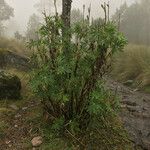
Lupinus montanus
Care Guide
💧 Water
Lupinus montanus flourishes in high-altitude environments where there is regular weekly rainfall. It needs consistent moisture and benefits from a stable watering schedule of once a week. This plant skillfully balances its hydration needs with its drought tolerance. Its growth cycle is closely tied to water availability, which influences both the timing of its flowering and its seasonal vitality.
☀️ Light Full sun
Lupinus montanus is a sun-loving perennial herbaceous plant native to open habitats, commonly found in meadows and grasslands. It prefers full sun but can also tolerate partial sun.
What are the sun requirements for Lupinus montanus?
Lupinus montanus, also known by its botanical name Lupinus montanus, thrives under specific sunlight conditions to ensure its well-being. For full sun exposure, the plant requires above 6 hours of sunlight daily. In cases of partial sun, about 3-6 hours of sunlight are adequate. It's essential to observe the way sunlight moves through your garden throughout the day. By doing so, you can find the optimal locations that provide a perfect balance of light and shade, which is crucial for the happiness and health of your Lupinus montanus.
🌡️ Temperature 5–32.2°C
💨 Humidity
🪴 Soil 6-7
🌱 Fertilizer
The best time to fertilize a Lupinus montanus is in early spring, as it is exiting dormancy and starting active growth. Fertilization supplies essential nutrients needed for healthy development. Although Lupinus montanus has fairly low fertilizer requirements, annual feeding can boost its survival and encourage improved, longer-lasting flowers.
🪴 Pot & Repot
✂️ Pruning
Lupinus montanus is a perennial plant known for its vibrant flowers and foliage. To encourage growth, prune it in early spring by removing dead stems and shaping the plant. Avoid heavy pruning to preserve the blooms. Light pruning helps improve air circulation, reduces the risk of disease, and promotes healthy foliage.
🌿 Propagating
🐛 Diseases & pets
☠️ Toxicity
Characteristics
- Plant Type
- Herb
- Life Cycle
- Perennial
- Genus
- Lupinus
- Family
- Fabaceae
- Hardiness Zone
- 4-8
- Mature Height
- 30 cm to 91 cm
- Mature Spread
- 30 cm to 61 cm
- Leaf Color
- Green, Dark Green
- Leaf Type
- Deciduous
- Flower Color
- Purple
- Flower Size
- 1.02 cm to 2.03 cm
- Bloom Time
- Late spring, Early summer, Mid summer
- Planting Time
- Spring, Autumn
- Harvest Time
- Mid summer, Late summer, Early fall