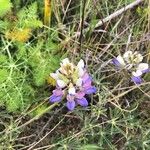
Lupinus variicolor
Manycolored lupine · Lindley's Varied Lupine
Description
Source: leafsnapLupinus variicolor (varied lupine, manycolored lupine, Lindley's varied lupine or varicolored lupine) is a shrub in the lupine (lupin) genus Lupinus. Lupinus variicolor is endemic to California where it occurs mostly along the northern coast, though it has also been reported in Sutter County, California. It is one of the foodplants of the endangered mission blue butterfly. It thrives in elevations between sea level and 1,640 ft (500 m).
Care Guide
💧 Water
Varied lupine flourishes in areas that receive periodic rainfall, as it needs weekly watering and has a moderate tolerance to drought. To cultivate it successfully, maintain consistent soil moisture without overwatering, particularly in temperate regions where seasonal rains promote its growth cycles.
What should I do if I give my Varied lupine too much or too little water?
If you notice that your Varied lupine lacks moisture, the solution is to water it more regularly. Overwatering, on the other hand, can be a serious problem that may go unnoticed until it's too late. Overwatered plants can become vulnerable to diseases, which can cause them to decline and eventually die. To avoid this, it's important to choose a good growing location with plenty of sunlight to dry out the soil and proper drainage to prevent waterlogging. If your Varied lupine is in a pot and you've been overwatering it, consider transferring it to a new pot with good soil drainage and additional holes for water to escape.
☀️ Light Full sun
Varied lupine flourishes when exposed to abundant sunlight. Its growth and overall health are best under those conditions. As a plant native to sunny environments, it may show poor growth and reduced vigor if it does not receive sufficient light.
What are the sunlight requirements for varied lupine?
Varied lupine thrives in conditions that provide abundant sunlight, requiring more than 6 hours of sunlight daily, referred to as 'full sun'. It can also grow in 'partial sun', which means about 3-6 hours of sunlight. It's essential to watch how sunlight moves through your garden to ensure you're providing the right balance of light and shade, as this significantly impacts the health and happiness of your plants.
What are the essentials for growing varied lupine successfully?
Growing varied lupine successfully hinges on exposing the plant to ample amounts of sunlight to ensure optimal health and growth. Native to sunny environments, varied lupine can suffer from poor growth and vitality if not provided with enough light. In scenarios where natural sunlight is scarce, such as indoors during winter or in less sunny spaces, artificial lighting can be a vital supplement. Proper artificial lighting involves selecting the right type of light, like LED, ensuring the suitable intensity (30-50W/sq ft for full sun plants), maintaining the correct distance (12-36 inches above the plant), and mimicking natural daylight hours, typically 8-12 hours per day.
What symptoms indicate insufficient light for varied lupine?
Varied lupine showing signs of insufficient light will exhibit symptoms such as smaller new leaves compared to mature ones, leggy or sparse growth, faster leaf drop, slower or no new growth, and lighter-colored new leaves. Conditions like chlorosis (leaf yellowness), sunscald, leaf curling, wilting, and leaf scorching might also occur, indicating either too little or too much light exposure. These symptoms highlight the plant's struggle with inadequate lighting conditions.
What are the solutions for varied lupine struggling with light conditions?
To address varied lupine's struggle with light conditions, indoor plants can be gradually moved to sunnier locations, aiming for at least 6 hours of direct sunlight, or supplemented with artificial light. Outdoor plants should also be moved to sunnier spots gradually to prevent sunburn. Techniques include reducing obstructions like pruning obstructive branches, or for smaller plants, considering transplanting during dormant periods to better-lit locations. While some damage from insufficient light may be irreversible, new growth should be healthier following these adjustments.
🌡️ Temperature 5–25°C
Varied lupine is native to temperate regions and thrives in temperature ranges of 68 to 95 °F (20 to 35 ℃). Its natural habitats are generally warm. In other climates, seasonal adjustments may be required to replicate this environment.
What is the natural habitat of varied lupine?
Varied lupine, or Lupinus variicolor, is endemic to temperate regions and flourishes best in temperatures ranging from 68 to 95 °F (20 to 35 °C). It thrives in natural habitats that maintain warm temperatures. For regions with different climates, seasonal adjustments may be necessary to replicate its native environmental conditions.
How does varied lupine adapt to cold temperatures?
Varied lupine is highly cold-tolerant and does not need extra frost protection in winter. To prepare for the first freeze in autumn, it is recommended to water the plant generously, ensuring the soil remains moist and freezes in this state. This strategy helps prevent drought and water scarcity for the plant during the winter and early spring months.
What should be done if varied lupine experiences temperatures below -30°C?
Although varied lupine is extremely cold-tolerant, maintaining winter temperatures above -30°C is crucial. If temperatures drop below this level, there may not be noticeable changes during the winter, but a decrease in sprouting or a complete failure to sprout might occur in the spring. To mitigate this, remove any parts of the plant that have failed to sprout in the spring.
How can varied lupine be protected in high temperature conditions?
Varied lupine struggles with high temperatures above 35°C, leading to halted growth and increased susceptibility to rot. To protect the plant, trim away any sunburned or dried-up parts. It's beneficial to move the plant to a shaded area during the midday and afternoon sun or to use a shade cloth. Ensuring the soil stays moist by watering in the morning and evening can also help the plant cope with high temperatures.
💨 Humidity
🪴 Soil 6-7
🌱 Fertilizer
When Varied lupine has opened most of its flowers to full size, you should resume fertilizing. Begin feeding the plant about when blooms are at their peak, doing so every three to four weeks as conditions allow. Once the plant produces fewer new blooms, discontinue fertilizing; there's no point in feeding it when it can no longer produce additional flowers.
🪴 Pot & Repot
✂️ Pruning
Varied lupines display vibrant flowers and lush foliage. To encourage growth and enhance blooms, prune them from early to late spring. Remove any damaged stems and spent flower spikes, but avoid heavy pruning to prevent stress. This approach promotes healthier plants and more abundant flowering.
🌿 Propagating
🐛 Diseases & pets
☠️ Toxicity
Characteristics
- Plant Type
- Herb
- Life Cycle
- Annual, Perennial
- Genus
- Lupinus
- Family
- Fabaceae
- Hardiness Zone
- 4
- Mature Height
- 30 cm to 61 cm
- Mature Spread
- 61 cm
- Leaf Color
- Green, Blue, Bronze
- Leaf Type
- Deciduous
- Flower Color
- Purple, Blue, Pink, White
- Flower Size
- 1.02 cm to 2.03 cm
- Bloom Time
- Mid spring, Late spring, Early summer
- Planting Time
- Spring, Summer, Autumn
- Harvest Time
- Summer