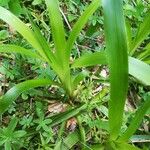
Luzula sylvatica
Great wood-rush · Great woodrush · Greater woodrush · Shadowgrass · Greater Wood-rush
Description
Source: leafsnapLuzula sylvatica, commonly known as the great wood-rush, is a perennial plant species belonging to the Juncaceae family. Native to Europe, it thrives in woodlands, forests, and meadows. The plant typically forms clumps and can grow up to 60 cm in height. Its narrow, grass-like leaves are dark green, turning bronze in autumn. From May to July, Luzula sylvatica produces small, inconspicuous flowers on tall stems that rise above the foliage. The flowers are brownish-green or yellowish-green with six tepals arranged in two whorls. This plant prefers moist, organically rich soils but can tolerate dry conditions once established. It is an excellent choice for shady areas in gardens or woodland settings, offering year-round interest with its attractive foliage. Luzula sylvatica has various uses, including ornamental landscaping due to its appealing appearance. Traditionally, it has been used medicinally as an antiseptic for wounds. Additionally, the plant provides winter food for wildlife such as deer, which feed on its leaves when other food sources are scarce. Overall, Luzula sylvatica is a versatile perennial species that enhances both beauty and ecological value wherever it is grown.
Care Guide
💧 Water
☀️ Light Partial sun
🌡️ Temperature 5–35°C
💨 Humidity
🪴 Soil 4-6
🌱 Fertilizer
🪴 Pot & Repot
✂️ Pruning
🌿 Propagating
🐛 Diseases & pets
☠️ Toxicity
Characteristics
- Plant Type
- Herb
- Life Cycle
- Perennial
- Genus
- Luzula
- Family
- Juncaceae
- Hardiness Zone
- 4-9
- Mature Height
- 76 cm
- Mature Spread
- 49 cm
- Leaf Color
- Green
- Leaf Type
- Evergreen
- Flower Color
- Brown, Green
- Flower Size
- 0.25 cm to 0.51 cm
- Bloom Time
- Mid spring, Late spring, Early summer
- Planting Time
- Spring, Summer, Autumn
- Harvest Time
- Early summer, Mid summer