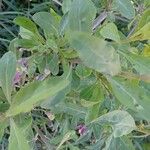
Lycium barbarum
Goji berry · Chinese boxthorn · Chinese wolfberry · Duke of Argyll's teaplant · Duke of Argyll's teatree
Description
Source: leafsnapLycium barbarum, commonly known as goji berry or wolfberry, is a deciduous shrub in the Solanaceae family. Native to China, this plant has been used in traditional Chinese medicine for centuries. It can grow up to 3 meters in height and features long, flexible branches with thorns. The leaves are small, oval-shaped, and bright green. The goji berry plant produces small, bright red berries that are rich in antioxidants and nutrients such as vitamin C, beta-carotene, iron, zinc, and selenium. These berries have been utilized for their medicinal properties, including boosting immune function and promoting healthy skin. The plant prefers well-drained soil and full sun exposure but can also tolerate partial shade. Though drought-tolerant, it requires regular watering during the growing season. Lycium barbarum is often grown commercially for its fruit, which has gained worldwide popularity due to its health benefits. The fruit can be eaten fresh or dried, making it easy to store for extended periods. Overall, Lycium barbarum is a fascinating shrub that not only enhances the beauty of your garden but also offers numerous health benefits. Its fruit production makes it an excellent addition, providing both aesthetic appeal and nutritional value.
🎭 Intoxicating,
Care Guide
💧 Water
☀️ Light Full sun
🌡️ Temperature 10–35°C
💨 Humidity
🪴 Soil 6-8
🌱 Fertilizer
🪴 Pot & Repot
✂️ Pruning
🌿 Propagating
🐛 Diseases & pets
☠️ Toxicity
Characteristics
- Plant Type
- Shrub, Vine
- Life Cycle
- Perennial
- Genus
- Lycium
- Family
- Solanaceae
- Hardiness Zone
- 6-9
- Mature Height
- 3.05 m
- Mature Spread
- 3.96 m
- Leaf Color
- Green, Gray
- Leaf Type
- Deciduous
- Flower Color
- Purple, Lavender
- Flower Size
- 2.54 cm
- Bloom Time
- Late spring, Early summer, Mid summer
- Planting Time
- Spring, Autumn
- Harvest Time
- Mid summer
- Native Area
- Nepal, Saudi Arabia, Iraq, Turkey, Syria, India, Indonesia, Egypt, Armenia, Azerbaijan, Lebanon, China