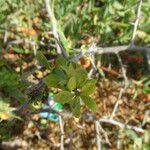
Lycium ferocissimum
African boxthorn · Box thorn · Cape boxthorn
Description
Source: leafsnapLycium ferocissimum, commonly known as the African boxthorn or spiny matrimony vine, is a woody shrub belonging to the Solanaceae family. Native to southern Africa, it has been introduced to various parts of the world as an ornamental plant. The plant can reach up to 3 meters in height and has a sprawling habit with long, arching branches covered in sharp thorns. The leaves of Lycium ferocissimum are small, oval-shaped, and glossy green. The flowers are small, bell-shaped, and have white or pale pink petals that bloom from spring through summer. The fruit is a bright red berry containing numerous seeds. Lycium ferocissimum prefers well-drained soils in full sun but can tolerate some shade. It is drought-tolerant but benefits from regular watering during dry periods. This plant can be propagated by seeds or cuttings. While Lycium ferocissimum has some ornamental value, it poses ecological threats as an invasive species in many parts of the world where it has been introduced outside its native range. Its thorny branches make it difficult for animals to move through areas where it grows densely, impacting local ecosystems by reducing biodiversity and altering habitat structure. Overall, Lycium ferocissimum is an interesting shrub with both positive attributes for landscaping and negative impacts on local ecosystems when grown outside its native range without proper management. Gardeners and land managers should exercise caution to prevent its spread in natural areas.
Care Guide
💧 Water Every 7 days
African boxthorn thrives in semi-arid conditions due to its high drought tolerance and preference for dry environments over moist ones. It should be watered every 2-3 weeks. Primarily grown outdoors, African boxthorn can adapt to a range of temperatures and effectively conserves water within its tissues during the growing season.
How should I water my African boxthorn plant?
Your African boxthorn is not particular about how you water it, so you can use any watering tool you have on hand. Whether it's a watering can, hose, or even a cup, they will all do the job of moistening the soil. When watering, it's best to apply the water directly to the soil and make sure to evenly moisten all areas so that the entire root system receives adequate hydration. To protect the plant, consider using filtered water instead of tap water which may contain harmful particles. Additionally, it's best to use water that is at or slightly above room temperature, avoiding water that is too cold or too hot, as it may shock the African boxthorn. However, overall, this plant is quite resilient and will generally thrive with any type of water you give it.
What should I do if I give too much or too little water to my African boxthorn plant?
Outdoor plants, particularly newly planted ones or seedlings, can often suffer from a lack of watering. It's important to remember that when a tree is small or recently planted, it needs to be watered consistently for a few months. This is because once the roots are established, the African boxthorn can usually rely on rainfall. When African boxthorns are planted in pots, overwatering is more likely to happen. If you accidentally overwater your African boxthorn, you should take immediate action to fix the situation. First, stop watering the plant to minimize the effects of overwatering. Then, remove the African boxthorn from its pot and examine its roots. If there are no signs of root rot, you can return the plant to its pot. However, if you do find root rot, trim away the affected roots and consider applying a fungicide to prevent further damage. Finally, repot the African boxthorn in well-draining soil. On the other hand, if your African boxthorn is underwatered, the solution is much simpler. Simply water the plant more frequently. It's easy to spot underwatering as the leaves will droop, dry out, and fall off. Once the plant has been given sufficient water, the leaves will quickly regain their fullness. Make sure to adjust your watering frequency as soon as you notice signs of underwatering.
How often do I need to water my African boxthorn?
Most plants that grow outdoors can survive with natural rainfall. However, if your area lacks rainfall, you should water your plants every 2 weeks in the spring and fall. In the summer, you'll need to water them more frequently. In the winter, when plants grow slower and need less water, water them sparingly or not at all. If you have a young or newly planted African boxthorn, it will need more frequent watering to help it establish and grow. For potted plants, there are two main ways to determine watering frequency for your African boxthorn. One option is to set a predetermined watering schedule, such as once every week or every other week. However, this may not work for every situation, as it doesn't take into account the specific conditions of your plant's environment. Another option is to water based on soil moisture. You should wait until the top two to four inches of soil have dried out completely before watering again. This method allows you to adjust the watering frequency based on the plant's needs, which may change depending on the season. During summer, for example, the plant will require more water than during other times of the year.
How often should I water my African boxthorn plant?
Watering your African boxthorn may seem confusing at first, but it actually doesn't need a lot of water. If only a few inches of soil have dried since your last watering, giving it about five to ten ounces of water each time will support healthy growth. You can also determine the water volume needed based on the moisture in the soil. Pay attention to how many inches of soil have dried out between waterings. To ensure the plant gets enough moisture, water until all the dry layers of soil from the previous watering have been moistened. If more than half of the soil has become dry, it's a good idea to give more water than usual. Keep adding water until you see excess water draining from the pot's holes. If your African boxthorn is in an area with plenty of rain, it may not need additional watering. However, if it's young or just getting established, make sure it gets 1-2 inches of rain per week. As the plant grows and becomes established, it can rely solely on rainwater, unless there are extremely hot conditions and no rainfall for 2-3 weeks. In that case, give it a full watering to prevent stress.
How can I know if I'm giving enough water to my African boxthorn plant?
When it comes to the African boxthorn, overwatering is a more common problem. There are several signs to watch out for if this happens. Generally, an overwatered African boxthorn will have yellowing leaves and may drop some leaves. Overwatering can also cause the plant's structure to shrivel and promote root rot. On the other hand, if the African boxthorn is underwatered, it will start to wilt and may have brown or brittle leaves. Regardless of whether you see signs of overwatering or underwatering, it's important to take action and restore the plant's health.
☀️ Light Full sun
African boxthorn performs best with ample sunlight, which is key to its healthy development. In its native setting, this light helps achieve optimal leaf growth and fruiting. Neither too much nor too little light harms the plant, showing its strong adaptability. It does not need different amounts of sunlight at different stages of growth.
What are the sunlight requirements for African Boxthorn?
African Boxthorn requires full sun, which means it needs more than 6 hours of sunlight daily. This generous amount of sunlight is integral to its healthy growth, promoting optimum foliage and fruit production. Its adaptability is highlighted by its ability to manage both excessive and scarce light conditions without harm, demonstrating robust adaptability throughout different growth stages.
How important is sunlight for African Boxthorn's growth?
Sunlight is crucial for the growth and health of the African Boxthorn. It thrives best when exposed to generous amounts of sunlight, which is essential for optimum foliage and fruit production in its natural habitat. The plant demonstrates a strong adaptability to varying light conditions, indicating that both excessive or scant sunlight doesn’t pose significant harm.
Can African Boxthorn grow with artificial lighting?
Yes, African Boxthorn can grow with artificial lighting, making it suitable for indoor environments where natural sunlight is limited, especially during winter or in less sunny spaces. Adequate lighting is essential for optimal growth, with recommendations including using artificial lights such as LED lights that can mimic natural sunlight. For full sun plants, 30-50W/sq ft of artificial light is recommended, for partial sun plants, 20-30W/sq ft, and for full shade plants, 10-20W/sq ft. The proper distance and duration under artificial lights are crucial for mimicking natural conditions and promoting healthy growth.
What symptoms does African Boxthorn show when light conditions are poor?
In suboptimal light conditions, African Boxthorn may exhibit several symptoms indicating distress, including smaller new leaves, leggy or sparse growth, faster leaf drop, halted or nonexistent new growth, paler new leaves or chlorosis, and physical damage like sunscald, leaf curling, wilting, and leaf scorching. These symptoms reflect the plant struggling with inadequate sunlight or excessive sunlight exposure.
How can I improve light conditions for my African Boxthorn?
Improving light conditions involves gradual adjustments and considering artificial lighting options. For indoor plants, gradually move them to sunnier spots to ensure they receive at least 6 hours of direct sunlight daily, utilizing south-facing windows and keeping curtains open during the day. Artificial lighting, such as using a desk or ceiling lamp for at least 8 hours daily or investing in plant grow lights, can supplement light. For outdoor plants, gradually moving them to sunnier locations weekly helps them adapt without risking sunburn. Removing obstructions or transplanting to sunnier locations with good drainage can also be effective for ground plants.
🌡️ Temperature 15–32.2°C
African boxthorn is native to areas with mild temperatures, usually prospering where temperatures range from 59 to 89.6 °F (15 to 32 ℃). Adjustments to cope with lower temperatures during the winter months may be necessary.
What information and warnings should I remember about temperature for African boxthorn?
To maintain the health of African boxthorn and promote successful budding, flowering, and new growth, it is crucial to ensure consistent soil temperature. This can be accomplished by regularly watering, applying mulch to bare soil, and planting the shrub in a shaded area.
What temperature is best for African boxthorn?
The ideal temperature range for African boxthorn to thrive is between 65 and 80℉ (18 to 27℃). During its primary growing phase, it can tolerate temperatures as high as 95℉ (35℃) and as low as 15℉ (-10℃). This species is also capable of surviving freezing winters. To summarize, the recommended temperature range for African boxthorn is as follows: - Ideal: 65~80℉ (18~27℃) - Highest acceptable: 85~95℉ (30~35℃) - Lowest acceptable: -5~15℉ (-20~-10℃) or below.
Should I change the temperature for African boxthorn at different stages of growth?
African boxthorn research indicates that when temperatures rise for extended periods, such as during the growth of axillary buds and main shoots, the plant's growth is hampered. To promote strong growth after germination or transplanting, it is advisable to maintain a cool and consistent temperature of around 65℉(18℃).
How can I protect African boxthorn from the cold?
When African boxthorn is planted in the ground in areas that don't go below 15℉ (-10℃) during winter, it can tolerate freezing temperatures. However, if planted in pots or containers, it is necessary to protect the roots from the winter cold. This can be done by wrapping the container in a blanket or bringing it indoors for complete protection from the elements.
What happens to African boxthorn when the temperature is too high or too low?
African boxthorn is more severely affected by consistently high temperatures than by low temperatures. When the temperature is too hot, heat stress triggers hormonal changes that reduce seed germination and photosynthesis efficiency. This can be observed through signs like wilting, leaf browning, and even potential plant death. On the other hand, if the temperature drops too low, the plant's nutrient uptake and photosynthesis will stop, potentially resulting in the death of the plant. If a freeze occurs during the growing season, a membrane phase transition might happen, causing the plant functions to cease and leading to plant death.
💨 Humidity
🪴 Soil 6-7
🌱 Fertilizer
To encourage healthy growth, apply fertilizer to your African boxthorn in early spring. Consistent fertilizing boosts overall health, producing vigorous growth, greater tolerance of challenging conditions, and enhanced resistance to pests and diseases. Keep a regular fertilization schedule for your African boxthorn to preserve vibrant, deeply colored foliage and a lush look.
🪴 Pot & Repot
✂️ Pruning
The African boxthorn is characterized by its dense, thorny branches and small, glossy leaves. To maintain its health and appearance, prune in early to late winter. Begin by removing any dead branches and thinning out the growth to improve air circulation. This process encourages new growth and helps keep the plant at a manageable size. Be sure to wear protective gear to prevent injuries from the thorns. By following these steps, you can ensure that your African boxthorn remains healthy and vibrant.
🌿 Propagating
🐛 Diseases & pets
☠️ Toxicity
Characteristics
- Plant Type
- Shrub
- Life Cycle
- Perennial
- Genus
- Lycium
- Family
- Solanaceae
- Hardiness Zone
- 8
- Mature Height
- 4.88 m
- Mature Spread
- 3.05 m
- Leaf Color
- Dark Green
- Leaf Type
- Evergreen
- Flower Color
- White, Purple
- Flower Size
- 1.02 cm
- Bloom Time
- Spring, Summer
- Planting Time
- Autumn
- Harvest Time
- Summer, Fall
- Native Area
- South Africa, Namibia, Lesotho