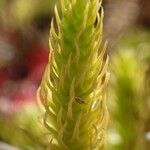
Lycopodiella inundata
Marsh club-moss · Northern Bog Club-Moss · Marsh clubmoss · Inundated clubmoss · Inundated Bog Clubmoss
Description
Source: leafsnapLycopodiella inundata, commonly known as bog clubmoss, is a small, evergreen plant in the Lycopodiaceae family. It thrives in wetlands and boggy areas across North America and Europe. This plant features creeping stems that can extend up to 20 cm in length, with small, needle-like leaves spirally arranged around the stem. Bog clubmoss reproduces through spores, which are produced in cone-like structures known as strobili found at the tips of the stems during the summer months. Traditionally, Native Americans have utilized bog clubmoss for medicinal purposes, treating ailments such as urinary tract infections, kidney problems, and respiratory issues. Ecologically, bog clubmoss is vital in wetland ecosystems by providing habitat for various insects and wildlife and helping to prevent soil erosion with its stabilizing root system. However, Lycopodiella inundata is considered threatened due to habitat loss resulting from human activities like wetland drainage for agriculture or development. Conservation efforts, including habitat restoration projects and legal protection under endangered species acts, are underway to protect this important species from further decline.
Care Guide
💧 Water Every 7 days
The inundated clubmoss thrives in environments with consistent moisture and high humidity, making it well-suited to the wet conditions found in swamps. To support its growth, the plant requires weekly watering and careful management of soil moisture to prevent it from drying out, particularly during its active growth phase. Being an evergreen, it is commonly cultivated outdoors.
At different stages of growth, how should I water my Inundated clubmoss plant?
The water needs of the Inundated clubmoss can vary depending on its growth stages. In the first few years of its life or after being transplanted, it requires more water. During these stages, the plant focuses on growing new roots to support future growth, so they need extra moisture. As the plant matures, it will require less water. Additionally, during the bloom period, the clubmoss may need more water due to the moisture demands of flower development.
What's the difference between watering my clubmoss that is in water indoors and outdoors?
The Inundated clubmoss is commonly grown indoors by gardeners who don't live in temperate or tropical regions. It's important to note that the soil in a container can dry out faster than soil in the ground. Factors such as air conditioning units can also cause the plant to need more frequent watering if it's planted outside. In such cases, you may not need to water the Inundated clubmoss very often, as regular rainfall could be sufficient. However, if you are growing this plant indoors, it will require more frequent watering since relying on rainwater won't be possible.
How should I water my flooded clubmoss plant?
To properly care for the Inundated clubmoss, use filtered water at room temperature. Tap water may contain harmful particles, so filtering is better. The plant is accustomed to a warm environment, so avoid using cold water as it can be a shock. Instead of overhead watering, apply filtered room temperature water directly to the soil until it is completely soaked. This helps the roots stay moist and spread through the soil for nutrient absorption.
What should I do if I give my Inundated clubmoss too much or too little water?
Overwatering is a more common issue that can harm your Inundated Clubmoss. It can cause wilting and yellowing of the stems and leaves. Prolonged overwatering can also lead to diseases such as root rot, mold, and mildew, which can be fatal for the plant. Underwatering is less common for the Inundated Clubmoss, but it is still possible. Signs of underwatering include brittle and brown leaves. It is important to notice the signs of overwatering early to prevent irreversible damage. If you see early signs, reduce watering immediately and check the soil's drainage. If the soil drains poorly, replace it with a well-draining potting mix. On the other hand, if you notice signs of underwatering, simply water more regularly until the signs subside.
How often do I need to water my Inundated clubmoss?
If you have a potted Inundated clubmoss, the most accurate way to determine if it needs water is by putting your finger in the soil. If the top two to three inches of soil feel dry, it's time to water it. If you have the plant outdoors in the ground, you can use a similar method. Once the top few inches of soil have dried out, it's time to water. Generally, during spring and early fall, this plant needs watering about once a week. In extremely hot weather, you may need to water it two or more times per week. However, mature and well-established Inundated clubmoss has a remarkable ability to survive without water.
☀️ Light Full sun
Inundated clubmoss does best with full exposure to sunlight, which encourages healthy growth. Coming from places where sunlight is plentiful, this plant does not require steps to reduce light intensity. Too little sun can slow its growth, while receiving more light than it needs will not harm it.
What are the sunlight requirements for Inundated clubmoss?
Inundated clubmoss requires full sun, which means it needs above 6 hours of sunlight daily for healthy growth. It thrives under full exposure to the sun's rays, originating from habitats where sunlight is abundant. The plant can grow without intervention to mitigate light intensity, and while insufficient sun can hinder its growth, exposure beyond its sun-soaking needs won't harm it. It's important to observe how sunlight moves through your garden to ensure the optimal balance of light and shade for your plants.
How does artificial lighting support indoor growth of Inundated clubmoss?
Indoor plants, including Inundated clubmoss, require adequate lighting for optimal growth, especially when natural sunlight is insufficient. Artificial lights, such as LED lights which can be customized to provide specific wavelengths, offer a vital solution. They can promote faster, healthier growth by mimicking natural sunlight. For full sun plants, 30-50W per square foot is recommended; for partial sun plants, 20-30W per square foot; and for full shade plants, 10-20W per square foot. The light source should be placed 12-36 inches above the plant, and most plants need 8-12 hours of light per day.
What are the symptoms of insufficient or excessive light exposure on Inundated clubmoss?
When Inundated clubmoss experiences insufficient light exposure, symptoms can include smaller new leaves, leggy or sparse growth, faster leaf drop, slower or no new growth, lighter-colored new leaves, and general weak appearance. Excessive light can lead to chlorosis, where leaves lose their green color, sunscald with pale or necrotic areas on leaves, leaf curling as a defense mechanism, wilting, and leaf scorching characterized by brown, dry edges. Monitoring and adjusting the plant's exposure to sunlight can help mitigate these issues.
How can I address light-related issues for Inundated clubmoss?
To optimize growth and address light-related issues for Inundated clubmoss, gradually moving the plant to receive at least 6 hours of direct sunlight daily is crucial for both indoor and outdoor plants. For indoor plants, using a south-facing window or artificial light like desk or ceiling lamps for at least 8 hours daily can help. Outdoors, it's essential to find the best spot for sunlight without causing sunburn by making gradual changes. Additionally, reducing obstructions and considering transplanting smaller plants during their dormant period can improve sunlight access. Note that parts of the plant damaged by insufficient sunlight may not recover, but new growth will be healthy with adjusted light exposure.
🌡️ Temperature 10–35°C
Inundated clubmoss is indigenous to temperate regions and prospers in temperatures between 50 and 95 °F (10 to 35 °C). For best results, keep temperatures within this range year-round, making adjustments as needed for seasonal changes.
What is the native climate for the Inundated clubmoss, and what are its ideal growing temperatures?
Inundated clubmoss, scientifically known as Lycopodiella inundata, is native to temperate climates and prospers when the temperature remains between 50 to 95 °F (10 to 35 °C). To ensure optimal growth, it's essential to maintain this temperature range throughout the year, making necessary adjustments for seasonal variations. Its strong cold resistance means it usually doesn’t require special frost protection measures during winter. However, if temperatures are expected to plummet below -25°C, it is crucial to provide cold protection by covering the plant with insulating materials such as soil or straw. Additionally, watering the plant abundantly before the first freeze in autumn is recommended to keep the soil moist, helping to prevent drought and water scarcity during winter and early spring.
What should I do if the Inundated clubmoss is exposed to temperatures below its cold tolerance or above its heat tolerance?
The Inundated clubmoss shows remarkable cold tolerance, thriving best above 10°C and requiring protection when winter temperatures drop below -15°C. Exposure to temperatures below -25°C might not exhibit immediate visible changes, but it could lead to decreased or even absent sprouting in spring. In such cases, the recommended solution is to remove any parts of the plant that have failed to sprout. During hot summers, it's important to keep the plant’s temperature below 35°C. Temperatures exceeding 38°C can cause the leaves to lighten in color, curl, and become susceptible to sunburn, potentially wilting and drying out the entire plant. To address this, trim away the sunburned and dried-up parts. Relocating the plant to a shaded area or using a shade cloth can protect it from midday and afternoon sun. Ensure the soil remains moist by watering in the morning and evening.
💨 Humidity
🪴 Soil 5-7
🌱 Fertilizer
Typically, one fertilizer application in spring is sufficient for Inundated clubmoss, though multiple feedings can maximize its growth. Apply fertilizer every month to a month and a half. Fertilization improves the leaves' appearance and function, maintaining even color and a healthy texture. It also encourages root development and nutrient uptake, supporting the plant's long-term health.
🪴 Pot & Repot
✂️ Pruning
The inundated clubmoss thrives in moist environments and features delicate, trailing stems. To promote growth and prevent disease, prune the plant from early to late spring. Be sure to use sharp, sterile tools to minimize stress on the plant. Regular pruning improves air circulation and light penetration, enhancing both the plant's appearance and overall health.
🌿 Propagating
🐛 Diseases & pets
☠️ Toxicity
Characteristics
- Plant Type
- Herb, Shrub
- Life Cycle
- Perennial
- Genus
- Lycopodiella
- Family
- Lycopodiaceae
- Hardiness Zone
- 6-9
- Mature Height
- 3 cm to 10 cm
- Mature Spread
- 10 cm to 30 cm
- Leaf Color
- Light Green, Yellow Green
- Leaf Type
- Evergreen
- Planting Time
- Spring, Summer, Autumn
- Harvest Time
- Mid summer, Late summer, Early fall, Mid fall
- Native Area
- Turkey, Austria, Czech Republic, Slovakia, Bulgaria, Croatia, Slovenia, Belarus, Ukraine, Serbia, Russia, China, Lithuania, Germany, Italy, Spain, Switzerland, Denmark, Netherlands, Estonia, Japan, Finland, France, Ireland, United Kingdom, Latvia, Belgium, Portugal