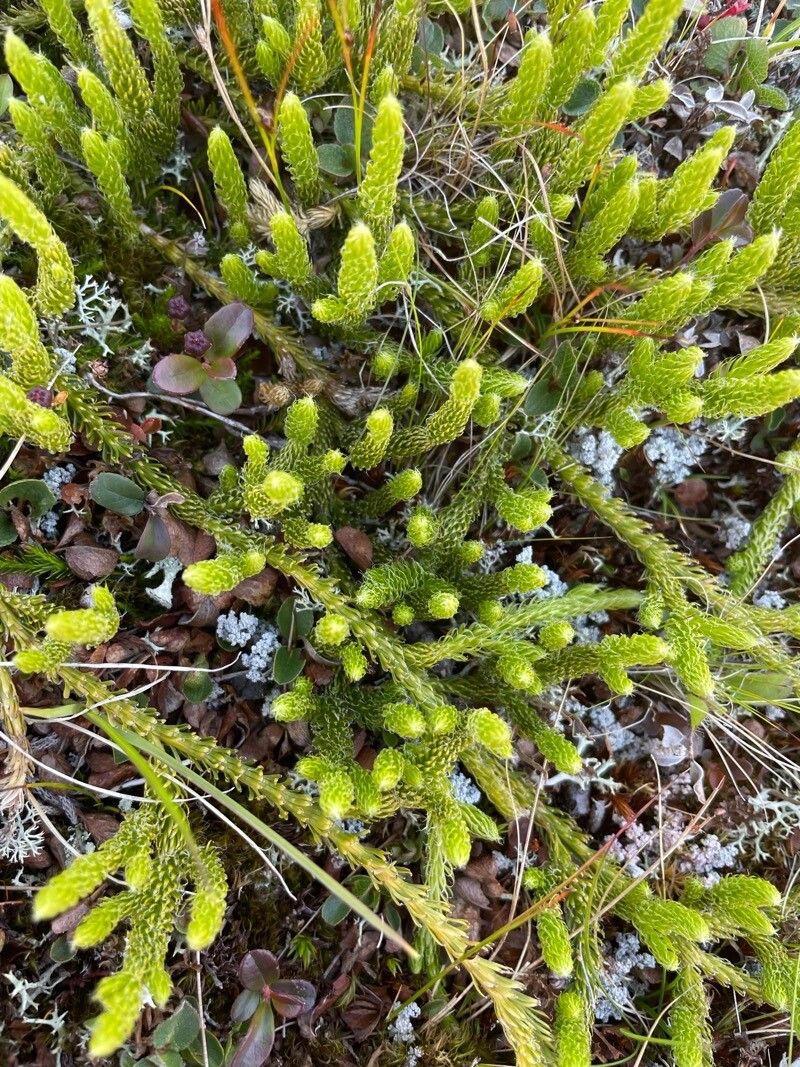
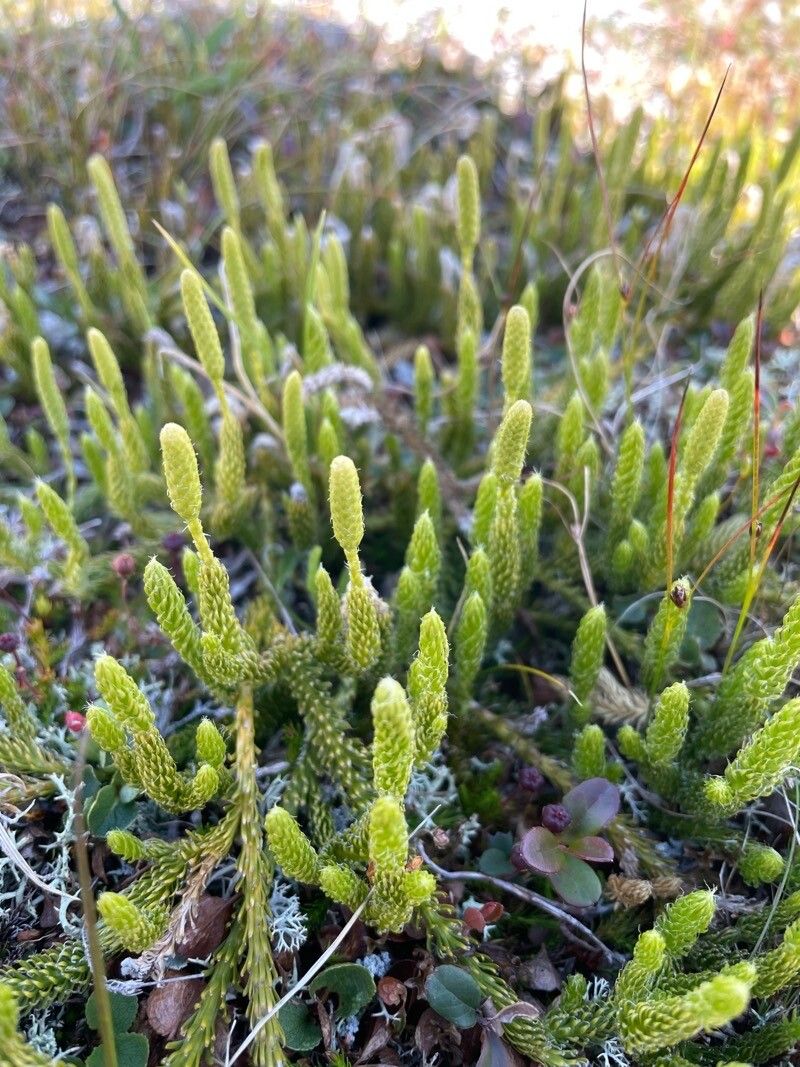
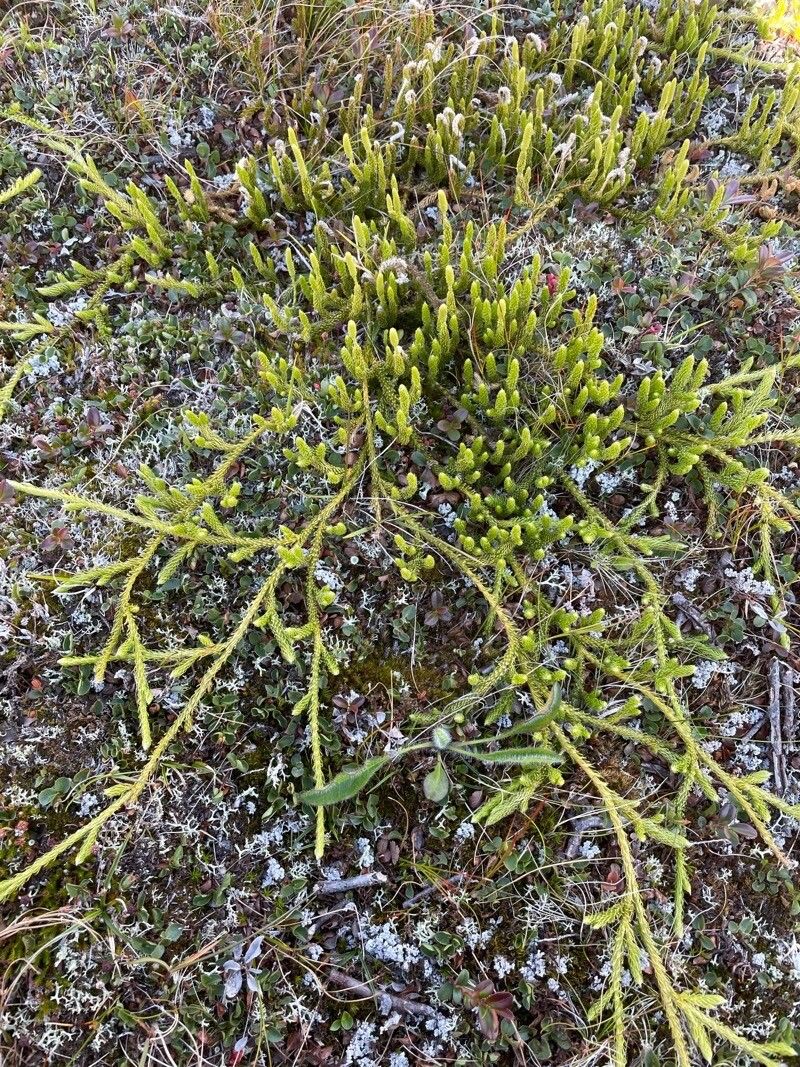
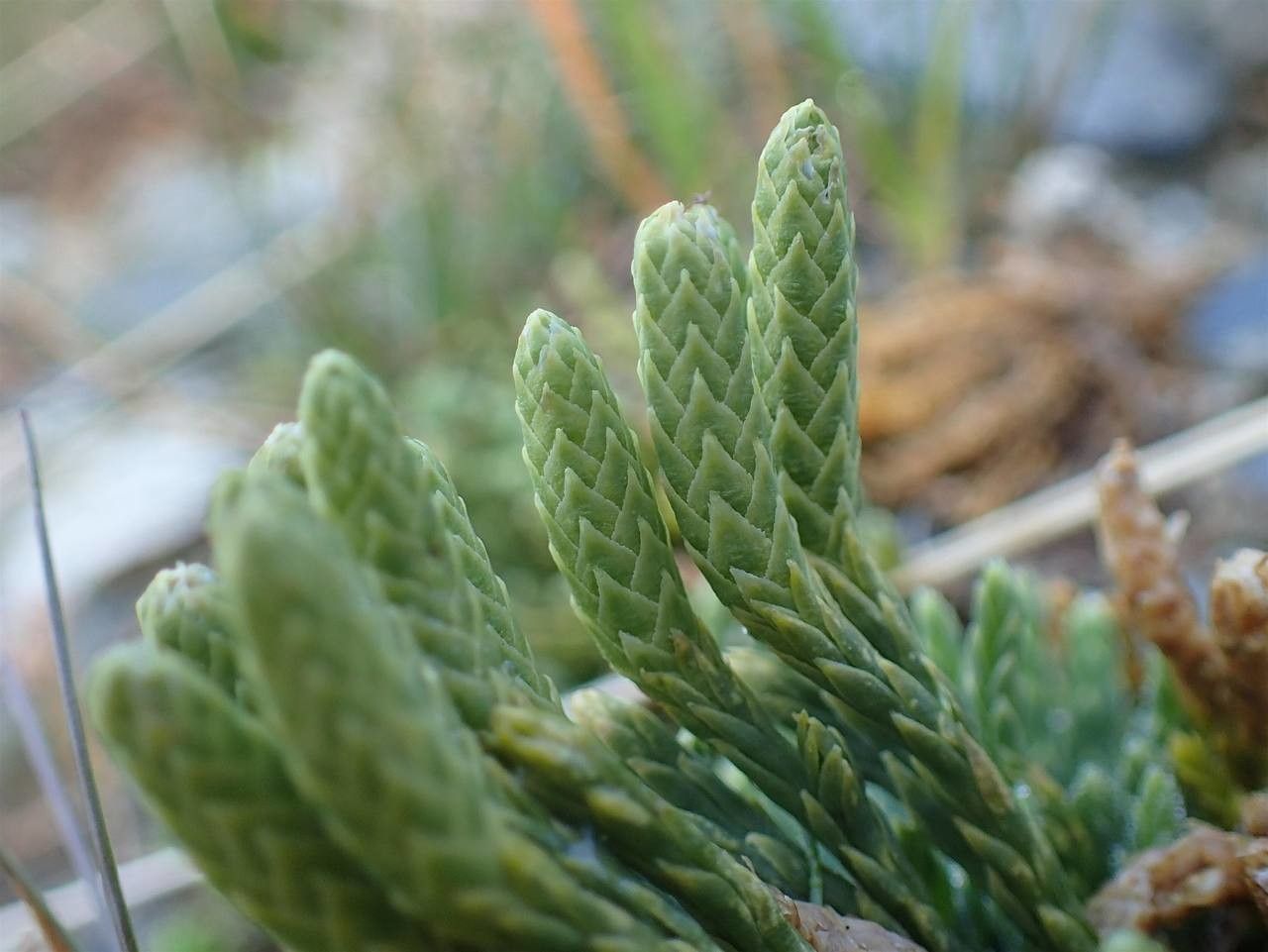
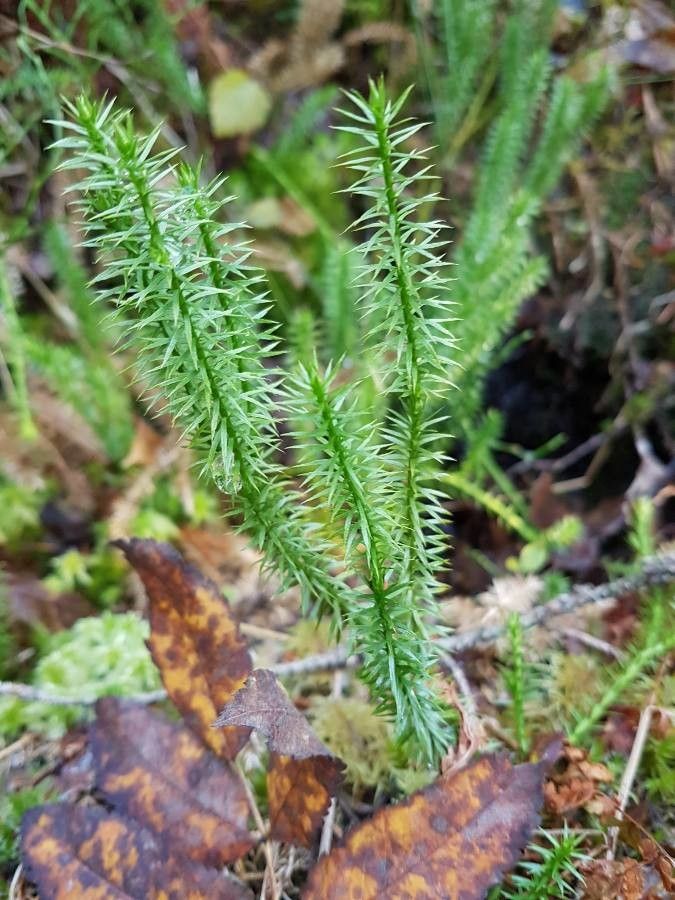
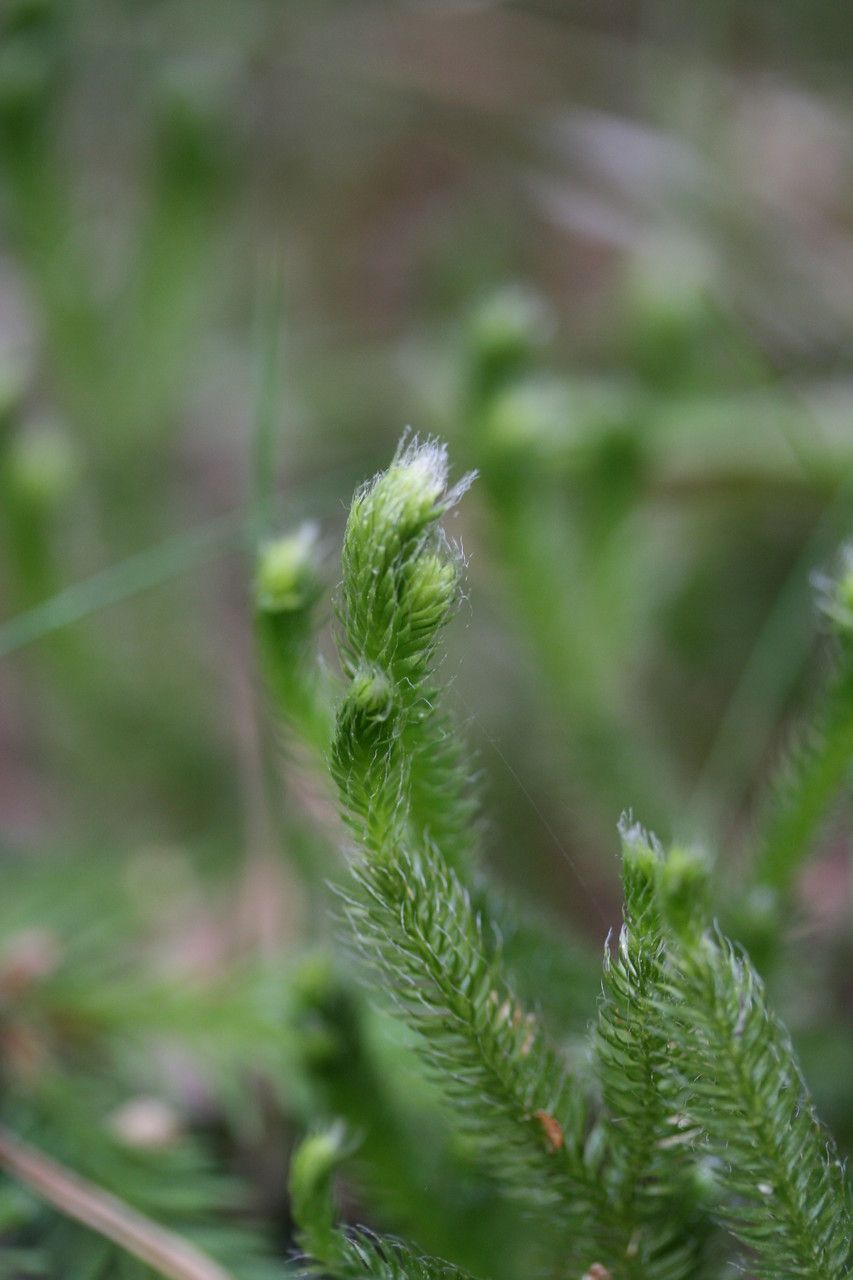
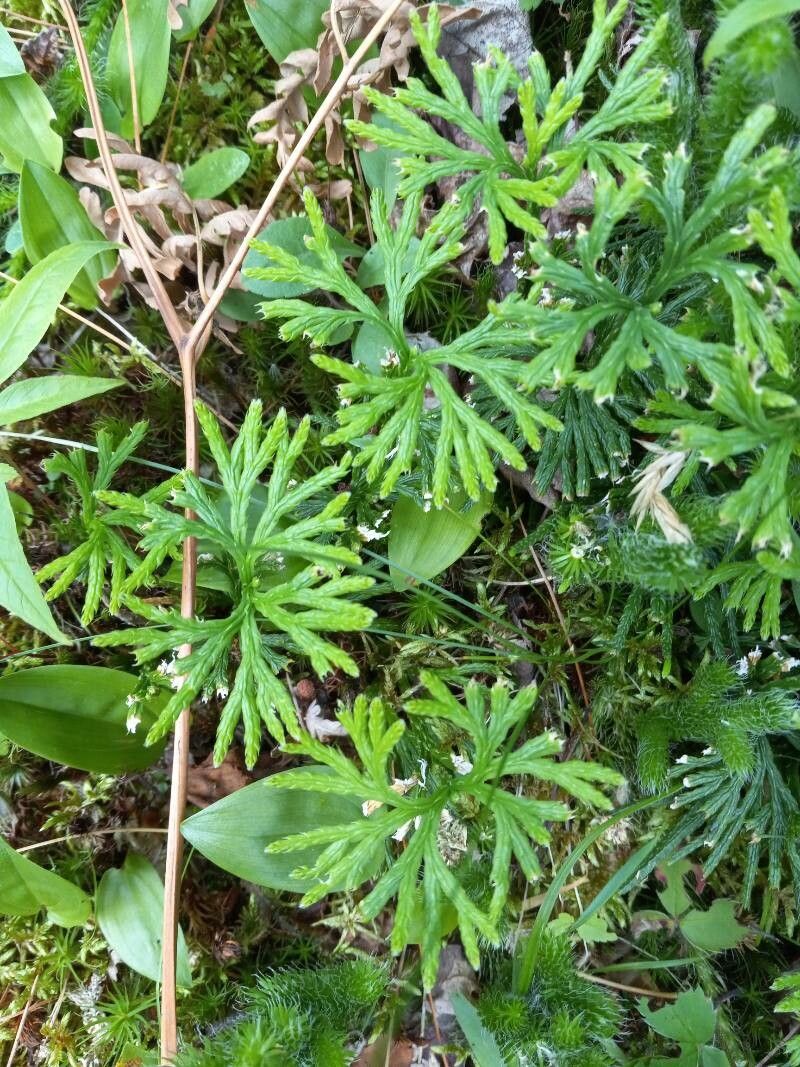
Lycopodium lagopus, commonly known as one-cone club-moss, is an arctic and subarctic species of plants in the genus Lycopodium in the clubmoss family. It is widespread in cold, northerly regions: Canada, Greenland, Russia, Scandinavia, and the northern United States including Alaska.Lycopodium lagopus is very similar to L. clavatum except that it rarely has more than one cone per stem. There has been no evidence of the two interbreeding, even though they can sometimes be found growing next to each other.
One-cone clubmoss is fairly resistant to disease and typically does not suffer from many illnesses. Still, it can be affected by pests and diseases found in its environment. These problems are generally mild. Care-wise, the plant needs a moderate amount of attention. It should be pruned regularly to preserve its appearance and encourage healthy growth. Applying fertilizer can also aid in promoting blooms. One-cone clubmoss is appropriate for anyone with outdoor space, like a garden or patio, and does not demand extensive care experience. It may need extra attention if kept indoors.
How to keep Lycopodium Lagopus.
Light
One-cone clubmoss is native to habitats like forest understories and rocky areas, where it grows in natural shade. It prefers partial sun but can tolerate full sun or full shade, showing its versatility and hardiness.
Water
The one-cone clubmoss thrives in consistently humid conditions and should be watered weekly, taking care to prevent waterlogging. As an evergreen plant, it flourishes indoors with its attractive foliage. To maintain the necessary moisture levels, regular misting is beneficial.
Temperature
One-cone clubmoss grows well in cold climates and at high elevations. It prefers cool temperatures, good air circulation, and a moist setting. In summer, steps should be taken to keep it cool because it is very sensitive to heat and can readily die from it. Dry conditions can also damage the plant. In winter, no special cold protection is necessary, but maintaining soil moisture is important.
Fertilizer
For One-cone clubmoss, a single fertilizer application in spring is typically enough, though several feedings can boost growth. Apply fertilizer every one to one-and-a-half months. Fertilization improves leaf look and function, helping maintain even color and a healthy texture. It also promotes root development and nutrient uptake for the plant’s long-term health.
Pruning
One-cone clubmoss features overlapping leaves on its trailing stems, forming dense mats. To encourage growth, it's best to prune from early to late spring, but be sure to avoid heavy trimming. Regular pruning helps maintain plant density and lowers the risk of disease. Always use sanitized tools to ensure clean cuts and minimize the chance of infections.
Botanical profile.
- Plant Type
- Herb, Shrub
- Life Cycle
- Perennial
- Genus
- Lycopodium
- Family
- Lycopodiaceae
- Hardiness Zone
- 1
- Mature Height
- 10 cm to 25 cm
- Mature Spread
- 20 cm to 40 cm
- Leaf Color
- Dark Green
- Leaf Type
- Evergreen
- Flower Color
- Yellow, Green, Brown
- Planting Time
- Spring, Summer, Autumn
- Native Area
- Russia, Norway, Austria, Sweden, Italy, Switzerland, Denmark, Finland, United Kingdom
Other names.
Reader questions.
How much water does my One-cone clubmoss require?
To water your One-cone clubmoss effectively, don't hold back on the amount of water you provide. Wait until the top two to three inches of soil are dry, then give it a good and deep watering. Make sure to thoroughly saturate the soil, allowing water to flow out from the drainage holes at the bottom of the pot. If no excess water drains out, it means you haven't watered enough. However, be careful not to let water accumulate in the soil, as this can be harmful to the plant. Additionally, ensure that the pot's soil is well-draining to avoid any complications. If the plant is outdoors, a weekly rainfall of 1 inch should be enough.
What are the essential care requirements for One-cone clubmoss?
One-cone clubmoss, known botanically as Lycopodium lagopus, flourishes in cold regions and high-altitude areas. This plant prefers cool temperatures, ample ventilation, and a consistently moist environment. It's vital to take various cooling measures during summer, as the plant is extremely vulnerable to heat, which can lead to its death. Similarly, it's important to protect the plant from dry environments. Although the One-cone clubmoss is highly tolerant of cold and doesn't require special frost protection measures in winter, it is crucial to ensure that the soil stays moist. Before the first freeze in autumn, watering the plant generously helps maintain soil moisture, preventing drought and water scarcity during the winter and early spring.
How does the One-cone clubmoss respond to low temperatures?
The One-cone clubmoss exhibits incredible tolerance to cold, with winter temperatures ideally remaining above -45°C. If temperatures fall below this threshold, the plant may not show immediate damage during winter, but it could experience a decrease in sprouting or fail to sprout at all in spring. To mitigate this, it's recommended to remove any parts of the plant that have failed to sprout in spring, ensuring healthy growth going forward.
What should I do if the One-cone clubmoss is exposed to high temperatures?
One-cone clubmoss struggles in high temperatures, particularly when the mercury climbs above 21°C, leading to halted growth and increased susceptibility to rot. To counteract damage from excessive heat, trim away the sunburned and dried-up parts of the plant. It's also wise to move the plant to a shaded area away from the midday and afternoon sun, or employ a shade cloth for protection. Ensure the soil is kept moist by watering the plant in the morning and evening to help it thrive in hotter conditions.