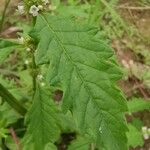
Lycopus europaeus
Gypsywort · Bugleweed · European bugleweed · Water Horehound · Gipsywort
Description
Source: leafsnapLycopus europaeus, common names gypsywort, gipsywort, bugleweed, European bugleweed and water horehound, is a perennial plant in the genus Lycopus, native to Europe and Asia, and naturalized elsewhere. Another species, Lycopus americanus has also been erroneously called L. europaeus.
Care Guide
💧 Water Every 7 days
Lycopus europaeus favours wet habitats. It thrives particularly well on soft-bottomed shores, where rotting plant refuse yields a lot of nutrition. On the other hand, flowing water is a constant source of new food, and on river banks the plant can be found happily growing even on moss-covered rocky outcrops. Grow in moist or wet soil or in shallow water no deeper than 15cm (5,90 "). Do not allow to dry out. In the home garden a regular supply of water will yield the best results. In a natural situation it will tend to grow near water sources or marshy areas.
☀️ Light Full sun
Gypsywort thrives in full sun but also tolerates shadier conditions without affecting its health or growth. Its origin in varied habitats has enabled it to handle changes in sunlight exposure. Excessive sun can cause leaf scorching, while insufficient light can restrict its optimal growth.
What are the sunlight requirements for Gypsywort?
Gypsywort requires full sunlight for over 6 hours a day to thrive optimally but can also grow well in partial sunlight, which is about 3-6 hours of sunlight per day. It's important to observe the movement of sunlight through your garden carefully to find spots that offer a healthy balance of light and shade, ensuring the plants' well-being.
How does Gypsywort adapt to different lighting conditions?
Originating from diverse habitats, Gypsywort is quite adaptable to various light conditions. It flourishes under full sunlight but can also tolerate lower light environments without significant compromise to its health or growth. However, too much direct sunlight may cause leaf scorching, whereas not enough light can hinder its growth. For indoor plants, utilizing artificial lighting can promote healthier growth, especially during periods or in areas with insufficient natural sunlight.
What are the recommended artificial lighting strategies for indoor plants?
For optimal growth, indoor plants can benefit greatly from artificial lighting, particularly when natural sunlight is not sufficient. LED lights, due to their ability to be customized to specific plant needs, are highly recommended. Full sun plants should receive 30-50W/sq ft of artificial light, partial sun plants 20-30W/sq ft, and full shade plants 10-20W/sq ft. The light source should be placed 12-36 inches above the plant and be kept on for 8-12 hours per day to mimic natural sunlight duration effectively.
What symptoms indicate a Gypsywort plant is getting insufficient light?
When Gypsywort receives insufficient light, especially in indoor settings, several symptoms may manifest. These include the growth of smaller new leaves, leggy or sparse growth patterns, early dropping of older leaves, halted or no new growth, and the development of lighter-colored or pale new leaves. Additionally, excessive sunlight can lead to chlorosis, sunscald, leaf curling, wilting, and leaf scorching, indicating the need for immediate adjustment of the plant's lighting conditions.
What are effective solutions for lighting issues with Gypsywort?
To address lighting issues, gradually moving your Gypsywort to sunnier locations each week until it gets at least 6 hours of direct sunlight daily is key. For indoor plants, using a south-facing window or artificial light sources like desk or ceiling lamps for at least 8 hours daily can help. For outdoor plants, ensure a gradual transition to prevent sunburn. If obstructions block sunlight, consider pruning or transplanting smaller plants during their dormant period to spots with better sunlight and drainage. Remember, parts of the plant affected by insufficient light may not recover, but new growth should be healthy with improved lighting conditions.
🌡️ Temperature 5–32.2°C
Gypsywort is native to temperate environments where temperatures range from 41 to 89.6°F (5 to 32 ℃). It prefers mild climates and grows best when there is a roughly equal mix of warm and cool weather. In extreme seasons, consider adjusting the temperature to match gypsywort's preferred range.
What is the native environment and preferred temperature range for Gypsywort?
Gypsywort, or Lycopus europaeus, is native to temperate environments and thrives in a temperature range of 41 to 89.6°F (5 to 32°C). It prefers mild climates that provide an even balance of warm and cool weather. Although Gypsywort exhibits strong cold resistance and usually does not require special frost protection measures, it's essential to adjust environmental temperatures to remain within its preferred range, especially during extreme seasons.
How can Gypsywort be protected against extremely cold temperatures?
Although Gypsywort has a strong resistance to cold, protection from extremely cold temperatures that drop below its growth limit is vital. Protecting the plant can be done by covering it with soil or straw. Moreover, it's advisable to water the plant abundantly before the first freeze of autumn. This ensures the soil remains moist and enters a frozen state, which helps prevent drought and water shortages for the plant during the winter and early spring months.
What are the symptoms of Gypsywort exposed to temperatures below its cold tolerance?
When Gypsywort is exposed to temperatures below its cold tolerance threshold, there may not be any noticeable changes during the winter. However, this exposure can lead to a decrease in sprouting, or in some cases, no sprouting at all during the spring. To address this, any parts of the plant that have failed to sprout in spring should be removed to encourage new growth and maintain plant health.
How does high temperature affect Gypsywort, and what solutions are available?
High temperatures can adversely affect Gypsywort, leading to symptoms such as leaves becoming lighter in color, prone to curling, susceptibility to sunburn, and in severe cases, the entire plant may wilt and dry out. To counteract these effects, it's recommended to trim away the sunburned and dried-up parts of the plant. Moving the plant to a shaded location or using a shade cloth to protect it from midday and afternoon sun can also be beneficial. Additionally, watering the plant in the morning and evening helps keep the soil moist and supports the plant's well-being in high temperatures.
💨 Humidity
🪴 Soil
🌱 Fertilizer
🪴 Pot & Repot
✂️ Pruning
🌿 Propagating
🐛 Diseases & pets
☠️ Toxicity
Characteristics
- Plant Type
- Herb
- Life Cycle
- Perennial
- Genus
- Lycopus
- Family
- Lamiaceae
- Hardiness Zone
- 4-8
- Mature Height
- 20 cm to 76 cm
- Mature Spread
- 91 cm
- Leaf Color
- Green
- Leaf Type
- Deciduous
- Flower Color
- White
- Flower Size
- 0.76 cm to 1.02 cm
- Bloom Time
- Early summer, Mid summer
- Planting Time
- Spring
- Harvest Time
- Mid summer