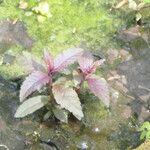
Lycopus virginicus
Water horehound · Water-bugle · Bugleweed · Virginia Water-Horehound · Virginia Bugleweed
Description
Source: leafsnapLycopus virginicus is a species of flowering plant in the mint family known by many common names, including Virginia water horehound, American water hoarhound, sweet bugleweed, water bugle, carpenter's herb, green archangel, purple archangel, wolf foot, and Egyptian's herb. It is native to North America, where it is widespread in eastern Canada and the eastern United States.This is a perennial herb with a hairy, squared stem reaching a meter tall. The oppositely arranged leaves have oval to lance-shaped blades with toothed edges. The leaves are dark green or purple. Clusters of tiny white or pink-tinged flowers occur in the leaf axils. The plant has a mint scent and a bitter taste. This species can be easily confused with Lycopus uniflorus. The latter has stamens exserted from the flowers, while the stamens of L. virginicus are included. The two species may hybridize, producing Lycopus × sherardii.Habitat types include damp, shady places. It can be found in riparian zones, such as floodplains. It grows in wet spots in forests, woodlands, and swamps.This plant has had uses in traditional herbal medicine. It was perhaps best known as a treatment for hyperthyroidism conditions, including Graves' disease and thyrotoxicosis. Indications included signs and symptoms such as dyspnea, tachycardia, tremor, and exophthalmia. Medical research has not validated the use of the herb for these conditions. It was also used for anxiety, insomnia, and respiratory ailments such as pneumonia, bronchitis, hemoptysis, and chronic cough. In Native American tradition, the Iroquois considered the plant poisonous, but the Cherokee found it useful for treating snakebite in people and in dogs. It was given to infants to help them learn to speak, and it had ceremonial uses.
Care Guide
💧 Water
The Virginia Water Horehound thrives in wetland habitats, where it prefers consistently moist conditions but can also tolerate short periods of dryness. For optimal growth, it benefits from weekly watering. As an herbaceous perennial, it needs moist soil that mimics its natural environment to maintain its health and vitality.
☀️ Light Full sun
Virginia Water Horehound thrives with ample sunlight for vigorous growth. This abundant light allows it to carry out photosynthesis efficiently for its nourishment and development, particularly during its budding period. It can tolerate partial shade, but this often leads to slower growth. Both excessive light exposure and inadequate light can impair its health and vitality.
What are the sunlight requirements for Virginia Water Horehound?
Virginia Water Horehound thrives in environments that offer generous sunlight exposure, ideally benefiting from full sun conditions, which means receiving more than 6 hours of sunlight a day. It can also adapt to partial sun conditions, roughly amounting to about 3-6 hours of sunlight per day. The plant's growth and health might be compromised if not provided with sufficient light, experiencing slower growth in partially shaded conditions and potential health decline due to overexposure or inadequate light. Observing the movement of sunlight through your garden to find the best spots that offer a balance of light and shade throughout the day is crucial for the plant's wellbeing.
How does artificial lighting benefit indoor Virginia Water Horehound plants?
Indoor Virginia Water Horehound plants require adequate lighting for optimal growth, particularly when natural sunlight is insufficient, like during winter or in spaces that do not receive enough sunlight. Artificial lights provide a vital solution, promoting healthier and faster growth by supplementing the necessary light intensity and duration. LED lights are especially beneficial as they can be customized to offer specific wavelengths needed by the plants. For plants that naturally require full sun, 30-50W per square foot is recommended; partial sun plants need 20-30W per square foot, and full shade plants should have 10-20W per square foot. The proper distance for placing lights is between 12-36 inches above the plants to mimic natural sunlight conditions, ensuring they receive 8-12 hours of light per day.
What are the signs of insufficient light in Virginia Water Horehound plants?
When Virginia Water Horehound does not receive ample sunlight, it might display several symptoms indicating light deficiency. These include the growth of smaller leaves compared to older ones, leggy or sparse growth due to elongated spaces between leaves or stems, premature leaf dropping to conserve resources, delayed or halted growth as the plant enters a survival mode, and the development of paler or irregularly colored new leaves due to lack of chlorophyll. Additionally, excessive light can lead to chlorosis, sunscald, leaf curling, wilting, or leaf scorching, directly impacting the plant's ability to photosynthesize and maintain health.
What solutions can help improve light conditions for Virginia Water Horehound?
Improving light conditions for Virginia Water Horehound involves several strategies depending on the plant's location. Indoors, gradually moving the plant to sunnier spots to achieve at least 6 hours of direct sunlight or using a desk or ceiling lamp for at least 8 hours daily can be beneficial. For outdoor plants, adjusting their location gradually to avoid sunburn is key. Minimizing obstructions such as pruning trees can enhance sunlight exposure. For smaller plants, transplanting during the dormant period to a sunnier location with good drainage is recommended. Note that while affected parts may not recover, new growth should be healthy following these adjustments.
🌡️ Temperature 5–32.2°C
Virginia Water Horehound naturally grows best in habitats where temperatures range from 41 to 89.6 °F (5 to 32 ℃). This plant prefers cooler climates. In areas with varying seasonal temperatures, Virginia Water Horehound can be adapted by using appropriate shading or watering practices.
What is the ideal temperature range for growing Virginia Water Horehound?
Virginia Water Horehound, also known by its botanical name Lycopus virginicus, naturally thrives in cooler climates with temperature ranges between 41°F to 89.6°F (5°C to 32°C). This plant has a strong cold resistance, making it suitable for varying seasonal temperatures. To adapt Virginia Water Horehound in different locations, you might need to employ shading or watering techniques to manage the temperature around the plant.
Does Virginia Water Horehound require special frost protection measures during winter?
In general, Virginia Water Horehound does not require special frost protection measures during winter due to its strong cold resistance. Nonetheless, if winter temperatures are anticipated to drop below -30°C, it's important to implement cold protection by covering the plant with soil, straw, or similar materials. It is advisable to water the plant generously before the first freeze in autumn to ensure the soil remains moist and enters a frozen state, which helps prevent drought and water scarcity for the plant during winter and early spring.
How does low temperature affect Virginia Water Horehound, and what are the solutions?
Virginia Water Horehound is quite cold-tolerant and generally thrives best in temperatures above 5°C but should be kept above -25°C during winter. If temperatures fall below -30°C, the plant may not exhibit noticeable changes during the winter but could see a decrease in sprouting or even fail to sprout in spring. In such cases, the solution is to remove any parts of the plant that failed to sprout come spring.
What are the effects of high temperature on Virginia Water Horehound, and how can they be mitigated?
During summer, it's important to keep Virginia Water Horehound below 32°C. Should temperatures exceed 35°C, the plant's leaves might turn lighter, become prone to curling, suffer from sunburn, and in severe cases, the entire plant may wilt and dry out. To mitigate these issues, trim away any sunburned or dried parts of the plant. Moving the plant to a shaded location during the midday and afternoon sun, or utilizing a shade cloth, can provide relief. Additionally, watering the plant in the morning and evening to maintain soil moisture can be beneficial.
💨 Humidity
🪴 Soil 6-7
🌱 Fertilizer
A single fertilizer application in spring is generally enough for Virginia Water Horehound, though multiple feedings can maximize growth. Apply fertilizer every month to every month and a half. Fertilizing improves the leaves' appearance and function, helping maintain uniform color and a healthy texture. It also promotes root development and nutrient uptake for the plant's long-term health.
🪴 Pot & Repot
✂️ Pruning
Virginia Water Horehound is a hardy perennial plant with distinct square stems and opposite leaves. To maintain its health and appearance, it should be pruned between early and late spring. This process involves removing dead stems and controlling excessive growth. For the best results, use sharp tools to make clean cuts, and focus on thinning out crowded areas. This will improve airflow and exposure to sunlight, promoting healthier growth.
🌿 Propagating
🐛 Diseases & pets
☠️ Toxicity
Characteristics
- Plant Type
- Herb
- Life Cycle
- Perennial
- Genus
- Lycopus
- Family
- Lamiaceae
- Hardiness Zone
- 4-8
- Mature Height
- 46 cm to 91 cm
- Mature Spread
- 49 cm to 61 cm
- Leaf Color
- Green, Dark Green
- Leaf Type
- Deciduous
- Flower Color
- White
- Flower Size
- 0.25 cm
- Bloom Time
- Mid summer, Late summer, Early fall
- Planting Time
- Spring, Autumn
- Harvest Time
- Fall