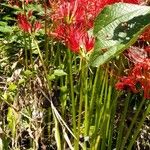
Lycoris radiata
Red spider lily · Spider-lily · Dragon Claw Flower · Resurrection Lily · Hurricane Lily
Description
Source: leafsnapLycoris radiata, known as the red spider lily, red magic lily, corpse flower, or equinox flower, is a plant in the amaryllis family, Amaryllidaceae, subfamily Amaryllidoideae. Originally from China, Korea, and Nepal, it was introduced into Japan and from there to the United States and elsewhere. It is considered naturalized in Seychelles and in the Ryukyu Islands. It flowers in the late summer or autumn, often in response to heavy rainfall. The common name hurricane lily refers to this characteristic, as do other common names, such as resurrection lily; these may be used for the genus as a whole.
💡 According to legend, the red spider lily was a flower that willingly descended into hell and was later returned by demons. Even then, it continued to wander along Huangquan Road. Feeling compassionate towards the lily, the demons allowed it to grow there, where it would guide and comfort the souls leaving the world.
🌳 The occurrence and vigor of red spider lily can reflect concentrations of certain metals in the soil, serving as a natural indicator of soil health and possible heavy metal contamination. Such bioindicator plants are valuable tools in ecological conservation and land management strategies.
🎭 Longing for one another and sorrowful memories
Care Guide
💧 Water Every 1-2 weeks
The Red Spider Lily thrives in humid subtropical climates and can tolerate short periods of drought. To keep the soil slightly moist, water the plant once every 1 to 2 weeks. Proper hydration during the growing season is crucial for blooming, highlighting the plant's need for balanced water availability.
What should I do if I give too much or too little water to Red Spider lily?
If you over-water your Red Spider lily, it will develop yellow leaves. Normally, yellow leaves occur at the end of the blooming period. However, if the leaves turn yellow before the flowers bloom, it means you're over-watering. To remedy this, ensure there is proper drainage and stop watering for a few days. Adding sawdust to the soil can help absorb excess moisture. If the situation doesn't improve, check if the seedpods have decayed. If so, promptly remove them. Under-watered Red Spider lilies also have yellow leaves, but the stems droop and the leaves become smaller and curled. Brown patches may also appear. If you've given too little water, don't panic. Red Spider lilies can tolerate some drought. Give them a good drink without saturating the soil. However, avoid over-watering, as it can cause root rot and fungal growth on the bulb. This can be seen through spots on the leaves and buds, as well as discoloration and death of leaf tips.
How frequently should I water my Red Spider lily?
The growth of your Red Spider lily depends on its location and current state. Once planted, give them a good watering and then leave them. This initial watering will spur their growth, but you can leave them alone until you see shoots. If your lilies are in a pot, water them when the top 1-2 inches of soil feels dry. Container plants dry out faster, so make sure the soil is damp. If your lilies are planted outside, they won't need extra water if it rained during the week. Red Spider lilies can tolerate some dryness, but too much watering can cause the plant to die if the seed ball rots. Be mindful of how often you water.
Do I need to change how often I water my Red Spider lily depending on the time of year or weather?
When caring for your Red Spider lily, it is recommended to water it once a week. However, as temperatures increase, the soil will dry out faster, so you may need to water more frequently. It's important to note that a dry soil environment is preferable for the Red Spider lily, rather than an overly wet environment. During the summer, the Red Spider lily will enter a dormant phase, where the above-ground parts will dry up and die. If you have planted it outdoors, you generally don't need to water it during this time. However, if your region experiences heavy rainfall, it is advisable to dig out the lily bulbs to protect them from rot caused by excessive water. For potted Red Spider lilies, once the above-ground parts have completely dried out, you should stop watering them. If storing the bulbs, keep them in a cool location with no watering until the next growing season. Alternatively, you can leave them in the soil in a cool area for the next growing season. Resume watering when the next sowing season arrives.
What things should I consider when planting my Red Spider lily inside or outside?
To ensure the health of your plants, it is important to monitor their moisture levels. If your containers become overly saturated with water, it is advisable to move them to a sheltered area until they have dried out. When the weather improves, you can return them to their original position. When planting outdoors, it is crucial to consider rainwater and choose well-drained soil to prevent waterlogging and decay. After planting bulbs, it is recommended to minimize watering until the buds begin to grow. Allowing the soil to fully dry out before providing small amounts of water can help prevent bulb rot. Once new shoots start to emerge, regular watering can be resumed. If you have a Red Spider lily indoors, it is more prone to rot in conditions of low light and poor ventilation. Therefore, it is essential to be cautious when watering, ensuring that a significant portion of the soil is dry before adding water. If your Red Spider lily consistently remains moist for extended periods indoors, it may be necessary to reconsider its placement. On the other hand, when grown outdoors, adequate ventilation and ample sunlight will generally create a safer environment for the plant.
☀️ Light Partial sun
The red spider lily generally grows best with a moderate amount of sunlight, but it can tolerate both strong sun and complete shade. Coming from habitats that cope with a variety of light levels, this trait supports healthy plant growth. Too much or too little light can change its vigor and flowering.
What are the sunlight requirements for Red Spider lily?
Red Spider lily thrives in a moderate amount of solar exposure and can tolerate both heavily sunlit and entirely shaded environments. It requires partial sun, about 3-6 hours of sunlight, to maintain optimal health. However, it can also grow in conditions of full sun or full shade, which constitutes over 6 hours of sunlight. It's vital to observe how sunlight moves through your garden to choose spots that provide the ideal balance of light and shade, ensuring the plants' wellbeing and happiness.
How does artificial lighting benefit indoor Red Spider lilies?
When natural sunlight is insufficient for indoor Red Spider lilies, particularly in winter or in less sunny spaces, artificial lighting becomes crucial for optimal growth. Adequate artificial lighting, like LED lights, promotes faster, healthier growth by providing the specific wavelengths of light that plants need. Full sun plants require 30-50W/sq ft, partial sun plants 20-30W/sq ft, and full shade plants 10-20W/sq ft of artificial light. The artificial light source should be placed 12-36 inches above the plant, mimicking natural sunlight, and plants typically need 8-12 hours of light per day.
What are the symptoms of light deficiency in Red Spider lilies?
Symptoms of light deficiency in Red Spider lilies include small or lighter-colored new leaves, indicating a lack of chlorophyll and essential nutrients. The plant may exhibit leggy or sparse growth, with longer spaces between leaves or stems, resulting in a thin appearance that may easily break or lean. Red Spider lilies may also experience faster leaf drop, slower or no new growth, indicating survival mode due to poor light conditions. Overexposure can lead to chlorosis, where leaves turn yellow, sunscald with pale or necrotic areas on the plant, leaf curling as a defense mechanism, wilting from significant water loss, or leaf scorching with brown, dry edges due to excessive sunlight.
What solutions can help Red Spider lilies thrive in indoor, outdoor, and ground settings?
For indoor Red Spider lilies, gradually shift them to sunnier spots each week until they receive 3-6 hours of direct sunlight daily, allowing gradual adaptation to light conditions. Using a desk or ceiling lamp for at least 8 hours daily or investing in professional plant grow lights can provide additional light. Outdoors, move plants to sunnier locations weekly to avoid sudden changes in light intensity, protecting them from sunburn. To improve light exposure on the ground, reduce obstructions like pruning branches or leaves blocking sunlight, or transplant smaller plants during their dormant period to a location with ample sunlight and good drainage. It's important to note that parts of the plant affected by insufficient sunlight may not recover, but increasing light exposure will result in healthy new growth.
🌡️ Temperature 15–35°C
The red spider lily is native to areas with moderate climates and prefers temperatures between 59 and 95 ℉ (15 and 35 ℃) for optimal growth. In colder conditions it becomes dormant until warmer temperatures return. In summer it can benefit from some shading to prevent heat stress.
What are the temperature preferences for the growth of the Red Spider lily?
The Red Spider lily thrives in moderate temperatures, preferring environments that range between 59 to 95°F (15 to 35°C) for optimal growth. When the weather gets colder, the plant enters a dormant state until warmer temperatures prevail. During summer, to prevent heat stress, the Red Spider lily can benefit from being placed in shaded areas. It possesses some level of cold tolerance and does not require special care when the temperature is above its minimum tolerable limit. However, if temperatures are expected to drop below this threshold, protective measures such as covering the plant with plastic, fabric, or other materials should be taken to protect it from the cold, and these should be removed once the temperature rises again.
How does the Red Spider lily react to low temperatures?
The Red Spider lily showcases moderate tolerance to low temperatures, flourishing optimally when kept above its suitable minimum growth temperature. Over winter, it’s crucial to maintain the temperature above its lowest tolerable limit. If temperatures fall beneath its growth limitation, the foliage may begin to droop. In milder instances, recovery is possible, but in severe circumstances, the leaves will wilt and ultimately drop. To address frost damage, it's advisable to trim the frost-affected parts and, to prevent future occurrences, wrap the plant with protective materials like non-woven fabric or cloth, and set up a wind barrier.
What are the necessary steps when the Red Spider lily is exposed to high temperatures?
In the summer, it’s important to ensure the Red Spider lily remains below its maximum suitable growth temperature. Exposure to higher temperatures can lead to symptoms like lighter leaf colors, dry and withered leaf tips, curled leaves, and increased susceptibility to sunburn. If these symptoms occur, trim away the sun-damaged and dried-up parts. To mitigate further damage, relocate the plant to a shaded area or use a shade cloth during the sun’s peak hours. Additionally, maintaining soil moisture with morning and evening waterings can help alleviate stress from high temperatures.
💨 Humidity normal (40-60%)
This plant will thrive in moderate humidity, which is probably the level in your home. However, misting it a few times a week can be very beneficial. Make sure the room has good ventilation.
🪴 Soil 6-7
🌱 Fertilizer
For the Red spider lily, the best time to apply fertilizer is in early spring when the flowers are beginning to form. Using the appropriate fertilizer promotes improved blooms and helps the Red spider lily produce attractive flowers. Fertilizing in early spring ensures excellent flowering during the season and supplies energy for its dormant growth phases.
Why should I put fertilizer on my Red Spider lily?
To help your Red Spider lily thrive and produce beautiful blooms, it's important to fertilize it. Fertilizing in early spring is particularly beneficial, as it ensures excellent flowers during that season. Additionally, fertilizer provides your Red Spider lily with energy that it can store in the ground while it's dormant. By giving your Red Spider lily extra nutrients during fall planting or late spring, it will have more energy to use when it goes back into active growth.
When should I fertilize my Red Spider lily for best results?
Fertilizing your Red Spider lily at certain times can greatly benefit its growth and blooming. The best time to fertilize is early spring when the flowers are forming. Using the right fertilizer during this period will encourage better blooms. Additionally, you can also fertilize your Red Spider lily in the later part of spring once the flowers have faded. This will provide the plant with ample energy to store and utilize for the following year. If you are planting a Red Spider lily for the first time in the fall, it is also recommended to apply fertilizer during this planting process. Doing so will give your Red Spider lily the highest chance of producing healthy flowers in its initial growing season.
When is the best time to not fertilize my Red Spider lily?
To properly fertilize a Red Spider lily, it is recommended to do so during specific times. These times include: the fall planting process, the early spring bloom period, and the late spring following the bloom period. Fertilizing at any other time of the year is unnecessary and may harm the plant. It's important to note that the Red Spider lily has a significant dormancy period during which it requires less fertilizer and water. This dormancy occurs during both winter and summer. After the flowers fade, the leaves will remain briefly before dying back to the ground. Once the leaves have died back, the plant has entered a dormant phase again and will not require fertilization.
What kind of plant food does my Red Spider lily need?
When it comes to fertilizing Red Spider lilies, there are a few options to consider. To keep things simple, a balanced fertilizer with equal amounts of nitrogen, phosphorus, and potassium, such as a ratio of 10-10-10 or 5-5-5, is a good choice. It's also recommended to use granular fertilizer instead of liquid. However, if you want to be more specific, opting for a fertilizer that is rich in overall nutrients but higher in phosphorus can help promote better and longer-lasting flowers. Organic materials like bonemeal can provide the additional phosphorus needed for the Red Spider lilies to thrive and bloom successfully.
How do I make my Red Spider lily grow better?
To properly fertilize your Red Spider lily, there are two key times to keep in mind. First, when you plant the bulb in the fall, you should add some granular slow-release fertilizer to the small hole that you dig. It's important to water the soil consistently during this process to keep the moisture level constant. The second fertilization should occur in early spring when the plant is emerging from the ground and beginning to bloom. Use a granular fertilizer with a balanced mix of nutrients and sprinkle it on the ground around the plant. As you apply the fertilizer, remember to gently water the soil at the same time.
🪴 Pot & Repot 2-3 years
Repot your red spider lily every 2 to 3 years during the spring. Use a pot that is one size larger and make sure it has good drainage. After repotting, place the plant in bright, indirect light and keep the soil consistently moist, but avoid overwatering. Try to minimize any disturbance to the roots to promote optimal recovery and growth.
✂️ Pruning
The Red Spider Lily showcases vibrant red flowers and requires minimal pruning. It's best to remove dead leaves and spent flowers in early spring to improve the plant's health and appearance. Avoid heavy pruning, as it can stress the plant. Instead, careful pruning encourages better air circulation and helps prevent disease.
🌿 Propagating
🐛 Diseases & pets
☠️ Toxicity
Characteristics
- Plant Type
- Herb
- Life Cycle
- Perennial
- Genus
- Lycoris
- Family
- Amaryllidaceae
- Hardiness Zone
- 8-10
- Mature Height
- 30 cm
- Mature Spread
- 30 cm
- Leaf Color
- Green
- Leaf Type
- Deciduous
- Flower Color
- Red, White
- Flower Size
- 7.62 cm to 15.24 cm
- Bloom Time
- Mid summer, Late summer
- Planting Time
- Autumn, Winter, Spring
- Harvest Time
- Mid fall, Late fall
- Native Area
- Koppen, Japan, South Korea, China