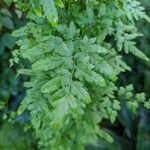
Lygodium japonicum
Japanese climbing fern · Vine-like fern
Description
Source: leafsnapLygodium japonicum is a species of fern that is known by the common names vine-like fern and Japanese climbing fern. It is native to eastern Asia, including Taiwan, Japan, Korea, southeastern Asia, and India, and eastern Australia. The fern is present in the southeastern United States and Puerto Rico as an introduced species.
🎭 Captivation, Genuineness, Enchantment
Care Guide
💧 Water
The Japanese climbing fern originates from humid regions, where it thrives in consistently moist conditions but can tolerate occasional periods of dryness. To care for this plant, water it every 1-2 weeks, ensuring the soil remains moist without becoming waterlogged. When grown outdoors in shaded areas, the Japanese climbing fern benefits from a layer of mulch, which helps retain moisture and replicates its natural environment.
What's the difference between watering my Japanese climbing fern inside or outside?
The Japanese climbing fern is commonly grown indoors by gardeners who live in non-temperate and non-tropical regions. It's important to note that the soil in containers can dry out quicker than ground soil. Additionally, if there are drying elements like air conditioning units present, the fern may require more frequent watering compared to if it was planted outside. In outdoor conditions, it is possible that little to no watering will be needed if there is regular rainfall. However, if the fern is grown indoors, it will need to be watered more frequently since it won't have the option of rainwater soaking the soil.
How should I water my Japanese climbing fern?
To keep the Japanese climbing fern healthy, here are some guidelines for watering. It is best to use filtered water at room temperature because tap water may have harmful particles. The plant prefers warmer water as it is used to a warm environment, and cold water can be disruptive. Avoid overhead watering, as it can cause issues with the foliage. Instead, pour filtered room temperature water onto the soil until it is completely soaked. This helps the roots to spread through the soil and gather necessary nutrients.
What should I do if I give my Japanese climbing fern too much water or too little water?
Overwatering your Japanese climbing fern can be a common issue that negatively affects its health. When this happens, the stems and leaves may wilt and turn yellow. Additionally, overwatering for an extended period can lead to diseases like root rot, mold, and mildew, which can be fatal for your plant. On the other hand, underwatering is less common but still possible for the Japanese climbing fern, as it can tolerate drought relatively well. When underwatering occurs, the leaves become brittle and brown. It is crucial to recognize the signs of overwatering early on, as some diseases resulting from overwatering may be irreversible if not addressed promptly. If you notice these signs, reduce your watering schedule immediately and assess the drainage of the soil. If the soil drains poorly, replace it with a loose and well-draining potting mix. Conversely, if your Japanese climbing fern lacks water, simply increase the frequency of watering until the signs subside.
How frequently should I water my Japanese climbing fern?
If your Japanese climbing fern is in a pot, you can check if it needs water by putting your finger in the soil. If the top two to three inches of soil are dry, it's time to water it. If your fern is planted outdoors, you can use the same method. Once the top few inches of soil have dried out, it's time to water it. Typically, during spring and early fall, watering once a week is enough. But in extremely hot weather, you may need to water it twice or more per week. However, mature and well-established Japanese climbing ferns can surprisingly tolerate drought well.
How much water does my Japanese climbing fern require?
To properly water your Japanese climbing fern, make sure the top two to three inches of soil are dry. Give the plant a thorough watering, making sure to soak the entire soil. It's important to add enough water so that excess water flows through the drainage holes at the bottom of the pot. If you don't see any excess water draining, you may have underwatered the plant. However, be careful not to let the water accumulate in the soil as this can harm the plant. Additionally, if water doesn't drain properly through the pot, it may indicate poorly draining soils which is bad for the plant's health. If the plant is outdoors, 1 inch of rain per week should be enough.
☀️ Light Partial sun
The Japanese climbing fern tends to do best in settings where sunlight is filtered rather than in full, direct exposure, reflecting its original habitat. Too much exposure can scorch the leaves and cause damage, while too little may impede its growth and development.
What are the sunlight requirements for the Japanese climbing fern?
The Japanese climbing fern thrives in partial sunlight, requiring about 3-6 hours of sunlight daily. It is important to monitor the sunlight movement through your garden to ensure you choose locations that offer a balance of light and shade, optimizing the plant's health. In its natural habitat, this fern prefers a filtered degree of sunlight rather than full exposure. Excessive sunlight can cause leaf scorching, while insufficient light may hinder the fern's growth and development.
How can artificial lighting be used for the Japanese climbing fern?
Artificial lighting can be crucial for the growth of the Japanese climbing fern, especially when natural sunlight is insufficient, such as during winter or in less sunny indoor spaces. LED lights are recommended because they can provide the specific wavelengths of light the plants need. For indoor plants, the general guideline is full sun plants need 30-50W/sq ft, partial sun plants need 20-30W/sq ft, and full shade plants need 10-20W/sq ft of artificial light. The light source should be placed 12-36 inches above the plant, and plants typically require 8-12 hours of light per day.
What are the signs of inadequate lighting for the Japanese climbing fern?
Inadequate lighting can lead to several symptoms in Japanese climbing ferns, including smaller new leaves, leggy or sparse growth, faster leaf drop, slower or no new growth, and lighter-colored new leaves. Other signs include chlorosis or the yellowing of leaves due to excessive light, sunscald, leaf curling, wilting, and leaf scorching. These symptoms indicate that the plant's light requirements are not being met, either due to too much or too little sunlight.
How should I address lighting issues for my Japanese climbing fern?
To optimize growth and address lighting issues, gradually introduce the Japanese climbing fern to more sunlight by moving it to sunnier spots each week until it receives the ideal 3-6 hours of direct sunlight daily. For plants that are large or difficult to move, consider using desk or ceiling lamps for at least 8 hours daily or investing in professional plant grow lights. Outdoor plants should be moved gradually to prevent sunburn. Note that parts of the plant affected by insufficient sunlight might not recover, but new growth should be healthy after adjusting the light exposure.
🌡️ Temperature 20–37.8°C
Japanese climbing fern grows best at temperatures of 68 to 100°F (20 to 38 ℃). Native to temperate regions, it favors moderate warmth. Care should be taken to adjust its ambient temperatures according to the seasons.
What is the ideal temperature range for the Japanese climbing fern?
The Japanese climbing fern, or Lygodium japonicum, thrives in a temperature range of 68 to 100°F (20 to 38°C). Originating in temperate climates, it is extremely heat-loving and prefers moderate warmth. It is important to adjust the ambient temperature according to the seasons to ensure the plant's health. During winter, keeping the temperature above 20°C is beneficial for the plant, while temperatures approaching 10°C or lower can be detrimental.
How should I care for my Japanese climbing fern in the autumn and winter?
In the autumn, it is recommended to bring outdoor-grown Japanese climbing ferns indoors to protect them from the cold. Placing them near a bright window will ensure they receive sufficient light, but they should be kept at a distance from heaters to avoid overly dry conditions. Maintaining an indoor temperature above 20°C during the winter months is important for the plant's well-being. Careful adjustment of temperatures in accordance with seasonal changes is vital for the health of the Japanese climbing fern.
What are the signs of low temperature damage on a Japanese climbing fern, and how can it be treated?
The Japanese climbing fern shows several signs when affected by low temperatures, including leaves lightening in color when the temperature falls below 5°C. After frost damage, leaves may gradually turn brown or black, accompanied by wilting and drooping. To treat frost damage, trim off the frost-damaged parts and move the plant indoors to a warm environment immediately. Positioning the plant near a south-facing window while ensuring it does not sit near heaters or air conditioning vents helps prevent air dryness and aids in recovery.
How does high temperature affect the Japanese climbing fern, and what are the solutions?
During summer, it's important to keep the Japanese climbing fern's temperature below 38°C. Temperatures above 43°C can cause the leaves to lighten and make the plant more susceptible to sunburn. In such cases, remove the sunburned and dried-up parts to prevent further damage. Relocating the plant to a shaded area, especially away from the harsh midday and afternoon sun, and watering it in the morning and evening, are effective strategies to keep the soil moist and the plant healthy.
💨 Humidity
🪴 Soil 5-7
🌱 Fertilizer
Japanese climbing fern needs the most fertilizer during its active growth period, which is mainly in spring, summer, and early fall. Fertilizing supplies essential nutrients the soil may lack, supporting healthy root and stem development and the attractive foliage that characterizes this plant.
🪴 Pot & Repot Every 12 months
✂️ Pruning
🌿 Propagating
🐛 Diseases & pets
☠️ Toxicity
Characteristics
- Plant Type
- Herb
- Life Cycle
- Perennial
- Genus
- Lygodium
- Family
- Schizaeaceae
- Hardiness Zone
- 11
- Mature Height
- 4.57 m to 27.43 m
- Mature Spread
- 4.57 m to 9.14 m
- Leaf Color
- Green
- Leaf Type
- Deciduous
- Planting Time
- Spring, Summer, Autumn
- Harvest Time
- Late summer, Early fall
- Native Area
- Nepal, Sri Lanka, India, Malaysia, Philippines, Bangladesh, Pakistan, Laos, China, Indonesia, Cambodia, Vietnam, Myanmar, Japan, Papua New Guinea, Koppen, Bhutan, South Korea, Thailand