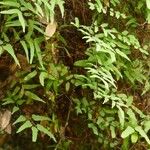
Lygodium microphyllum
Climbing-maidenhair fern · Old World climbing fern · Small-leaf climbing fern · Snake fern · Small-leaved climbing fern
Description
Source: leafsnapLygodium microphyllum (commonly known as, variously, climbing maidenhair fern, Old World climbing fern, small-leaf climbing fern, or snake fern) is a climbing fern originating in tropical Africa, Southeast Asia, Melanesia and Australia. It is an invasive weed in Florida where it invades open forest and wetland areas. The type specimen was collected in the vicinity of Nabúa, on the island of Luzon in the Philippines by Luis Née.
🎭 Captivation, Genuineness, Enchantment
Care Guide
💧 Water
The Old World climbing fern flourishes in environments with high humidity and moisture, necessitating weekly watering to maintain its growth. While it can endure brief periods of dryness, it requires regular hydration, even during cooler months, because it retains its foliage throughout the year.
How do I water my Old world climbing fern in different seasons?
The Old world climbing fern has different water needs throughout the year. During the hottest months, you may need to water it more than once a week, depending on how quickly the soil dries. In contrast, during the winter, the plant goes into a dormant phase and requires much less water. In fact, you may not need to water it at all during this time. However, if you choose to water it in winter, only do so once a month to avoid increasing the risk of disease.
How should I water my Old world climbing fern properly?
To ensure the health of the Old world climbing fern, it is recommended to water it using filtered water at room temperature. Tap water may contain harmful particles, so filtered water is preferable. The plant prefers warmer water since it is adapted to a warm environment. Cold water can be a shock to its system. Additionally, overhead watering should be avoided as it may cause problems with the foliage. Instead, it is best to apply filtered room temperature water directly to the soil until it is completely saturated. This helps moisten the roots and support their spread in the soil, enabling the plant to gather the necessary nutrients.
What should I do if I give my Old world climbing fern too much or too little water?
Overwatering is a more common issue that can harm your Old world climbing fern. Too much water causes wilting and yellowing of stems and leaves, and can also lead to diseases like root rot, mold, and mildew. Underwatering is less common but can make the leaves brittle and brown. It's important to notice signs of overwatering early, as some diseases may not be reversible if left unattended. Reduce watering if you see early signs of overwatering and consider replacing poorly draining soil. For underwatering, simply water more regularly until the signs subside.
How often should I water my Old world climbing fern?
If your Old world climbing fern is in a pot, the best way to determine if it needs water is to stick your finger into the soil. If the top two to three inches of soil are dry, it's time to water it. The same method can be used if you have the fern planted outdoors in the ground. When the first few inches of soil have dried out, it's time to water it. Typically, during spring and early fall, watering once a week should be sufficient. However, during extremely hot weather, you may need to water it twice or more per week. It's worth noting that mature, well-established Old world climbing ferns can tolerate drought well.
How much water does my Old world climbing fern require?
To properly water your Old world climbing fern, don't be afraid to use a generous amount. Make sure the top 2-3 inches of soil are dry before watering. Give it a thorough watering, making sure the soil is completely soaked. You should add enough water that it starts to drain through the bottom of the pot. If you don't see water draining, you may have not given enough water. However, be careful not to let the water accumulate in the soil as it can harm the plant. On the other hand, if water doesn't drain through the pot, it might indicate poorly draining soil, which is not good for the plant's health. If the plant is outside, about 1 inch of rain per week should be enough.
☀️ Light Partial sun
The Japanese climbing fern tends to do best in settings where sunlight is filtered rather than in full, direct exposure, reflecting its original habitat. Too much exposure can scorch the leaves and cause damage, while too little may impede its growth and development.
What are the sunlight requirements for the Old world climbing fern?
The Old World climbing fern, known botanically as Lygodium microphyllum, thrives best under conditions of intense, unfiltered sunlight for the majority of the day. It is adaptable and can grow with moderate sun exposure as well. Ensuring the plant receives adequate sunlight is crucial for its healthy growth, as insufficient or excessive light may impede its development. This fern originates from habitats with substantial sunlight exposure, allowing it to adapt to changing light conditions during different growth stages. It's important to observe how sunlight moves through your garden, selecting spots that provide a balance of light and shade to ensure the plant's wellbeing.
How can artificial lighting benefit indoor Old world climbing ferns and what are the guidelines for using it?
Indoor plants like the Old World climbing fern require adequate lighting, especially when natural sunlight is insufficient, such as during winter or in less sunny spaces. Artificial lights, particularly LED lights, are beneficial because they can give specific wavelengths needed for optimal growth. For plants requiring full sun, 30-50W per square foot is recommended; for partial sun, 20-30W per square foot; and for full shade, 10-20W per square foot. The light source should be placed 12-36 inches above the plant to imitate natural sunlight. It's also important to mimic natural daylight hours, with most plants needing 8-12 hours of artificial light per day.
What are the signs of inadequate light exposure in Old world climbing ferns?
Old World climbing ferns show several signs when exposed to inadequate light. These include smaller new leaves compared to preceding ones, leggy or sparse growth, accelerated leaf drop, delayed or halted growth, and paler or irregularly colored new leaves. These symptoms indicate the plant's struggle in low light conditions and its attempts to conserve resources. Chlorosis and sunscald are also common issues, with the former involving yellowing leaves due to chlorophyll breakdown and the latter being damage from excessive sunlight. Leaf curling, wilting, and leaf scorching are other symptoms that manifest under extreme sunlight conditions or excessive exposure, respectively.
What solutions can be implemented for Old world climbing ferns facing inadequate sunlight?
To counteract inadequate sunlight for Old World climbing ferns, it's advisable to gradually move them to brighter locations, ensuring they get at least 6 hours of direct sunlight daily. For indoor plants, this might mean using a south-facing window or supplemental artificial light, such as desk lamps or grow lights, for at least 8 hours a day. Outdoors, the plants should be moved gradually to prevent shock. Addressing obstructions by pruning trees or relocating plants to sunnier spots can improve sunlight access. It's crucial to note that parts of the plant affected by low light might not recover, but new growth should be healthy once light conditions improve.
🌡️ Temperature 20–37.8°C
Japanese climbing fern grows best at temperatures of 68 to 100°F (20 to 38 ℃). Native to temperate regions, it favors moderate warmth. Care should be taken to adjust its ambient temperatures according to the seasons.
What is the native climate of the Old World Climbing Fern, and what are its temperature preferences?
The Old World Climbing Fern is native to temperate climates and thrives in temperatures ranging from 68 to 105.8°F (20 to 41°C). It prefers to be in this temperature range throughout the year. To maintain its preferred climate, adjustments such as using heat lamps or providing shade may be necessary to compensate for extreme seasonal temperatures. The plant is extremely heat-loving, and exposure to cold can be harmful. Therefore, it's suggested to bring outdoor-grown ferns indoors during the autumn, placing them near a bright window but at a distance from heaters to avoid heat damage. Keeping the temperature above 20°C during winter supports optimal growth, while temperatures nearing 5°C can be detrimental.
How does the Old World Climbing Fern react to low temperatures, and what are the recommended solutions?
The Old World Climbing Fern has a low tolerance for cold temperatures, thriving best when the temperature remains above 20°C. It is crucial to keep the plant above 5°C during winter, as falling below this threshold can lighten leaf color, leading to brown or black discoloration and symptoms of wilting and drooping after frost damage. The recommended solution for frost damage includes trimming off the frost-damaged parts and moving the plant indoors to a warmer environment for protection. It is beneficial to place the plant near a south-facing window to ensure it receives ample sunlight, avoiding placement near heaters or air conditioning vents to prevent the air from becoming excessively dry.
What are the effects of high temperatures on the Old World Climbing Fern, and how can they be mitigated?
The Old World Climbing Fern should be kept below 41°C during the summer, as temperatures exceeding 45°C can cause the leaves to lighten in color, making the fern more susceptible to sunburn. To mitigate the effects of high temperatures and sunburn, it is advised to trim away the sunburned and dried-up parts of the plant. The fern should be moved to a location that provides shade from the strong midday and afternoon sun. Additionally, watering the plant in the morning and evening helps keep the soil moist, further protecting it from the adverse effects of excessive heat.
💨 Humidity
🪴 Soil 5-7
🌱 Fertilizer
Japanese climbing fern needs the most fertilizer during its active growth period, which is mainly in spring, summer, and early fall. Fertilizing supplies essential nutrients the soil may lack, supporting healthy root and stem development and the attractive foliage that characterizes this plant.
🪴 Pot & Repot
✂️ Pruning
The Old World climbing fern is a fast-growing climber that needs regular pruning to control its growth. To keep it manageable, it is essential to trim it back aggressively from early to late spring. This process involves removing older fronds and runners, which helps improve air circulation and encourages healthy growth while also preventing the plant from becoming invasive.
🌿 Propagating
🐛 Diseases & pets
☠️ Toxicity
Characteristics
- Plant Type
- Herb
- Life Cycle
- Perennial
- Genus
- Lygodium
- Family
- Lygodiaceae
- Hardiness Zone
- 11
- Mature Height
- 4.57 m to 27.43 m
- Mature Spread
- 4.57 m to 9.14 m
- Leaf Color
- Green
- Leaf Type
- Deciduous
- Planting Time
- Spring, Summer, Autumn
- Harvest Time
- Late summer, Early fall
- Native Area
- Nepal, Sri Lanka, India, Malaysia, Philippines, Bangladesh, Pakistan, Laos, China, Indonesia, Cambodia, Vietnam, Myanmar, Japan, Papua New Guinea, Koppen, Bhutan, South Korea, Thailand