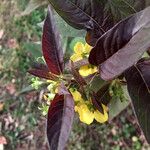
Lysimachia ciliata
Fringed loosestrife · Firecracker · Fringed Yellow-Loosestrife · Ciliate Loosestrife
Description
Source: leafsnapLysimachia ciliata, the fringed loosestrife, is a species of flowering plant in the family Primulaceae. It is an erect herbaceous perennial growing to 120 cm (47 in) tall and 60 cm (24 in) broad, with opposite, simple leaves, and smooth green stems. The star-shaped yellow flowers are borne in midsummer. It is native to North America, including most of southern Canada and most of the United States except for the southwest. This plant is notable in that it is one of the few species of Lysimachia to bear elaiophores, that is, to offer oil instead of nectar as a reward to pollinators. It is pollinated in the northern part of its range by the specialist oil bee Macropis nuda, a native bee species whose survival depends upon this host plant.It is also cultivated as an ornamental plant. It can be aggressive, but new suckers can be removed easily to keep plant size under control. The most common cultivars of L. ciliata include: L. ciliata 'Firecracker' L. ciliata 'Purpurea''Firecracker' has gained the Royal Horticultural Society's Award of Garden Merit.
🌳 Fringed loosestrife is a popular choice among gardeners due to its attractive multicolored leaves, charming yellow flowers, and ability to thrive in wet soil. It performs well in rain gardens, bog gardens, and near water features like ponds and creeks.
Care Guide
💧 Water Every 3 days
Fringed loosestrife naturally grows in damp woodlands and thrives in consistently moist environments. It prefers regular watering, ideally once a week, to maintain its health. As an outdoor herbaceous perennial, it benefits from rain, which supports its growth cycle and overall well-being.
How do I water my Fringed loosestrife when it is growing at different stages?
The Fringed loosestrife's water requirements can vary depending on its growth stages. In the first few years or after transplanting, it needs more water because it focuses on developing new roots for future growth. These roots perform best with slightly more moisture. As the plant matures, it needs less water. Additionally, during the bloom period, when flowers are developing, it may require additional water due to increased moisture needs.
How do I water my Fringed loosestrife during different seasons?
The Fringed loosestrife has different water needs depending on the season. During the hottest months of summer, you may need to water it more than once a week, depending on how quickly the soil dries. However, during winter, the plant goes into a dormant phase and requires much less water, or none at all. If you choose to water it during winter, do so no more than once a month to avoid the risk of disease.
What's the difference between watering my Fringed loosestrife inside and outside?
Growing Fringed loosestrife indoors is most common for gardeners in non-temperate and non-tropical regions. It is important to note that soil in containers can dry out faster than ground soil. Additionally, factors such as air conditioning units can further contribute to the drying of the plant, leading to a need for more frequent watering compared to if it was planted outside. In such outdoor cases, watering your Fringed loosestrife may not be necessary as rainfall can usually provide enough moisture for the plant. However, if you are growing it indoors, regular watering is essential as relying on rainwater to soak the soil is not an option.
What should I do if I give my Fringed loosestrife too much or too little water?
Overwatering is a common issue that can harm your Fringed loosestrife. It causes wilting, yellowing leaves, and can lead to diseases like root rot, mold, and mildew which can kill your plant. Underwatering is less common but still possible. It results in brittle, brown leaves. It's important to notice the signs of overwatering early to prevent irreversible damage. Reduce watering and check the soil drainage. If the soil doesn't drain well, replace it. If your plant is not getting enough water, increase watering until the signs disappear.
How much water does my Fringed loosestrife need and how often?
If your Fringed loosestrife is in a pot, the most precise way to determine if it needs water is by checking the soil. Stick your finger into the soil and if the top two to three inches are dry, it's time to water it. If you are growing your Fringed loosestrife outdoors in the ground, you can use a similar method to test the soil. Again, when the top few inches of soil are dry, it's time to water. Typically, during the spring and early fall, you will need to water this plant about once a week. However, during extremely hot weather, you may need to water it twice or more times per week. It's worth noting that mature, well-established Fringed loosestrife can tolerate drought conditions quite well.
☀️ Light Full sun
Fringed loosestrife flourishes with abundant sunlight, yet can tolerate moderate sun. Native to sunlit habitats, its healthy growth is promoted by plentiful light, particularly during its developmental stages. However, excessive light can harm the foliage, while insufficient light may stunt growth.
What are the sunlight requirements for Fringed Loosestrife?
Fringed Loosestrife requires full sun, which means it should receive above 6 hours of sunlight daily, but it can also tolerate partial sun, roughly about 3-6 hours of sunlight. It's important to observe how sunlight travels through your garden to find the ideal balance of light and shade, ensuring the plant's well-being.
How does sunlight affect the growth of Fringed Loosestrife?
Sunlight plays a crucial role in the growth of Fringed Loosestrife, a plant that thrives in environments with ample sunlight. While it can endure moderate sun exposure, too much direct sunlight might damage its foliage, and insufficient light could stunt its growth. For indoor plants lacking natural sunlight, especially in winter or less sunny spaces, artificial lighting can be an effective solution to promote healthier growth. LED lights are recommended for their ability to replicate specific wavelengths needed by plants, with varying wattage requirements based on the plant's sunlight needs.
What are the signs of sunlight deficiency in Fringed Loosestrife?
Symptoms of insufficient sunlight in Fringed Loosestrife include smaller new leaves than past growth, leggy or sparse growth, accelerated leaf drop, halted or no new growth, paler new leaves indicating a lack of chlorophyll, and conditions like chlorosis and sunscald. These signs suggest the plant isn't receiving the recommended amount of sunlight, adversely affecting its health.
How do you address sunlight deficiency symptoms in Fringed Loosestrife?
To address sunlight deficiency in Fringed Loosestrife, gradually increase the plant's exposure to sunlight until it receives at least 6 hours of direct sunlight daily. For indoor plants, use a south-facing window or artificial lighting to supplement light exposure. Outdoor and ground-planted specimens can benefit from minimizing obstructions like overhanging branches or being transplanted to sunnier locations. It's crucial to make these adjustments gradually to prevent sunburn and ensure new growth is healthy.
🌡️ Temperature 5–35°C
Fringed loosestrife does best in temperatures from 41 to 95 ℉ (5 to 35 ℃). It can withstand both warm and cold conditions, although severe temperature swings may impair its growth. In colder areas, mulching around the plant during winter is advised to provide extra protection.
What is the optimal temperature range for fringed loosestrife?
The optimal temperature range for fringed loosestrife, or Lysimachia ciliata, is between 41°F (5°C) and 95°F (35°C). This plant possesses a strong tolerance for both high and low temperatures. However, it's important to note that extreme temperature fluctuations can impact its growth adversely. To ensure the plant remains healthy during colder months, especially in regions that experience severe winters, applying mulch around its base can provide better protection against the cold. Even though fringed loosestrife has robust cold resistance, in instances where winter temperatures are expected to plunge below -25°C, additional cold protection measures, such as covering the plant with soil or straw, are advisable. Additionally, watering the plant generously before the first freeze of autumn helps the soil retain moisture, preventing drought and water scarcity for the plant during the winter and early spring.
How should I protect fringed loosestrife in low temperatures?
Fringed loosestrife thrives best in temperatures above 5°C and should ideally remain above -20°C during winter months. If temperatures dip below -25°C, the plant might not show immediate damage but could experience a decreased ability to sprout in the spring, or may not sprout at all. To mitigate this, in spring, you should remove any parts of the plant that have failed to sprout. Despite its strong cold tolerance, taking steps to ensure its survival through unusually harsh winters can help maintain its health and vigor.
What should I do if fringed loosestrife experiences high temperatures?
During the summer, it's critical to ensure that temperatures around fringed loosestrife remain below 35°C. Exceeding this range, especially temperatures above 38°C, can lead to symptoms like the leaves becoming lighter in color, curling, becoming susceptible to sunburn, and in severe cases, may result in the entire plant wilting and drying up. To combat these issues, you should trim away any sunburned or dried-up parts of the plant. Additionally, relocating the plant to an area that provides shade during the midday and afternoon sun, or utilizing a shade cloth can offer necessary protection. Ensure the soil remains moist by watering the plant in the morning and evening. These steps can help the plant recover from and withstand high temperature stress.
💨 Humidity
🪴 Soil 6-7
🌱 Fertilizer
One application of fertilizer in spring is typically sufficient for Fringed loosestrife, though several feedings can boost growth to its fullest. Feed about every month to six weeks. Fertilizing improves the leaves' appearance and function, helping them keep an even color and healthy texture. It also promotes root development and nutrient uptake, supporting the plant's long-term health.
What will happen if I add too much fertilizer to my Fringed loosestrife?
To prevent overfertilization of the Fringed loosestrife, it is important to understand that it doesn't require a lot of fertilizer. If it is overfertilized, the leaves will turn brown. This is more likely to happen if a fertilizer with high nitrogen content is used. When the nitrogen content is high, the leaves of the Fringed loosestrife may become discolored, lose moisture, and curl at the edges. To avoid these issues, many gardeners choose to fertilize their Fringed loosestrife only once a year in early spring.
Why should I add fertilizer to my Fringed loosestrife plant?
Proper fertilization is crucial for maintaining the appearance and function of the leaves of the Fringed loosestrife. By fertilizing correctly, you can ensure that the leaves maintain their color and texture. Fertilization also has benefits below the soil's surface, as it helps the plant generate new roots and maintain existing ones. This not only keeps the plant healthy in the present, but also ensures that it can effectively absorb nutrients from the soil in the future.
When should I fertilize my Fringed loosestrife to get the best results?
If you grow your Fringed loosestrife outdoors each year, the plant will start growing new leaves in early spring. This is your cue to start fertilizing for the year. Typically, one application of fertilizer in the spring will suffice for the Fringed loosestrife to thrive. However, if you want to maximize its growth, you can fertilize multiple times throughout the spring and early summer. To do this, you can feed your Fringed loosestrife approximately once every month to a month and a half.
When is the best time to not fertilize my Fringed loosestrife?
During the late fall and winter, your Fringed loosestrife will go into a dormant phase and stop producing new growth. So, it is important to avoid fertilizing it during this time. In the spring and summer, if you decide to fertilize, you should gradually decrease the frequency as summer approaches because the Fringed loosestrife's growth rate slows down. It is never a good idea to fertilize your Fringed loosestrife when the weather is unseasonably hot or the soil is very dry. Doing so can stress and ultimately kill your Fringed loosestrife.
What kind of fertilizer does my Fringed loosestrife plant need?
Choosing the best fertilizer for a Fringed loosestrife is easy. These plants thrive on a general-purpose garden fertilizer with equal amounts of nitrogen, phosphorus, and potassium. A fertilizer with a ratio of 10-10-10 or similar will work well. Avoid fertilizers with high nitrogen levels if unsure. Granular fertilizers, preferably slow-release, are most suitable. They are easy to apply to the soil. Additionally, feeding the Fringed loosestrife with organic soil amendments like compost can be helpful.
🪴 Pot & Repot 2-3 years
When repotting Fringed loosestrife, select a container 1-2 inches (2.5–5.1 cm) larger that provides good drainage. Use a well-draining potting mix. Repot in spring or fall, making sure the root ball sits slightly lower than the rim of the flower pot. Water thoroughly after repotting and place the plant in a warm spot with indirect sunlight.
✂️ Pruning
Fringed loosestrife displays vibrant summer blooms and unique fringed leaves. To encourage growth, it's important to prune the plant from early to late spring. Remove any dead stems and spent flowers. Additionally, thinning out overcrowded stems can improve airflow, enhancing the plant's appearance and reducing the risk of disease. This also supports healthy flowering.
🌿 Propagating
🐛 Diseases & pets
☠️ Toxicity
Characteristics
- Plant Type
- Herb
- Life Cycle
- Perennial
- Genus
- Lysimachia
- Family
- Primulaceae
- Hardiness Zone
- 5-9
- Mature Height
- 1.22 m
- Mature Spread
- 61 cm
- Leaf Color
- Green
- Leaf Type
- Deciduous
- Flower Color
- Yellow
- Flower Size
- 2.54 cm
- Bloom Time
- Early summer, Mid summer
- Planting Time
- Spring
- Harvest Time
- Mid summer
- Native Area
- North America