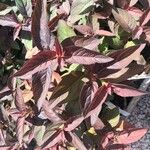
Lysimachia ephemerum
Milky Loosestrife · Silver loosestrife · Willow-leaved Loosestrife
Description
Source: leafsnapLysimachia ephemerum, the willow-leaved loosestrife or milky loosestrife, is a species of flowering plant in the primrose family Primulaceae, native to France, Spain, Portugal and Morocco. Against grey-green foliage this hardy herbaceous perennial bears erect racemes of delicate white flowers with purple stamens on 1 m (3.3 ft) stems in early summer. It is cultivated as an ornamental plant, and holds the Royal Horticultural Society's Award of Garden Merit. It requires a position in full sun, and reliably moist soil.
Care Guide
💧 Water
☀️ Light Full sun
Gooseneck loosestrife grows most vigorously when given the maximum amount of daylight, though it can also do well with lower light levels. Uninterrupted sun exposure plays a key role in its healthy development. Its native habitat has abundant sunlight, which matches its needs. Note that improper or imbalanced light can impede its growth or cause damage.
What are the sunlight requirements for Willow-leaved loosestrife?
Willow-leaved loosestrife, also known by its botanical name Lysimachia ephemerum, thrives in various sunlight conditions. For full sun exposure, it requires above 6 hours of sunlight daily. If the plant is in partial sun, it should receive about 3-6 hours of sunlight. It's important to observe how sunlight moves through your garden to ensure you choose spots that provide the perfect balance of light and shade. This careful placement ensures the plants' happiness and health.
🌡️ Temperature 0–32.2°C
Gooseneck loosestrife is a plant that naturally grows best in climates with temperatures between 68 and 95°F (20 to 35℃). It favors this range of warmth but may require adjustments to shading and watering when the seasons change.
💨 Humidity
🪴 Soil 6-7
🌱 Fertilizer
The best time to fertilize Gooseneck loosestrife is in early spring, as it comes out of dormancy and begins active growth. Fertilizing supplies essential nutrients needed for healthy development. Although Gooseneck loosestrife has fairly low fertilizer requirements, giving it fertilizer annually can improve its survival and encourage better, longer-lasting flowers.
🪴 Pot & Repot
✂️ Pruning
To encourage growth and flowering, prune willow-leaved loosestrife from early to late spring by removing any dead stems. This plant thrives in well-drained soil with full to partial sunlight. Regular pruning helps maintain its shape and health, resulting in a bushier and more visually appealing plant.
🌿 Propagating
🐛 Diseases & pets
☠️ Toxicity
Characteristics
- Plant Type
- Herb
- Life Cycle
- Perennial, Annual
- Genus
- Lysimachia
- Family
- Primulaceae
- Hardiness Zone
- 3-8
- Mature Height
- 61 cm to 91 cm
- Mature Spread
- 0.61 m to 1.22 m
- Leaf Color
- Green, Gray, Silver
- Leaf Type
- Deciduous
- Flower Color
- White
- Flower Size
- 11.43 cm
- Bloom Time
- Early summer, Mid summer
- Planting Time
- Spring
- Harvest Time
- Mid summer
- Native Area
- Russia, Vietnam, Japan, Koppen, Laos, South Korea, China