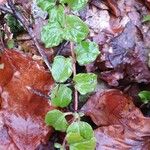
Lysimachia nummularia
لیزوماکیا · Creeping-Jenny · Wandering Jenny · Running Jenny · Creeping Charlie
Description
Source: leafsnapLysimachia nummularia, commonly known as Creeping Jenny or Moneywort, is a low-growing perennial plant belonging to the Primulaceae family. Native to Europe and Asia, it has also become widely naturalized in North America. This plant features round, bright green leaves about the size of a coin, growing on long, trailing stems that can reach up to 2 feet in length. The leaves are arranged opposite each other on the stem and have a slightly glossy texture. In late spring or early summer, Creeping Jenny produces small yellow flowers on short stalks above the foliage. These flowers, around 1/2 inch wide, have five petals. This plant is frequently used as ground cover because of its ability to spread quickly by rooting at nodes along its stems. Although it prefers moist soil, it can tolerate some drought once established. Creeping Jenny thrives in both full sun and partial shade and can be grown as an annual or perennial, depending on the climate. Besides serving as ground cover, Lysimachia nummularia is popular for use in hanging baskets, where its trailing habit adds visual interest and texture alongside other plants such as ferns and ivy. Overall, Lysimachia nummularia is an attractive, low-maintenance plant that adds vibrant green foliage and visual appeal wherever it's planted.
🌳 Creeping jenny, often admired for its ornate golden foliage, conceals a secret among learned botanical circles. A rich, golden dye, similar to those found in historic Egyptian masterpieces, has been successfully extracted from its luminescent green stems, giving fresh life to the adage "old is gold."
🎭 Calm, serenity
Care Guide
💧 Water Every 3 days
Creeping jenny thrives in moist environments, reflecting its woodland origins and preference for consistent hydration. It can tolerate brief dry spells, but for optimal growth, it should be watered weekly. As an evergreen, creeping jenny maintains lush foliage throughout the year, benefiting from regular watering while avoiding waterlogged conditions.
When Should I Water My Creeping Jenny?
Understanding when to water your Creeping Jenny is essential to its health and thriving growth. It requires timely watering based on soil moisture; if the top 1-2 inches of soil are dry, it's time to water. Wilting leaves often indicate a need for water, while yellowing or browning leaves suggest under-watering. Stunted growth can also be a sign of insufficient moisture. Consider the plant's environment as well, since factors like heat, dry air, and intense sunlight increase water needs. Avoid watering when the soil is still moist to prevent diseases, and don't delay watering when the plant is too dry, as this can severely dehydrate it.
How Should I Water My Creeping Jenny?
Watering your Creeping Jenny correctly involves maintaining a balance to prevent waterlogged or overly dry conditions. Bottom-watering and occasional misting are effective methods, emphasizing the importance of avoiding foliage wetness to prevent diseases. Use a watering can with a long spout to direct water to the soil base and consider employing a moisture meter to monitor the soil's moisture level accurately. Focusing water on the soil rather than the leaves helps prevent root rot and fungal problems.
How Much Water Does Creeping Jenny Really Need?
The water requirements for Creeping Jenny vary based on plant size, pot dimensions, and environmental conditions. A general rule is to ensure the top inch of soil is damp without over-saturating it. Creeping Jenny shows signs of adequate hydration through lively green foliage, while signs like wilting or pale leaves suggest under-watering. It's crucial to maintain consistent soil moisture without causing root rot through overwatering.
What Kind of Water is Best for Creeping Jenny?
Creeping Jenny thrives best with distilled or rainwater, as these are free from harmful minerals and chemicals. Filtered water is an acceptable alternative, ensuring harmful contaminants are removed. It is sensitive to chlorine present in tap water; thus, dechlorinating tap water by letting it sit out for 24 hours before use is advisable. The plant prefers room temperature water, avoiding extremes to prevent shock.
How Do Creeping Jenny's Watering Needs Change with the Seasons?
Watering needs for Creeping Jenny vary seasonally. In spring, its active growth phase, the soil should remain moist without being waterlogged. Summer's heat requires consistent soil moisture due to increased evaporation, while in autumn, watering should be reduced as the plant prepares for dormancy. During winter, the plant's dormancy requires minimal watering, focusing on preventing waterlogging by ensuring the soil remains mostly dry.
☀️ Light Partial sun
Generally, creeping jenny prefers filtered or dappled sunlight. It can, however, tolerate both higher and lower light levels, although those extremes may affect its health. This preference comes from its native habitat, where sunlight varied over the course of the day.
What are the sunlight requirements for creeping jenny (Lysimachia nummularia)?
Creeping jenny (Lysimachia nummularia) enjoys exposure to filtered or dappled sunlight but can adapt to a range of sun exposure, from partial to full sun, receiving about 3-6 hours of sunlight or more. It's crucial to observe how sunlight moves through your garden to find spots that offer a balance of light and shade, ensuring the plants' health. Additionally, for indoor plants or those in less sunny spaces, artificial lighting can be essential, with recommendations for the type of light, distance, and duration provided to mimic natural sunlight and promote healthy growth.
What are the symptoms of light deficiency or excess in creeping jenny?
Symptoms of light deficiency in creeping jenny include smaller new leaves, leggy or sparse growth, faster leaf drop, slower or no new growth, and lighter-colored new leaves. Excess sunlight can lead to chlorosis, sunscald, leaf curling, wilting, and leaf scorching. These symptoms indicate either a lack of chlorophyll and essential nutrients due to insufficient light or damage caused by excessive light exposure.
How can I address light-related issues in creeping jenny?
To address light-related issues in creeping jenny, indoor plants needing more light could be gradually shifted to sunnier spots or supplemented with artificial lighting, such as desk, ceiling, or professional grow lights for at least 8 hours daily. Outdoors, gradually moving plants to sunnier locations each week can help them adapt without causing sunburn. Reducing obstructions or transplanting smaller plants are strategies to increase light exposure outdoors. It's important to note that parts of the plant damaged by poor light may not recover, but new growth should be healthy with corrected lighting.
🌡️ Temperature 5–32.2°C
Creeping jenny is native to regions where temperatures typically range from 68 to 95 °F (20 to 35 °C). It does best within that range. In colder climates, provide a warmer indoor environment during the winter for optimal growth.
What is Creeping Jenny's ideal temperature range for growth?
Creeping Jenny, scientifically known as Lysimachia nummularia, thrives in areas where the temperature typically ranges between 68 to 95°F (20 to 35°C). This temperature range is optimal for its growth. To ensure the plant continues growing healthily in colder climates, it's advisable to provide a warmer indoor environment during winter. These measures help in maintaining the plant's health and promoting its growth throughout the varying seasons.
Does Creeping Jenny require special frost protection measures?
Creeping Jenny possesses strong cold resistance, making it capable of surviving winter without special frost protection in many cases. However, if winter temperatures are expected to plummet below -30°C, taking measures to protect the plant from the cold becomes crucial. This can be done by covering the plant with insulating materials such as soil or straw. Additionally, watering the plant abundantly before the first freeze of autumn is recommended, as this ensures the soil remains moist and enters into a frozen state prepared, which helps in preventing drought and water scarcity for the plant during the winter and the early spring.
How does low temperature affect Creeping Jenny and what are the solutions?
Creeping Jenny is known for its cold tolerance and performs best when the temperature remains above 20°C. During the winter months, it's important to keep the temperature above 0°C to avoid negative effects. If temperatures fall below -30°C, there might not be noticeable changes during the winter, but there could be a decrease in sprouting or no sprouting at all come springtime. The solution to this issue involves removing any plant parts that have failed to sprout in the spring, allowing for a healthier regrowth.
How does high temperature affect Creeping Jenny and what are the corrective actions?
During the summer, it is crucial to ensure that the temperature surrounding Creeping Jenny does not exceed 35°C. When temperatures climb above 38°C, the plant’s leaves may lighten in color, become prone to curling, suffer from sunburn, and in severe cases, the whole plant may wilt and dry up. To mitigate these effects, sunburned and dried-up parts of the plant should be trimmed away. Relocating the plant to a shaded area away from the midday and afternoon sun or using a shade cloth can provide necessary relief. Additionally, watering the plant in the mornings and evenings helps keep the soil sufficiently moist for its survival and growth.
💨 Humidity normal (40-60%)
This plant will thrive in moderate humidity, which is probably the level in your home. However, misting it a few times a week can be very beneficial. Make sure the room has good ventilation.
🪴 Soil 6-7
🌱 Fertilizer
Usually one fertilizer application in spring is enough for Creeping jenny, though repeated feedings can maximize growth. Apply fertilizer about once a month to every six weeks. Feeding improves the leaves’ appearance and function, helping maintain even color and a healthy texture. It also promotes root development and nutrient uptake for long-term plant health.
Why do I have to put fertilizer on my Creeping jenny?
The main structure of the Creeping jenny is comprised of its leaves. Fertilization is an important way to ensure that these leaves look great and function properly. It helps the plant maintain consistent color and a healthy texture. Fertilization also benefits the plant below the surface by promoting new root growth and maintaining existing roots. This means that fertilization not only keeps the plant healthy now but also improves its ability to absorb soil nutrients in the future.
When should I fertilize my Creeping jenny for the best results?
If you grow your Creeping jenny outdoors each year, it will start growing new shoots in early spring. This is a signal to start fertilizing. Usually, a single application of fertilizer in spring is enough for Creeping jenny. However, if you want it to grow more, you can fertilize it multiple times during spring and early summer. In that case, you can feed it about once every month to a month and a half.
When is the best time to not put fertilizer on my Creeping jenny?
During late fall and winter, your Creeping jenny goes into a dormant phase and stops producing new growth. It's best to avoid fertilizing it during this time. In spring and summer, if you decide to fertilize your Creeping jenny multiple times, start decreasing the amount of fertilizer as summer approaches because its growth rate will slow down. In general, it's not a good idea to fertilize your Creeping jenny when the weather is unusually hot or the soil is extremely dry. Fertilizing in those conditions can stress your Creeping jenny and make it die early.
Which fertilizer should I use for my Creeping jenny plant?
Choosing the best fertilizer for a Creeping jenny is a simple task. These plants thrive on a general-purpose garden fertilizer with equal amounts of nitrogen, phosphorus, and potassium, like a 10-10-10 ratio. Avoid fertilizers high in nitrogen if unsure. Granular fertilizers are ideal and should be slow-release for easy application to the soil. Using organic soil amendments like compost can also be beneficial for feeding your Creeping jenny.
How can I feed my Creeping jenny?
To ensure the healthy growth of your Creeping jenny, wait until you see its first leaves poking through the soil in early spring. At this point, apply a balanced slow-release fertilizer to the soil surrounding the base of the plant. You can repeat this process later in the season if desired. Remember to apply the fertilizer to the soil, not the plant itself, which may require moving some leaves aside. It's also beneficial to water the Creeping jenny before and after fertilizing.
🪴 Pot & Repot 2-3 years
When repotting Creeping jenny, select a pot 1-2 inches (2.5–5.1 cm) larger with ample drainage. Use a well-draining potting mix. Repot in spring or fall, making sure the root ball sits slightly below the rim of the flower pot. Water thoroughly after repotting and place in a warm spot with indirect sunlight.
✂️ Pruning
Creeping Jenny is a low-growing perennial known for its vibrant yellow-green foliage. To keep it healthy and well-shaped, regular pruning from early to late spring is recommended. This helps encourage denser growth and reduces the risk of disease by removing dead stems and overgrown areas.
🌿 Propagating
🐛 Diseases & pets
☠️ Toxicity
Characteristics
- Plant Type
- Herb
- Life Cycle
- Perennial, Annual
- Genus
- Lysimachia
- Family
- Primulaceae
- Hardiness Zone
- 4-8
- Mature Height
- 5 cm
- Mature Spread
- 30 cm to 46 cm
- Leaf Color
- Green, Yellow
- Leaf Type
- Evergreen
- Flower Color
- Yellow, Gold
- Flower Size
- 2.03 cm
- Bloom Time
- Late spring, Early summer, Mid summer
- Planting Time
- Spring
- Harvest Time
- Early summer, Mid summer
- Native Area
- Turkey, Austria, Sweden, Slovakia, Montenegro, Croatia, Slovenia, Belarus, Russia, Germany, Estonia, Romania, Latvia, Belgium, France, Netherlands, Czech Republic, Bulgaria, Poland, Greece, Ukraine, Serbia, Lithuania, Norway, Italy, Switzerland, Denmark, Albania, Ireland, United Kingdom, Hungary