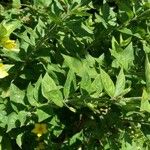
Lysimachia punctata
Large yellow loosestrife · Goldencup · Large loosestrife · Spotted loosestrife · Dotted loosestrife
Description
Source: leafsnapLysimachia punctata, commonly known as yellow loosestrife, is a perennial herbaceous plant belonging to the Primulaceae family. Native to Europe and Asia, it has also been introduced and naturalized in North America. The plant can grow up to 3 feet tall and features lance-shaped leaves arranged in whorls around the stem. The flowers of Lysimachia punctata are bright yellow, consisting of five petals, and bloom from June to August. They grow in clusters at the top of the stem, creating a vivid display of color. The plant prefers moist soil conditions but is also capable of tolerating some drought. Due to its attractive flowers and foliage, Lysimachia punctata is commonly used as an ornamental plant in gardens. It can be grown as a border or ground cover plant and is well-suited for naturalizing areas with moist soil. Although Lysimachia punctata has some medicinal properties, it should be used with caution because it can be toxic if ingested by humans or animals. Overall, Lysimachia punctata is an attractive perennial herbaceous plant that adds color and interest to gardens while also providing ecological benefits for pollinators such as bees and butterflies.
💡 Although commonly known as large yellow loosestrife, this plant is not actually a true loosestrife. Taxonomically, it belongs to the primrose family. Unlike some other well-known loosestrife species, it does not spread as quickly.
🌳 Yellow loosestrife, a member of the Primulaceae family, has several uses. It has traditionally been used for its anti-inflammatory properties, and its natural compounds also deter insects, including flies. Importantly, it is an important honey plant: bees are attracted to its nectar-rich yellow flowers, supporting the beekeeping industry. Its flowers may also serve as environmentally friendly dyes, although this application requires further study.
🎭 Harmony, forgiveness, the resolution of a disagreement
Care Guide
💧 Water Every 7 days
Large yellow loosestrife flourishes in damp environments and thrives best in wet soil, necessitating weekly watering to ensure lush growth. It benefits from conditions that mimic the moisture levels of its natural habitat. As an herbaceous perennial, this plant can make use of rainwater when grown outdoors, which reduces the need for extra irrigation during its growing season.
How do I water my big yellow loosestrife throughout the year?
The Large yellow loosestrife has different water needs depending on the season. In the summer, when it's hottest, you may need to water it more than once a week if the soil dries out quickly. However, in the winter, the plant goes into a dormant phase and requires less water. In fact, you may not need to water it at all during winter. If you do decide to water it during this time, it's important to do so only once a month to avoid the risk of disease.
What is the difference between watering my big yellow loosestrife inside and outside?
Large yellow loosestrife is commonly grown indoors by gardeners in regions that are not temperate or tropical. However, it's important to note that soil in a container can dry out faster than ground soil. If you have drying elements like air conditioning, your plant may need more frequent watering compared to if it was planted outside. In outdoor conditions, you may not need to water your plant much at all if it receives regular rainfall. On the other hand, if you grow this plant indoors, you will need to water it more often since you can't rely on rainwater to moisten the soil.
How should I water my Big yellow loosestrife plant?
To properly water the Large yellow loosestrife, it is recommended to use filtered water at room temperature or slightly warmer. Tap water may have harmful particles for the plant's health. The plant is accustomed to warm environments, so cold water can be a shock to its system. Avoid overhead watering to prevent foliage issues. Instead, apply filtered room temperature water directly to the soil until it is completely soaked. This will benefit the plant by moisturizing the roots and facilitating nutrient absorption.
What should I do if I give too much or too little water to my big yellow loosestrife?
Taking care of your Large yellow loosestrife's water needs is essential for its health. While both overwatering and underwatering can harm the plant, overwatering is a more common issue. When your plant gets too much water, the stems and leaves may wilt and turn yellow. Over time, this can lead to diseases like root rot, mold, and mildew, which can be fatal for the plant. Underwatering is less likely to occur as the Large yellow loosestrife is quite tolerant to drought. However, it is still possible, and you will notice brittle and brown leaves if it happens. To prevent problems caused by overwatering, it's crucial to spot the early signs and take action promptly. Reduce the watering schedule if you see these signs and consider the soil's drainage. If the soil is not draining well, replace it with a loose and well-draining potting mix. On the other hand, if you notice signs of underwatering, simply increase the watering frequency until the signs go away.
How much should I water my Big yellow loosestrife?
If your Large yellow loosestrife is in a pot, the most accurate way to determine if it needs water is by sticking your finger into the soil. If the top two to three inches of soil are dry, then it's time to water it. The same method can be applied for Large yellow loosestrife growing outdoors in the ground - if the first few inches of soil have dried out, it's time to water. Typically, during the spring and early fall, you'll need to water this plant about once a week using this method. However, during extremely hot weather, you may need to water it twice or more per week. It's worth noting that mature, well-established Large yellow loosestrife can withstand drought conditions quite well.
☀️ Light Full sun
The yellow loosestrife grows best with abundant sunlight and can also do well in moderate light. Its vigorous growth is likely tied to originating from habitats where strong sun exposure is common. However, both excessive and insufficient light can be harmful to it.
What are the sun requirements for large yellow loosestrife?
Large yellow loosestrife requires a specific amount of sunlight for optimal growth. Full sun conditions, defined as above 6 hours of direct sunlight daily, are ideal for its health and development. Alternatively, the plant can also thrive under partial sun, which amounts to about 3-6 hours of sunlight each day. It's crucial to observe the movement of sunlight through your garden to find spots that offer a balanced mix of light and shade, ensuring the plant's well-being.
How does sunlight affect the growth of large yellow loosestrife?
The growth and health of large yellow loosestrife are significantly influenced by the plant's exposure to sunlight. Originating from environments with abundant sun exposure, it thrives under full sun but can also tolerate moderate light levels. Proper sunlight is essential for its vigorous growth, while both overexposure and underexposure can be harmful. In conditions where natural sunlight is inadequate, especially during winter or in less sunny spaces, artificial lighting can be used to provide the necessary light spectrum and intensity for the plant's growth.
What are the symptoms of inappropriate lighting for large yellow loosestrife?
Inappropriate lighting can lead to several symptoms in large yellow loosestrife, indicating either an overexposure or underexposure to sunlight. Symptoms of light deficiency include smaller new leaves, leggy or sparse growth, faster leaf drop, slower or halted new growth, and lighter-colored or chlorotic leaves. On the other hand, excessive sunlight can cause symptoms such as sunscald, leaf curling, wilting, leaf scorching, and chlorosis. These conditions reflect the plant's struggle to adapt to unsuitable light conditions and can significantly affect its health and appearance.
How can I improve the lighting conditions for my large yellow loosestrife?
Improving lighting conditions for large yellow loosestrife involves a careful balance between providing enough sunlight and protecting it from overexposure. For indoor plants, gradually moving them to sunnier locations or using artificial lighting can ensure they receive at least 6 hours of direct sunlight daily. Outdoors, consider relocating the plants gradually to avoid shock and ensure adaptation to brighter conditions. Additionally, reducing obstructions, such as pruning nearby trees, or transplanting to a location with better sunlight and drainage can be beneficial. It's important to note that parts of the plant already damaged by poor lighting may not recover, but new growth should be healthier with improved light conditions.
🌡️ Temperature 0–32.2°C
Yellow loosestrife comes from regions where temperatures fall between 68 and 95 °F (20 to 35 °C). It prefers warmer conditions, so during colder seasons you should move it to warmer spots or give it a heat source.
What is the native temperature range for large yellow loosestrife?
Large yellow loosestrife thrives in temperatures ranging from 68 to 95 °F (20 to 35 °C). It is native to areas within this temperature range and prefers warmer conditions. During the colder seasons, it's essential to ensure the plant is located in warmer areas or provided with a heat source to maintain its preferred temperature conditions.
Does large yellow loosestrife require special frost protection during winter?
Large yellow loosestrife has strong cold resistance, and special frost protection measures are not typically necessary during winter. However, if temperatures are expected to drop below -35°C, it's important to protect the plant from the cold. This protection can be provided by covering the plant with soil or straw. Additionally, watering the plant abundantly before the first freeze in autumn is recommended to keep the soil moist and help prevent drought and water scarcity during winter and early spring.
What are the symptoms of large yellow loosestrife experiencing low temperatures?
Large yellow loosestrife is cold-tolerant and performs best when the temperature remains above 20°C. During winter, it should be kept above 0°C to avoid damaging the plant. If the temperature falls below -35°C, there might not be noticeable changes during the winter, but a decrease in sprouting or even no sprouting might occur in the spring. In the spring, it's advised to remove any parts of the plant that have failed to sprout as part of the care routine.
What are the symptoms of large yellow loosestrife experiencing high temperatures?
During the summer, it's crucial to ensure that the temperature around large yellow loosestrife does not exceed 35°C. Temperatures above 38°C can cause the leaves to lighten in color, become prone to curling, suffer from sunburn, and in severe cases, the entire plant may wilt and dry out. To mitigate these issues, sunburned and dried-up parts should be trimmed away. Moving the plant to a shaded location or using a shade cloth can provide protection from the intense midday and afternoon sun. Additionally, watering the plant in the morning and evening can help keep the soil moist and prevent further stress.
💨 Humidity normal (40-60%)
This plant will thrive in moderate humidity, which is probably the level in your home. However, misting it a few times a week can be very beneficial. Make sure the room has good ventilation.
🪴 Soil 5-7
🌱 Fertilizer
Usually one application of fertilizer in spring is enough for Yellow loosestrife, though multiple feedings can boost growth. Apply every month to six weeks. Fertilization improves leaf appearance and function, encouraging even color and a healthy texture. It also promotes root development and nutrient uptake for long-term plant health.
When is it best to not fertilize my Large yellow loosestrife?
During the late fall and winter, your Large yellow loosestrife enters a dormant phase where it stops producing new growth. Therefore, it is best to avoid fertilizing it during this time. However, during the spring and summer, if you decide to fertilize, you should gradually reduce the rate as summer approaches since the growth rate of the plant slows down. It is never a good idea to fertilize your Large yellow loosestrife during extremely hot weather or when the soil is very dry as this can cause stress and premature death for the plant.
How can I add fertilizer to my Big yellow loosestrife plant?
To ensure proper growth of your Large yellow loosestrife, wait until early spring when the first leaves start emerging from the soil. At this point, you can apply a granular slow-release fertilizer with a balanced formula to the soil around the base of the plant. If desired, you can repeat this process later in the season. When reapplying the fertilizer, make sure to apply it to the soil at the base of the plant and not directly onto the plant itself. You may need to move some leaves to access the soil above the roots. It is also recommended to water your Large yellow loosestrife before and after feeding it.
Why is it necessary to add fertilizer to my Large yellow loosestrife?
The Large yellow loosestrife's main structure is comprised of its leaves. Fertilization is a crucial way to ensure that these leaves both look great and function effectively. By fertilizing properly, you can help your Large yellow loosestrife maintain consistent leaf color and a healthy texture. Furthermore, fertilization also aids in the regeneration of new roots and the maintenance of existing roots within the plant's root system. This not only promotes current plant health, but also enhances the plant's ability to absorb soil nutrients in the long run.
When should I put fertilizer on my Large yellow loosestrife?
If you grow your Large yellow loosestrife outdoors, it will send out new growth in early spring. This is the signal to start fertilizing for the year. Usually, one application of fertilizer in the spring is sufficient for the plant. However, if you want to maximize growth, you can feed it multiple times during spring and early summer. If you choose this option, feed your plant about once every month to a month and a half.
What kind of fertilizer does my large yellow loosestrife plant need?
Choosing the best fertilizer for a Large yellow loosestrife is a simple task. These plants thrive on a general-purpose garden fertilizer with equal amounts of nitrogen, phosphorus, and potassium. A 10-10-10 ratio or something similar is effective. Avoid fertilizers high in nitrogen when unsure. The best fertilizers for Large yellow loosestrife usually come in granular form, which are easy to apply. Slow-release fertilizers are recommended. Additionally, feeding the plants with organic soil amendments like compost can be helpful.
🪴 Pot & Repot 2-3 years
When repotting Yellow loosestrife, select a pot 1-2 inches (2.5–5.1 cm) larger with ample drainage. Use a well-draining potting mix. Repot in spring or fall, making sure the root ball sits slightly lower than the rim of the flower pot. Water thoroughly after repotting and place it in a warm spot with indirect sunlight.
✂️ Pruning
To help large yellow loosestrife flourish, it's important to prune it properly. In the spring, cut back the dead stems and thin out any crowded shoots. Deadheading the plant will encourage it to bloom for a longer period, and improving air circulation will help prevent diseases. Adjust your pruning methods based on the local climate and growing conditions to ensure the plant’s optimal health and growth.
🌿 Propagating
🐛 Diseases & pets
☠️ Toxicity
Characteristics
- Plant Type
- Herb
- Life Cycle
- Perennial, Annual
- Genus
- Lysimachia
- Family
- Primulaceae
- Hardiness Zone
- 3-8
- Mature Height
- 15 cm to 91 cm
- Mature Spread
- 30 cm to 46 cm
- Leaf Color
- Green
- Leaf Type
- Deciduous
- Flower Color
- Yellow
- Flower Size
- 2.54 cm
- Bloom Time
- Early summer, Mid summer
- Planting Time
- Spring
- Harvest Time
- Mid summer