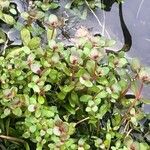
Lythrum portula
Spatulaleaf loosestrife · Water Purslane · Spatula-leaved loosestrife · European water purslane · Spatula-leaf loosestrife
Description
Source: leafsnapLythrum portula, commonly known as Water Purslane, is a small aquatic plant that belongs to the family Lythraceae. Native to North America, it thrives in shallow water bodies such as ponds, lakes, and slow-moving streams. The plant exhibits a prostrate growth habit, with stems that can extend up to 30 cm in length. Its leaves are small, oval-shaped, and have a glossy green appearance. Water Purslane produces small, pink flowers that bloom from June through September. These flowers, arranged in clusters at the ends of the stems, each have five petals. They attract various pollinators, including bees, butterflies, and other insects. The plant serves as an important food source for waterfowl such as ducks and geese, which feed on its leaves. Additionally, it provides shelter for fish species like the bluegill sunfish. Traditionally, Native Americans have used Water Purslane for its medicinal properties, which include treating diarrhea, dysentery, and fever, owing to its anti-inflammatory effects. Overall, Lythrum portula is significant both ecologically and medicinally, making it an interesting subject for botanists worldwide to study.
Care Guide
💧 Water Every 7 days
Water purslane thrives in wetland habitats, where it is accustomed to high moisture levels and consistent hydration. To replicate its natural environment, water it weekly. Although it can withstand short periods of dryness, it generally grows best outdoors, where natural rainfall supports its growth and overall health.
How can I know if I'm giving enough water to my Water purslane?
Avoiding overwatering can be challenging for Water purslane. While they have deep roots that need weekly moistening, they are highly vulnerable to root rot and browning if overwatered. Conversely, underwatering is less of a concern for Water purslane as they can tolerate periods without supplemental watering. However, prolonged lack of water will cause wilting and dry leaves.
How can I water my Water purslane in the best way?
There are several ways to water Water purslane. You can use a garden hose with a spray nozzle, a watering can, or any other common watering tool. Water purslane is not too picky about how it gets water, and can thrive on rainwater, tap water, or filtered water. It is best to avoid watering this plant from above because it can damage the leaves and flowers and may cause disease. Drip irrigation systems are a good option for watering Water purslane as they provide even and direct watering to the soil. If you have Water purslane in a container, you can use a cup, watering can, or tap to water it directly at the soil.
What should I do if I give my Water purslane too much or too little water?
To remedy underwatering Water purslane, simply water it more regularly when you notice it lacking moisture. However, overwatering can be a bigger problem. If not detected early, it can lead to diseases and the decline or death of the plant. To prevent this, choose a growing location with plenty of sunlight and good drainage to avoid waterlogged soil. If your potted Water purslane is overwatered, consider changing it to a new pot with better drainage and loose soil during repotting.
How often do I need to water my Water purslane?
Water purslane requires regular watering throughout the growing season. In the spring, you should water this plant approximately once a week. As the season progresses and temperatures rise, you may need to increase watering to two or three times a week. However, watering more frequently than this can harm the plant. It is important to ensure that the soil remains moist but not overly wet, regardless of how often you water. Watering water purslane in a pot is slightly different. Generally, you will need to water potted water purslane more frequently because the soil in a pot can dry out faster than ground soil. Therefore, in most cases, you should water container-grown water purslane a few times per week rather than just once per week for an in-ground plant.
How much water does my Water purslane plant need?
Determining how much water to give your Water purslane can be approached in a few different ways. One method is to feel the soil for moisture, and water until the first six inches feel moist. Another approach is to use a set measurement, such as giving about two gallons of water per week, depending on the temperature and soil dryness. However, following strict guidelines can lead to overwatering if your plant needs less. When growing Water purslane in a container, you should ensure all layers of soil are moist by either feeling the soil with your finger or allowing excess water to trickle out the drainage holes.
☀️ Light Full sun
Water purslane thrives with prolonged daily sunlight, though it can tolerate lower light conditions. Its native habitat is generally bright, which explains its requirement for abundant light. Excessive exposure can stress the plant, while inadequate light can lead to diminished growth and vigor.
What are the sunlight requirements for Water Purslane?
Water Purslane requires different levels of sunlight depending on its condition. For full sun exposure, it needs above 6 hours of sunlight, while partial sun exposure means about 3-6 hours of sunlight. It's important to observe how sunlight moves through your garden, choosing spots that offer a balance of light and shade, ensuring optimal growth and health of your plants.
How essential is sunlight for the growth of Water Purslane?
Sunlight is crucial for the growth of Water Purslane, benefiting significantly from extensive daily exposure. Naturally thriving in well-lit environments, Water Purslane can also survive in lower light conditions. However, overexposure to sunlight can stress the plant, while inadequate light may lead to reduced growth and poor vitality. In spaces with insufficient natural light, especially during winter, artificial lighting such as LED lights tailored to provide specific light wavelengths can support optimal growth. The amount of artificial light needed varies depending on the plant's sunlight requirements, ranging from 30-50W/sq ft for full sun plants to 10-20W/sq ft for full shade plants.
What are the symptoms of inadequate lighting in Water Purslane?
Water Purslane displays several symptoms when it doesn't receive enough light. These include smaller new leaves, leggy or sparse growth, faster leaf drop, slower or halted new growth, lighter-colored new leaves, chlorosis (leaves turning yellow), sunscald, leaf curling, wilting, and leaf scorching. Each symptom indicates the plant's struggle with light deficiency, affecting its ability to maintain health and continue growing effectively.
How can I address lighting issues for indoor and outdoor Water Purslane plants?
To improve growth conditions for Water Purslane, gradually relocating plants to sunnier spots can help, aiming for at least 6 hours of sunlight daily. For indoor plants not easily moved, supplementing with artificial light, such as keeping a lamp on for at least 8 hours daily or using grow lights, can provide necessary light. Outdoors, it's vital to avoid sudden changes in light exposure to prevent sunburn. Additionally, reducing obstructions like pruning trees or transplanting smaller plants to sunnier locations with good drainage can enhance light availability. Although parts of the plant damaged by insufficient light might not recover, increasing light exposure should promote the growth of healthy new sections.
🌡️ Temperature 5–35°C
Water purslane can tolerate a wide range of temperatures, though its distribution may still be restricted by different combinations of moisture and heat. It does best in warm summer climates with sufficient rainfall or watering. Extended stretches of cloudy, rainy weather or prolonged high temperatures make Water purslane more likely to die. In winter, adequate protection from the cold can improve the plant's chances of survival.
💨 Humidity
🪴 Soil
🌱 Fertilizer
To care for water purslane, apply balanced fertilizers with occasional high-nitrogen supplements once every month during the growing season. Make sure to dilute the fertilizer to quarter-strength to protect the plant’s flowers and the surrounding aquatic environment from the effects of over-fertilization. Fertilize after watering the plants. For your safety, always wear gloves during this process and wash your hands afterward.
🪴 Pot & Repot
✂️ Pruning
Water purslane has succulent stems and oval leaves, thriving in moist environments. To encourage growth and maintain its shape, prune the plant from early to late spring. Remove any dead or overcrowded stems to improve light penetration and airflow, promoting healthier growth and controlling its spread.
🌿 Propagating
🐛 Diseases & pets
☠️ Toxicity
Characteristics
- Plant Type
- Herb
- Life Cycle
- Annual
- Genus
- Lythrum
- Family
- Lythraceae
- Hardiness Zone
- 5-9
- Mature Height
- 5 cm to 20 cm
- Mature Spread
- 10 cm to 30 cm
- Leaf Color
- Green
- Leaf Type
- Deciduous
- Flower Color
- Pink
- Flower Size
- 0.20 cm to 0.25 cm
- Bloom Time
- Summer, Early fall
- Planting Time
- Spring, Summer, Autumn
- Harvest Time
- Late summer, Fall
- Native Area
- Turkey, Sweden, Austria, Slovakia, Montenegro, Slovenia, Morocco, Croatia, Belarus, Russia, Germany, Estonia, Romania, Latvia, Belgium, Portugal, Netherlands, France, Tunisia, Czech Republic, Bulgaria, Poland, Greece, Ukraine, Serbia, Lithuania, Norway, Italy, Kazakhstan, Spain, Switzerland, Denmark, Finland, Albania, Ireland, United Kingdom, Hungary, Algeria