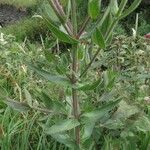
Lythrum salicaria
خون فام بنفش · Purple loosestrife · Purple lythrum · Spiked loosestrife · Coton rouge
Description
Source: leafsnapLythrum salicaria or purple loosestrife is a flowering plant belonging to the family Lythraceae. It should not be confused with other plants sharing the name loosestrife that are members of the family Primulaceae. Other names include spiked loosestrife and purple Lythrum. This herbaceous perennial is native to Europe and Asia, and possibly Australia.
💡 During its blooming season, purple loosestrife creates a vast expanse of light purple flowers, reminiscent of the romantic French lavender.
🌳 Purple loosestrife is not only prized for its showy flowers that improve garden appearance but also functions as an important nectar source for bees, helping with pollination. Its extended flowering period is crucial for feeding pollinators when other plants are not in bloom. Additionally, the plant’s fibrous stems are similar to bamboo and hold promise for the paper-making industry.
🎭 Forgiveness, an offering of peace
Care Guide
💧 Water Every week
Purple loosestrife is well-suited for wetland environments, as it can tolerate high moisture levels and occasional flooding. It needs consistent hydration, with weekly watering being recommended. As a herbaceous perennial, purple loosestrife benefits from rainwater during its growing season, which matches the conditions of its natural habitat.
When Should I Water My Purple Loosestrife?
Watering purple loosestrife is critical for its growth and health, aiding in nutrient intake, optimizing growth, and preventing diseases. Indications that purple loosestrife needs water include dry topsoil, droopy or curled leaves, leaves turning yellow or dull, and stunted growth. It's important to avoid both under-watering and overwatering, as each can lead to health issues for the plant, including dehydration or root rot. Observing the soil dryness, leaf texture, color changes, and growth patterns can help determine the perfect watering schedule.
How Should I Water My Purple Loosestrife?
Watering purple loosestrife effectively involves using techniques suited to its moist soil preference, such as using a watering can with a narrow spout for direct watering at the base and avoiding the foliage. Alternatives like soaker hoses or drip irrigation are ideal for ensuring water reaches the roots without waste. Moisture meters could help in avoiding overwatering. Key focus areas include watering around the base to ensure a thorough soak to the roots, and precautions should be taken to prevent overwatering, which can lead to root rot.
How Much Water Does Purple Loosestrife Really Need?
Purple loosestrife, originating from damp environments, thrives in moist soil conditions. The amount of water needed depends on factors like pot size, root depth, and plant size. Ensuring a thorough watering that reaches the bottom of the pot or ground is crucial. The soil should be damp but not waterlogged. Signs of proper hydration include damp soil and healthy growth, while yellowing leaves or wilting indicates watering issues. Consistency in soil moisture, mimicking its natural habitat, is key for the plant's wellbeing.
What Kind of Water is Best for Purple Loosestrife?
Purple loosestrife does well with rainwater due to its natural and balanced pH. Distilled water is a suitable alternative, especially if supplemented with essential minerals. Tap water can be used if dechlorinated and pH-adjusted. Filtering water might be necessary to remove harmful contaminants. Moderate sensitivity to chlorine and fluoride means these should be minimized in the plant's water. Adjusting tap water's pH and ensuring the temperature is around 68-72°F (20-22°C) will create optimal growing conditions for purple loosestrife.
How Do Purple Loosestrife's Watering Needs Change with the Seasons?
Seasonal changes affect purple loosestrife's watering needs. In spring, the plant requires more water to support new growth. Summer, with higher evaporation rates, calls for regular, deep watering. During autumn, water less frequently as the plant prepares for dormancy, and in winter, minimal watering is needed since the plant is dormant. Adjusting watering according to these seasonal needs ensures the plant remains healthy year-round, avoiding issues like root rot or dehydration.
☀️ Light Full sun
Purple loosestrife primarily thrives in conditions that have abundant sunlight, though it can also survive in places with moderate sun exposure. The plant comes from areas rich in sunlight, thereby, its growth and development are strongly linked with the availability of sunlight. Insufficient or excess sunlight can stunt its growth and affect its vivid coloration.
What are the sunlight requirements for Purple Loosestrife?
Purple Loosestrife thrives in environments that offer copious amounts of sunlight but can also tolerate areas with moderate sun exposure. It originates from sunny regions, which play a significant role in its growth and development. Sunlight affects its progress and vibrant coloration. For optimal growth, Full sun is defined as over 6 hours of sunlight, while Partial sun refers to about 3-6 hours of sunlight. It's important to observe how sunlight moves through your garden to find spots offering the right balance of light and shade for your plants.
How does artificial lighting support Purple Loosestrife's growth indoors?
Artificial lighting becomes crucial for indoor plants like Purple Loosestrife when natural sunlight is insufficient, especially during winter or in less sunny spaces. Adequate lighting promotes faster, healthier growth. LED lights are a popular choice because they can be customized to provide specific wavelengths of light needed by plants. Full sun plants need 30-50W/sq ft of light, partial sun plants 20-30W/sq ft, and full shade plants 10-20W/sq ft. The light source should be placed 12-36 inches above the plant to mimic natural sunlight, and most plants require 8-12 hours of light per day.
What are some common symptoms of inadequate lighting in Purple Loosestrife?
When Purple Loosestrife receives insufficient light, it may show several symptoms. New leaves might grow smaller, and the plant can exhibit leggy or sparse growth, with longer spaces between leaves or stems, leading to a thin appearance. Faster leaf drop, slower or halted growth, paler new leaves indicating a lack of chlorophyll and essential nutrients, and chlorosis – where leaves turn yellow due to chlorophyll breakdown – can also occur. Sunscald can damage plant tissues with intense sun exposure, while leaf curling reduces the surface area exposed to sunlight as a defense mechanism. Wilting from overexposure and leaf scorching, characterized by brown, dry patches on leaves, are also signs of stress due to improper lighting.
How can one mitigate the effects of insufficient or excessive sunlight on Purple Loosestrife?
To optimize Purple Loosestrife's growth in response to light exposure, consider the following strategies: For indoor plants, gradually move them to sunnier spots until they receive at least 6 hours of sunlight daily, use south-facing windows, and consider artificial lighting for additional support. Outdoors, adapt plants gradually to more sunlight to avoid sunburn. Reducing obstructions like pruning trees to allow more sunlight is beneficial. If plants are small enough, transplanting during their dormant period in late winter or early spring to a sunnier location can also help. Note that parts of the plant affected by inadequate light may not recover fully, but new growth will be healthier after adjusting light exposure.
🌡️ Temperature 10–32.2°C
The purple loosestrife originates from temperate areas and flourishes at temperatures of 68 to 95 °F (20 to 35 ℃). To ensure it grows optimally, recreate these conditions by keeping these temperatures consistent, making alterations as needed with the fluctuations of the seasons.
What is the native environment of Purple loosestrife, and what are its ideal temperature conditions for growth?
Purple loosestrife, botanically known as Lythrum salicaria, originates from temperate regions. It flourishes in temperatures between 68 to 95 °F (20 to 35 °C), which are the ideal conditions for its optimal growth. To ensure healthy development, it is recommended to maintain these temperatures, making adjustments according to seasonal variations. The plant exhibits strong resistance to cold, meaning special frost protection measures are generally unnecessary. However, in cases where winter temperatures are forecasted to fall below -25°C, cold protection is advised by covering the plant with insulating materials like soil or straw. Additionally, watering the plant abundantly before the first freeze of autumn helps keep the soil moist, aiding in the prevention of drought and water scarcity during the colder seasons.
How does Purple loosestrife respond to low temperature conditions, and what measures should be taken in spring if the plant fails to sprout?
Purple loosestrife is notably cold-tolerant, thriving best when temperatures remain above 20°C. Throughout the winter, it is vital to keep the temperature above 0°C. Should the temperature drop below -25°C, the plant may not exhibit immediate changes but could experience reduced sprouting or fail to sprout at all come springtime. The recommended solution for such an occurrence is to inspect the plant in spring and remove any parts that have not successfully sprouted. This helps to encourage new growth and maintain the health of the Purple loosestrife.
What should be done if Purple loosestrife is exposed to high temperatures during the summer?
During the summer months, it's crucial to ensure that the temperature around Purple loosestrife does not exceed 35°C. Exposure to temperatures above 38°C can cause the plant's leaves to lighten in color, curl, and become susceptible to sunburn; in severe cases, it can lead to the wilting and drying of the entire plant. To mitigate these effects, it is advisable to trim away any sunburned and dried parts of the plant. Relocating the plant to a shaded area or using a shade cloth to protect it from the midday and afternoon sun can be beneficial. Moreover, watering the plant in the morning and evening helps maintain soil moisture, further protecting the plant from the adverse effects of high temperatures.
💨 Humidity
🪴 Soil 5-7
🌱 Fertilizer
The optimal period to provide nutrients to a Purple loosestrife is at the start of spring, as it awakens from dormancy and begins its growth phase. Nutrient supplementation is crucial for its robust growth. While the Purple loosestrife doesn't have high nutrient requirements, yearly supplementation can increase its longevity and encourage more vibrant and durable blossoms.
When is it not a good time to fertilize my Purple loosestrife plant?
To ensure optimal growth of Purple loosestrife, avoid fertilizing during most of the year. Late winter and early spring are the only suitable times for fertilization, as this plant has low fertilization needs and only requires one feeding per year. Fertilizing during spring, summer, and fall can easily lead to overfertilization and its associated complications. However, if you missed fertilizing in spring, it is acceptable to fertilize in the fall. It is important to note that there is no need to fertilize during the winter, as Purple loosestrife enters a dormant growth phase where it doesn't produce new growth. Therefore, it is not advisable to fertilize during most of the winter.
Why should I use fertilizer on my Purple loosestrife?
Fertilization is important for the Purple loosestrife because it provides key nutrients that help the plant grow both above and below ground. However, Purple loosestrife's fertilization needs are relatively low, and it can survive well without fertilization at times. Nonetheless, annual fertilization can greatly benefit the plant, keeping it alive and promoting the growth of better and longer-lasting flowers. Therefore, those who want their Purple loosestrife to thrive should make sure to fertilize it annually.
When should I fertilize my Purple loosestrife plant?
The best time to fertilize a Purple loosestrife is in late winter to early spring when it is transitioning from dormancy to active growth. This timing promotes healthy growth and sets it up for a successful season. Although fertilizing in the early spring is generally recommended, it is also acceptable to fertilize in the fall. However, it is not advisable to feed a Purple loosestrife during the summer or winter seasons.
What kind of fertilizer should I use for my Purple loosestrife?
Purple loosestrife can thrive when using most general-purpose fertilizers with a balanced mix of the three main plant nutrients. However, some nutrient blends are especially beneficial. For example, many gardeners believe that higher phosphorus levels promote stronger roots and better flowers. Since Purple loosestrife is a flowering plant, using a phosphorus-rich fertilizer may be the best choice. Both granular and liquid forms of fertilizer are suitable as long as they contain sufficient nutrients. In addition to manufactured fertilizers, organic options like compost and manure can greatly improve the soil for your Purple loosestrife, creating a healthy growing environment.
How can I give fertilizer to my Purple loosestrife plant?
To fertilize a Purple loosestrife, the most common method is to use a granular or pellet fertilizer applied to the soil around the plant. It is important to fertilize when the plant is transitioning from its dormant phase to active growth, typically in early spring. Wait for the plant to send shoots through the soil before applying fertilizer. Alternatively, some people may prefer using liquid fertilizer. If using liquid fertilizer, dilute it with water before applying. Regardless of the type of fertilizer used, it is advisable to moisten the soil before, during, and after applying the fertilizer.
🪴 Pot & Repot 2-3 years
During the repotting of Purple loosestrife, opt for a pot that is 1-2 inches (2.5-5 cm) bigger and possesses sufficient drainage. Employ a potting mix that drains well. Undertake the repotting in the spring or fall, making certain that the root ball is marginally below the edge of the flower pot. Provide a thorough watering following the repotting and station it in a warm location with indirect sunlight.
✂️ Pruning
Purple loosestrife is known for its tall spikes of purple flowers and its ability to thrive in wet areas. To ensure robust growth, regularly prune the plant from early to late spring by cutting back any dead stems to ground level. This practice not only promotes healthy growth but also helps prevent the plant from spreading. Be sure to consult local guidelines for effective management.
🌿 Propagating
🐛 Diseases & pets
☠️ Toxicity
Lythrum Salicaria is safe to use for human. It can be used as ornamental plant in gardens and as a astringent medicinal herb for treating diarrhea and dysentery.
Characteristics
- Plant Type
- Herb
- Life Cycle
- Perennial, Annual
- Genus
- Lythrum
- Family
- Lythraceae
- Hardiness Zone
- 6-8
- Mature Height
- 0.91 m to 2.13 m
- Mature Spread
- 61 cm to 91 cm
- Leaf Color
- Green
- Leaf Type
- Deciduous
- Flower Color
- Pink, Purple, Red
- Flower Size
- 1.02 cm to 2.03 cm
- Bloom Time
- Early summer, Mid summer
- Planting Time
- Spring
- Harvest Time
- Mid summer
- Native Area
- Turkey, Sweden, India, Austria, Slovakia, Pakistan, Croatia, Morocco, Belarus, Russia, Iraq, Germany, Estonia, Romania, Latvia, Moldova, Portugal, Netherlands, France, Tunisia, Czech Republic, Bulgaria, Armenia, Poland, Greece, Ukraine, Serbia, Lebanon, Lithuania, Norway, China, Afghanistan, Syria, Italy, Spain, Switzerland, Denmark, Japan, Mongolia, Israel, Finland, Iran, Albania, Ireland, United Kingdom, Hungary, Algeria, Azerbaijan