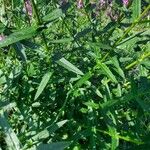
Lythrum virgatum
Purple loosestrife · European wand loosestrife · Wand loosestrife · Slender loosestrife · Long Purples (Shakespeare)
Description
Source: leafsnapLythrum virgatum, commonly known as wand loosestrife, is a perennial herbaceous plant belonging to the family Lythraceae. Although it is native to North America, you can find it growing in wetlands, marshes, and along the edges of streams and ponds. This plant can reach up to 4 feet in height and can spread up to 2-3 feet wide. Lythrum virgatum has lance-shaped leaves with smooth margins that grow in opposite pairs along the stem. The plant produces numerous small flowers arranged in dense spikes at the top of each stem. These flowers, which typically bloom from mid-summer through early fall, are generally pink or purple. Lythrum virgatum plays a crucial role in wetland restoration projects by stabilizing soil and preventing erosion while providing habitat for wildlife, including birds and insects. Traditionally, Native Americans have used this plant for its medicinal properties to treat ailments such as diarrhea, dysentery, fever, and sore throat, among others. However, it should be noted that some states in North America have listed Lythrum virgatum as an invasive species due to its ability to spread rapidly through seed dispersal. This can lead to the plant outcompeting native species if not properly managed or controlled. In summary, Lythrum virgatum is an attractive plant with significant ecological benefits. However, it should be monitored carefully if introduced into new areas outside its natural range to prevent potential invasiveness.
Care Guide
💧 Water Every 7 days
Wand loosestrife flourishes in moist environments, preferring consistent moisture without becoming waterlogged. To maintain its health, it should be watered weekly and planted in well-drained soil to support its growth. Typically, this plant is grown outdoors to replicate its natural habitat, ensuring it receives enough water during its active growing season while avoiding root rot.
☀️ Light Full sun
Wand loosestrife is a sun-loving herbaceous perennial that comes from open habitats and commonly thrives in meadows and grasslands. It prefers full sun but can also tolerate partial sun.
What are the sun requirements for Wand loosestrife (Lythrum virgatum)?
Wand loosestrife, known botanically as Lythrum virgatum, thrives under specific sunlight conditions. For 'Full sun' exposure, the plant requires above 6 hours of sunlight daily. Alternatively, if the plant is in a 'Partial sun' location, it should receive about 3-6 hours of sunlight each day. It's important to observe the way sunlight moves through your garden over the day. Selecting the right spots that offer a perfect balance of light and shade is crucial for the happiness and health of your plants. This careful observation can prevent potential issues and ensure your Wand loosestrife grows vibrantly.
🌡️ Temperature 0–35°C
Wand loosestrife occurs naturally in temperate regions and does well in temperatures ranging from 32 to 95 °F (0 to 35 ℃). When temperatures fall, introducing a warmer microclimate may improve growth. In hotter seasons, warmer, well-adapted environments are preferred.
What is the native climate for Wand loosestrife?
Wand loosestrife, scientifically known as Lythrum virgatum, is native to temperate regions. It thrives in a broad range of temperatures, preferring environments between 32 to 95°F (0 to 35°C). The plant is adaptable and can continue to grow as temperatures drop, especially if introduced to a warmer microclimate, which can enhance its growth. During hotter seasons, ensuring that Wand loosestrife is in a warmer, well-adapted environment is beneficial for its overall health and development.
💨 Humidity
🪴 Soil 5-7
🌱 Fertilizer
The best time to fertilize a Wand loosestrife is in early spring, as it comes out of dormancy and starts active growth. Fertilizing supplies essential nutrients needed for healthy development. Although Wand loosestrife has relatively low fertilizer requirements, applying fertilizer annually can improve its survival and encourage better, longer-lasting flowers.
🪴 Pot & Repot
✂️ Pruning
Wand loosestrife benefits from annual pruning between early and late spring to promote growth and flowering. To achieve the best results, remove any weak stems and shape the plant to improve airflow. Cut back about one-third of the plant to maintain a compact form, using sharp, clean tools to ensure precise cuts and prevent infections.
🌿 Propagating
🐛 Diseases & pets
☠️ Toxicity
Lythrum virgatum has no toxic effects reported.
Characteristics
- Plant Type
- Herb, Shrub
- Life Cycle
- Perennial
- Genus
- Lythrum
- Family
- Lythraceae
- Hardiness Zone
- 3-9
- Mature Height
- 1.52 m
- Mature Spread
- 49 cm
- Leaf Color
- Green
- Leaf Type
- Deciduous
- Flower Color
- Purple, Pink
- Flower Size
- 2.54 cm
- Bloom Time
- Summer
- Planting Time
- Spring, Summer
- Harvest Time
- Late summer, Early fall, Mid fall
- Native Area
- Turkey, Austria, Czech Republic, Slovakia, Montenegro, Bulgaria, Armenia, Poland, Greece, Croatia, Slovenia, Belarus, China, Russia, Serbia, Hungary, Kyrgyzstan, Kazakhstan, Italy, Mongolia, Albania, Azerbaijan, Romania, Turkmenistan